Introduction
Scrutiny panels are an important mechanism for reviewing CPS casework and identifying effective practice and areas for improvement. Through structured discussion of completed cases, they help strengthen operational delivery, improve outcomes for victims, enhance joint working with partners and embed continuous learning across the organisation.
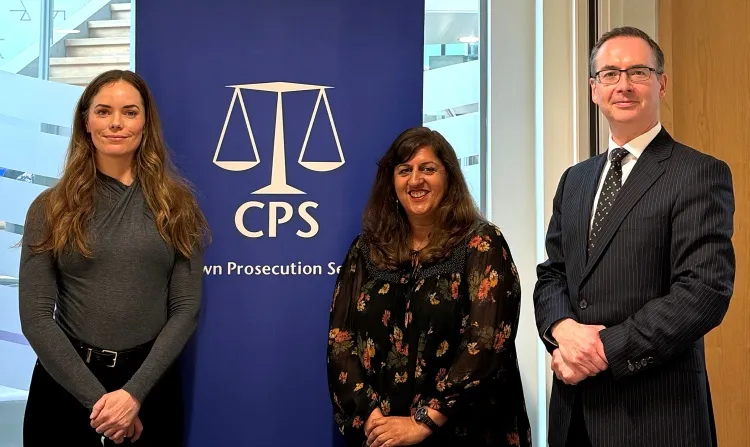
In May 2025, we launched the Modern Slavery National Scrutiny Panel, chaired by the Independent Anti-Slavery Commissioner. This brought together representatives from across the criminal justice system, government, academia, those with lived experience, and the third sector, including:
- Crown Prosecution Service
- Independent Anti-Slavery Commissioner’s Office
- National Police Chiefs’ Council
- National Crime Agency
- Home Office
- Modern Slavery and Organised Immigration Crime Unit
- Human Trafficking Foundation
- Justice and Care
- The Salvation Army
- Barnardo’s
- Modern Slavery and Human Rights Policy and Evidence Centre
- University of Hull
- Stop the Traffik
- Fair Work Agency
The Panel meets twice a year to scrutinise finalised modern slavery cases through a thematic approach. To date, it has considered cases involving county lines, sexual exploitation and forced labour, selected to draw out examples of good practice and areas where further learning is needed.
These discussions have highlighted the complexity of modern slavery prosecutions, including overlapping forms of criminality, vulnerable or traumatised victims, complex evidential issues and offending that may not be immediately apparent from the initial facts of a case. The Panel has helped the CPS identify practical learning on early investigative advice, evidence-led prosecutions, survivor engagement, prevention orders, financial investigation and partnership working, ensuring that scrutiny leads to improvements in national practice.
The Panel’s case discussions have provided practical insight into the challenges of prosecuting modern slavery offences. These challenges sit within a wider context of changing offending patterns and increasing identification of potential victims. The next section sets out the key trends shaping modern slavery and human trafficking, and explains why they are relevant to the learning drawn from the Panel’s work to date.
Trends in Modern Slavery and Human Trafficking
Modern slavery continues to present a significant and evolving challenge for the criminal justice system. In the year ending June 2026, 25,373 potential victims were referred to the National Referral Mechanism (NRM) across the UK, the highest number recorded since the NRM began, with a significant proportion of these referrals arising from England and Wales.1 UK nationals remained the most commonly referred nationality, accounting for 22% of referrals, and almost three-quarters of UK nationals referred were children.
The increase in small boat arrivals over recent years has contributed to this rise in NRM referrals, particularly among Eritrean, Vietnamese and Somali nationals. Of the 187,778 small boat arrivals between 2018 and 2025, 26,383 people were referred to the NRM (14%), with this peaking at 19% in the year ending December 2025.2 The overlap between people smuggling via small boats and modern slavery illustrates the increasingly complex intersection between organised immigration crime, financial debt bondage, coercion and human exploitation.
The profile of exploitation also reflects many of the issues considered through the Panel’s initial programme of case scrutiny. Labour exploitation was the most commonly reported form of exploitation overall, accounting for 38% of referrals, and almost half of adults referred reported labour exploitation. Among children, however, criminal exploitation was the most commonly reported exploitation type, accounting for 48% of referrals. Sexual exploitation also remains a significant concern, particularly for women and girls, with 27% of female potential victims referred in the year ending June 2026 reporting sexual exploitation.
County lines remains particularly prominent within child criminal exploitation. In the year ending June 2026, 1,994 NRM referrals were flagged as involving county lines, with male children accounting for 76% of these referrals. UK children are particularly represented within this form of exploitation. These cases can present difficult questions for investigators and prosecutors, including around grooming and coercion, victim engagement, the relationship between exploitation and offending behaviour, and the evidence needed to demonstrate the control exercised by perpetrators.
While rising referrals indicate greater system responsiveness, they also highlight the scale, persistence and changing nature of modern slavery, and the growing demands this places on investigative, safeguarding and decision-making capacity. Despite the growth in identified victims and investigations, the volume of prosecutions and convictions for modern slavery offences in England and Wales remains comparatively low, illustrating a continued gap between identification and criminal justice outcomes.
In the year ending June 2026, the CPS recorded 397 prosecutions for modern slavery flagged crimes in England and Wales, with over three-quarters resulting in a conviction, demonstrating strong outcomes in cases that reach charge and prosecution.3 However, this volume remains small when set against the number of potential victims identified through the NRM in the same period.
Modern Slavery investigation and prosecution challenges
The data and trends reflect the inherent difficulty of modern slavery investigations, where victims may be fearful, traumatised, reluctant to engage or difficult to trace, and where offending is often hidden within wider patterns of organised crime, immigration offending, debt control or coercion. It also underlines why early identification, strong evidence-led investigations, effective safeguarding and close partnership working are essential to converting increased victim identification into more effective criminal justice outcomes.
Modern slavery is increasingly poly-criminal in nature. Poly-criminality is where individuals or organised crime groups engage in multiple forms of criminal activity, using shared networks, capabilities and infrastructure. Modern slavery is often embedded within wider patterns of organised immigration crime, violence against women and girls, fraud, money laundering, drugs supply, weapons offences and other forms of serious, organised offending. Exploitation may be facilitated through digital platforms, informal labour markets, false recruitment, debt control, threats and movement across local, regional and international borders. This makes it harder for law enforcement and prosecutors to identify the full picture of offending at an early stage, to link apparently separate criminality to an underlying model of exploitation, and to gather evidence that captures the totality of harm and criminal benefit.
These cases are already being strengthened through close partnership working across policing, prosecutors, immigration and border agencies, safeguarding partners, financial investigators and international counterparts. This collaboration is helping agencies share intelligence and expertise, understand emerging offending models, disrupt exploitation earlier and build stronger cases where evidence, suspects, victims or criminal assets are spread across jurisdictions.
Insights from reviewed cases
During each Panel, we have looked at two finalised cases across different themes.
County lines
County lines cases often involve modern slavery offending alongside drugs, weapons and other criminality. This can make charge selection challenging, particularly where non-modern slavery offences are supported by more immediate physical evidence. The cases reviewed by the Panel underlined the importance of maintaining focus on exploitation where it is integral to the offending, including where a person who appears as a defendant may also be a victim compelled to carry out criminal activity. This reinforces the need to identify potential defendant-victims at the earliest stage. In county lines cases, individuals involved in drugs, weapons or other offending may also be victims of exploitation who have been compelled to commit offences. Early identification enables prosecutors to consider section 45 of the Modern Slavery Act 2015, which provides a statutory defence for victims of modern slavery in certain circumstances, and ensures linked offending is assessed in its full exploitation context.
Where modern slavery offences cannot be charged at the same time as associated drugs, weapons or other offences, the Panel emphasised the need for a clear case strategy from the outset. Early engagement between police and prosecutors can help ensure that investigative opportunities are not missed, that exploitation remains central to the case theory, and that decisions on linked offending support rather than obscure the modern slavery element.
Sexual exploitation
Sexual exploitation cases can present particular challenges where victims are unable, reluctant or fearful of engaging with the criminal justice process due to trauma, coercion or continuing vulnerability. The cases reviewed by the Panel showed why it is important that prosecutors pursue modern slavery offences even where there is limited victim engagement. Early, evidence-led investigation with the police is essential to identify alternative evidence, preserve investigative opportunities and build a case that captures the full context of control and exploitation.
One case demonstrated that a strong casework strategy is key to delivering successful outcomes, particularly where victim engagement may change over time. Although contact with the victim was lost during proceedings, the prosecution had planned for this risk and developed a strategy that enabled the victim’s original police statement to be presented as hearsay evidence, helping secure a conviction for modern slavery offending.
The Panel also emphasised that apparent consent or reluctance to support a prosecution should not obscure indicators of coercion, control and exploitation. Discussions highlighted the need to recognise psychological coercion, cultural stigma, immigration concerns and the role of harbouring, and to gather evidence early so that prosecutions remain viable if survivor engagement changes over time.
Forced Labour
Forced labour cases explored at the Panel reinforced the need for robust, evidence-led strategies that do not rely solely on survivor testimony. In one case reviewed by the Panel, convictions were secured, despite limited survivor engagement, through supporting evidence including phone data, financial material and police officer testimony. The case also highlighted the importance of applying the correct legal framework where a victim’s age is uncertain, as this affects the evidential threshold and how exploitation is established.
The Panel also considered a case involving long-term forced labour, which highlighted the need to recognise the particular vulnerabilities of victims and to use measures that support them to give evidence, including recorded video evidence where appropriate. Discussions also raised the lack of automatic anonymity for some victims under the Modern Slavery Act 2015, compared with the protections available in sexual exploitation cases, and the importance of wider support to help victims engage safely and confidently.
Across the forced labour cases, the Panel identified recurring learning on long-term control, debt bondage, cultural context, financial investigation, asset recovery, reparation and prevention orders. These tools can help reflect the full harm caused by exploitation, evidence criminal benefit, support recovery for victims and reduce the risk of further offending.
The cases reviewed also showed the value of building evidence from the outset, including through early investigative advice, body-worn video, phone evidence, financial material, travel evidence, disclosure planning and, where appropriate, hearsay applications. This can reduce over-reliance on survivor testimony and help prosecutors present the full context of coercion, control and exploitation to the court.
Our response to feedback from the panel: action we have taken
The CPS response to the Panel’s feedback is focused on strengthening the national quality, consistency and confidence of modern slavery casework. Our aim is to ensure that learning from scrutiny informs live prosecutorial decision-making, supports earlier identification of exploitation, and helps prosecutors build stronger evidence-led cases.
The national network of Modern Slavery and Human Trafficking Leads turns Panel learning into consistent operational practice across CPS Areas and Central Casework Divisions. Our National Thematic Modern Slavery Lead, Ben Samples (Deputy Chief Crown Prosecutor for CPS West Midlands) has oversight of the work of our Area Leads and supports them with driving improvements in their respective Areas. By aligning Lead meetings with the Scrutiny Panel, we can move quickly from case-based insight to national learning, helping prosecutors identify exploitation earlier, apply section 45 consistently and strengthen case strategies in live and future casework. At every Leads meeting, a section 45 case study is also reviewed to support earlier identification of potential defendant-victims and reinforce consistent decision-making in complex cases.
Learning is also reported to the CPS Serious Economic and Organised Crime and International Steering Board, co-chaired by the Director of Legal Services and Director of Policy. Reporting Panel learning into CPS national governance provides assurance that recurring issues identified through case scrutiny are visible at senior level and linked to wider strategic priorities. This helps ensure that modern slavery learning informs delivery of the CPS Serious Economic and Organised Crime Strategy 2030 and the CPS International Strategy 2030, particularly where stronger partnership working, disruption, asset recovery and international cooperation are needed to improve outcomes.
In response to the Panel’s feedback, the CPS is using the learning to strengthen national modern slavery practice. We are updating our modern slavery training to strengthen prosecutor confidence and consistency in areas highlighted by the Panel, including section 45, asset recovery, reparation, and cultural and practical barriers to victim engagement. Once finalised, we will recommend that all teams within CPS Areas that handle modern slavery casework undertake the refreshed training, to support consistency and confidence in handling modern slavery offences and to ensure the lessons learned from the Panel are embedded in our casework.
We are also reinforcing the importance of early CPS and police engagement, evidence-led case strategies, financial investigation, and timely escalation where investigative opportunities or victim-support issues arise. The learning from the Panel is helping us promote the effective use of ancillary and prevention orders, including interim risk orders where appropriate, and to strengthen advocacy where orders are needed to manage ongoing risk.
The Panel’s work to date has demonstrated the value of open, expert and survivor-informed scrutiny. Lived experience input has also helped ground casework learning in the realities of survivor engagement, trauma, fear and recovery, and is already shaping CPS training, guidance and engagement with prosecutors across England and Wales. The Panels will continue into 2026/27, ensuring this scrutiny remains an ongoing part of how the CPS learns from finalised casework, strengthens national practice and works with partners to improve its response to modern slavery. As modern slavery offending continues to evolve, the CPS will continue to work with the Independent Anti-Slavery Commissioner, law enforcement, government partners and the third sector to strengthen our collective response, improve outcomes for victims and hold perpetrators to account.