
CPS Joint Enterprise National Monitoring Scheme 2025-2026
Contents
- 1: Introduction
- 2: Background
- 3: Case Management Panels
- 4: Methodology
- 5: CPS data process
- 6: Data Commentary
- 7: Engagement and next steps
- 8: Local Scrutiny Involvement Panels
- 9: Conclusion and next steps
- 10: Data Annex and CPS Data Limitations
- Data sets
Downloadable as a PDF document (1.1 MB): CPS Joint Enterprise National Monitoring Scheme 2025-26
1: Introduction
This report marks the second year of reporting under the Joint Enterprise Monitoring Scheme. At the Crown Prosecution Service (CPS), we recognise our responsibility to deliver justice through prosecutions that are independent, fair and robust. Joint enterprise homicide cases remain among the most closely scrutinised areas of our work. Homicide and attempted homicide are among the most serious offences, with a profound impact on victims, survivors, their families and communities. We have therefore expanded the scheme to include data on victims and survivors of homicide and attempted homicide.
Joint enterprise, also known as secondary liability, is a legal doctrine in England and Wales where two or more people can be held responsible for the same crime, even if only one person physically or directly committed the criminal act. Secondary Liability arises where an individual assists or encourages another person to commit a crime, intending that a crime be committed. They can be prosecuted and punished by a court as if they were the principal offender.
Almost any crime can be prosecuted on a joint enterprise basis and it is often used in offences of violence, theft, fraud and public order. This report, however, focuses on homicide and attempted homicide prosecutions brought on a joint enterprise basis.
Joint enterprise homicide can arise in a wide range of contexts. It may involve a group of offenders acting together in the killing of a victim, or an individual playing a secondary role such as verbally encouraging the crime or handing over a weapon to assist the principal attacker.
While joint enterprise homicide is often associated with murder cases that involve large groups of defendants, it is important to recognise that the same legal principles apply across a broad range of homicide offences and case types. For the purpose of the monitoring scheme, as well as murder and attempted murder, “homicide” includes:
- Manslaughter
- Causing or allowing the death of a child or vulnerable adult
- Child destruction
- Death by dangerous or careless driving; and
- Inchoate offences such as conspiracy to commit murder
Joint enterprise homicide prosecutions include cases involving the death of a child through abuse or neglect, fatal road traffic incidents, conspiracies to murder a former partner and fatal fires in domestic settings. The use of the joint enterprise doctrine in homicide prosecutions is therefore broader in scope than is sometimes perceived, and the cases captured within this year’s monitoring scheme reflect the diverse range of homicide offences and circumstances to which these legal principles may apply.
Given the complexity and seriousness of these cases, and the severity of the consequences for defendants who are convicted of homicide or attempted homicide on the basis of joint responsibility for the actions of others, it is important that the CPS monitors the nature of its caseload and transparently reports on these prosecutions.
In April 2024, the CPS implemented a national monitoring scheme across all CPS Areas. This comprises a mandatory Joint Enterprise Monitoring Code ‘flag’ on the CPS Case Management System (CMS) for all cases of homicide and attempted homicide brought on a joint enterprise basis. The national flag enables system generated reporting on a range of data from CMS. In addition, manual data collection is undertaken to capture, monitor and report on features of these cases that cannot be extracted from CMS data alone.
As part of the monitoring framework, there is a mandatory requirement to convene a Case Management Panel (“CMP”). CMPs provide enhanced oversight and assurance for these prosecutions. Further detail on CMPs is set out in Section 3 of the report. We also have a network of Joint Enterprise Lead Prosecutors, known as single points of contact (“SPoCs”), that have been appointed in each regional CPS Area.
This work continues to sit within the CPS Disproportionality Action Plan, published in November 2024, as part of a wider programme of cross-cutting work to address disproportionality and promote fairness across the criminal justice system. The CPS monitors and scrutinises joint enterprise homicide cases carefully to improve understanding of outcomes and support evidence-based improvements to practice.
Alongside this monitoring and assurance work, the CPS continues to engage with stakeholders to better understand concerns, share learning and seek feedback on its approach to joint enterprise prosecutions. This report therefore includes a dedicated section summarising stakeholder engagement activity undertaken during the reporting period and the key themes emerging from those discussions.
2: Background
The CPS prosecution guidance on Secondary Liability: charging decisions on principals and accessories sets out the approach prosecutors should take when making charging decisions in cases involving individuals who assist or encourage another to commit a crime. The principles of secondary liability apply to most offences and remain the same whichever offence they are applied to.
Prosecutors must prove to a jury beyond reasonable doubt that each defendant participated in a crime with the requisite intent and is therefore guilty. They do this by using all available evidence to prove each defendant’s guilt.
As mentioned above, “Joint enterprise”, or secondary liability applies where persons assist or encourage another to commit a crime with the requisite intention. These persons are known as accessories or secondary parties.
Where two or more persons are involved in an offence, the parties to the offence may be principals (D1) or secondary parties (“accessories”) (D2). Each offence will have at least one principal, although it is not always possible or necessary to identify the principal(s).
A principal is one who carries out the substantive offence, i.e. performs or causes the act of the offence with the relevant mental state or intent, making them culpable for the crime. If two or more persons do so, they are joint principals.
A secondary party is one who intentionally aids, abets, counsels or procures (commonly referred to as “assists or encourages”) D1 to commit the substantive offence, without being a principal offender. For example, in a burglary, the person who enters a property and steals something is the principal D1, whereas the person who acts as a lookout or driver is a secondary party D2. The secondary party can be prosecuted and punished as if he were a principal offender.
3: Case Management Panels
The Joint Enterprise Monitoring Scheme has three core components:
- All homicide and attempted homicide cases prosecuted on a joint enterprise basis are identified using a mandatory flag on CMS. This enables the collection of system generated data on these cases.
- Every flagged case is subject to review through a mandatory CMP held at the appropriate stage following a charging decision and recorded on a dedicated monitoring form. These CMPs provide enhanced oversight of these complex and serious prosecutions.
- Information gathered through the CMP process is used to compile a national manual dataset, capturing features of the cases that are unable to be identified through the CMS system generated data alone.
Charging decisions in joint enterprise are sometimes made shortly after an offence has occurred, where suspects have been arrested and remain in custody and there are reasonable grounds to suspect that they committed the offence. In this case it may be appropriate to charge on the “Threshold Test”. This test is intended to apply to a very limited range of cases where the Full Code Test in the Code for Crown Prosecutors cannot be met but there are reasonable grounds to believe that further evidence can be obtained to provide a realistic prospect of conviction, and the overall seriousness or circumstances of the case, and the substantial grounds for objecting to bail, justify the making of an immediate charging decision.
The police must always endeavour to conclude all reasonable lines of inquiry during a suspect’s period of detention or within a reasonable time thereafter so that the “Full Code Test” can be applied.
In some cases, there will be enough evidence to charge on the Full Code Test, however even in these circumstances, the case will remain under continuous review.
Some CPS Areas hold an initial CMP within the first weeks after a charging decision with their Unit Head (Senior District Crown Prosecutor), the allocated prosecutor and the prosecutor’s line manager (District Crown Prosecutor). In this case, the main CMP will then follow at a further stage when the issues in the case are clearer often following engagement with the defence. The main CMP would usually be chaired by the Deputy Chief Crown Prosecutor, or the Chief Crown Prosecutor, depending on availability and level of complexity of the case.
Legal points reviewed during the CMP include an analysis of the evidential issues such as the offence under consideration or charged, details of how the principles of secondary liability are being applied, and the specific evidence against each defendant. Panel members are given access to the relevant paperwork, written summaries on the key issues by the prosecutor, and an opportunity to probe and discuss the case strategy and decisions, as well as any reasonable lines of enquiry and defence engagement. The panel can and will identify any further actions required, as well as a date to reconvene.
4: Methodology
This year’s monitoring scheme adopts the same methodology as the previous year, while incorporating new data on victims and survivors to provide a more complete picture of these cases.
The scheme covers pre-charge and post-charge cases across all CPS Areas that were finalised in the 2025-26 financial year. Live prosecutions, including recent trials not sentenced and finalised on CMS before the dataset closed, will be included in a future monitoring report for the financial year in which they are finalised. Cases finalised in this year’s report may have commenced in a previous year. Many factors can influence the length of time a case takes to progress to completion, for example, complexity of cases, evidential issues, and court processes. As the case population grows with year-on-year reporting, the CPS will be able to identify trends and patterns and draw on data comparisons.
5: CPS data process
This report provides an overview of two datasets, system generated “flagged” data (“System Generated data”) from CMS and a manually created dataset (“Manual data”) collected centrally as part of the national scheme.
Due to differences in the way the data is collected, there may be some minor variations between the two, including for the same data type (e.g. defendant demographic data). This is explained in section 5.4 below.
Data on defendants and victims, including demographic data, is passed to the CPS by the police. The data is not complete and is subject to varying levels of error and omission at local levels.
Both datasets are relatively small when broken down by CPS Area, case feature or defendant characteristic, and other variables, so individual cases, for example those with several defendants, can affect patterns in the data, particularly at Area level.
As the national Joint Enterprise flag was only introduced in April 2024, the available data is limited. Therefore, with only two years of data available, it is not possible to robustly assess trends in joint enterprise case characteristics. Any increase or decrease observed between two years may simply reflect normal random variation, changes in operational activity, or short-term fluctuations rather than a genuine underlying trend. A longer time series is needed to identify sustained patterns and distinguish them from normal year-to-year variation. Any apparent changes between years should be interpreted with caution.
The dataset will grow as the report is produced in future years.
The data in both the System Generated and the Manual datasets should be read together with the relevant caveats which are set out in the CPS Data Limitations sections in the Data Annex.
5.1: System Generated “flagged” data
The first dataset is system generated ‘flagged’ data from CMS and associated Management Information System (MIS). Held in MIS, it is based on suspects/defendants rather than cases, and includes records meeting the following criteria:
- The case was finalised on CMS during the report period (1 April 2025 – 31 March 2026). “Finalisation” means the administrative closure of a case, such as after sentencing.
- The Joint Enterprise monitoring flag had been applied before the monthly data freeze; the flag applies to all homicide and attempted homicide cases brought on a joint enterprise basis.
- The Principal Offence Category of Homicide had been applied to the defendant at case finalisation.
Please see the CPS Data Limitations (in the Data Annex) for further information relating to Monitoring Codes and Principal Offence Categories.
Data captured through the ‘flag’ is set out in the Data Annex A.
5.2: Manual data
The second dataset is manually created, using the monitoring ‘flag’ applied by operational staff to identify cases meeting the national scheme criteria. As with the system generated data, it only includes cases finalised on CMS during the relevant period (1 April 2025 – 31 March 2026).
All post-charge joint enterprise homicide or attempted homicide cases are subject to a CMP, where the case legal team uses a Joint Enterprise form to manually collect information from the meeting.
This enables collection of a richer set of data than that available from the system generated data. Manual data collected includes:
- the ‘role’ of each defendant (principal or secondary);
- whether any mental health issues were identified;
- information relating to potential ‘gang’ evidence in the case; and
- victim age and sex.
Demographic data, also available from the system generated dataset, is collected for each defendant. The demographic data collected manually enables analysis alongside case features which are not available through system generated data, such as defendant role by ethnicity and sex.
The Manual dataset includes all defendants (on Joint Enterprise flagged cases) who at one stage were charged with a joint enterprise homicide or attempted homicide offence, even if the charge was later reduced to a lesser non-homicide charge such as “Assisting an Offender”.
5.3: Accuracy of flagging
The data in this scheme (both system generated and manual) is dependent upon lawyers and administrative staff identifying and correctly applying the Joint Enterprise monitoring flag to applicable cases recorded on CMS.
The data is subject to monthly manual dip sample checks to identify relevant cases that may have been omitted. To assist accuracy, the Headquarters monitoring team contacts Area SPoCs each month about any homicide case with more than one defendant where the flag has not been applied. If appropriate, the flag is then added before the monthly data freeze, after which the data cannot be updated for consistency of reporting.
5.4: Differences between the System Generated and Manual data findings
There are differences between the manual set of data and the monitoring flag data.
System generated data is governed by recording rules and standard processes, which may result in slight discrepancies with manual data. Manual data can be updated as new information becomes available, while flagged data is ‘frozen’ in line with standard practice. As a result, the two datasets do not align exactly. Where system generated data was missing but could be obtained through manual checks, it has been included in the manual dataset.
System generated data gathered through the ‘flag’ is available in the Data Annex A. Where this report cites Manual data, this is clearly stated in the commentary. Manually collected data is available in the Data Annex B.
6: Data Commentary
6.1: System generated monitoring flag data
Tables and charts show cases flagged as joint enterprise homicide (referred to as “flagged” or “system generated” data) and their outcomes. Due to the nature of CPS systems, this will include cases where the eventual outcome may not relate to the flagged offence (see CPS Data Limitations in the data Annex for further information).
The numbers of prosecutions in this dataset are small in comparison to the overall CPS caseload. Where percentage figures or averages (mean) have been given, the reader should treat with caution due to the small population size as in some instances a difference in one case or defendant can make a significant difference to the percentage figure or average. For example, when comparing by CPS Area, some Areas have a much smaller number of cases or defendants than others.
6.1.1: Pre-charge stage
Pre-charge legal decisions
| Quarter | 25/26-Q1 | 25/26-Q2 | 25/26-Q3 | 25/26-Q4 | Rolling Year to Date |
|---|---|---|---|---|---|
| Legal decisions | 98 | 149 | 121 | 137 | 505 |
| Charged | 90 | 140 | 93 | 126 | 449 |
| Charged % | 91.8% | 94.0% | 76.9% | 92.0% | 88.9% |
| No prosecution | 8 | 9 | 28 | 11 | 56 |
| No prosecution % | 8.2% | 6.0% | 23.1% | 8.0% | 11.1% |
| Out of court disposal | 0 | 0 | 0 | 0 | 0 |
| Out of court disposal % | 0.0% | 0.0% | 0.0% | 0.0% | 0.0% |
The proportion of suspects charged (out of all legal decisions) was 88.9% of the total. This figure represents the ‘charge rate’. The number of suspects charged was 449. The charge rate can be compared with that for all cases (all crime), which was 81.1% for 2025-26.
Included in “legal decisions” are decisions to charge and prosecute, decisions not to prosecute, and recommended out of court disposals.
Tables are also available in the data Annex A showing the proportion of pre-charge decisions which were classed as ‘non-legal’ decisions, and a further breakdown of those decisions.
England and Wales – Pre-charge outcomes by CPS Area 25-26
| Area | Total pre-charge decisions | Legal decisions | Charged | % Charged | Average (mean) days taken from referral to charge |
|---|---|---|---|---|---|
| TOTAL | 566 | 505 | 449 | 88.9% | 132.50 |
| Cymru Wales | 22 | 17 | 16 | 94.1% | 3.44 |
| East Midlands | 49 | 49 | 41 | 83.7% | 93.35 |
| East of England | 25 | 24 | 24 | 100.0% | 376.65 |
| London North | 84 | 69 | 65 | 94.2% | 72.95 |
| London South | 21 | 21 | 21 | 100.0% | 1.38 |
| Merseyside & Cheshire | 35 | 35 | 20 | 57.1% | 297.95 |
| North East | 37 | 35 | 35 | 100.0% | 3.14 |
| North West | 26 | 24 | 22 | 91.7% | 211.41 |
| South East | 28 | 23 | 23 | 100.0% | 184.91 |
| South West | 19 | 19 | 19 | 100.0% | 4.11 |
| Thames and Chiltern | 17 | 12 | 12 | 100.0% | 286.42 |
| Wessex | 14 | 14 | 14 | 100.0% | 112.79 |
| West Midlands | 110 | 97 | 85 | 87.6% | 240.96 |
| Yorkshire & Humberside | 79 | 66 | 52 | 78.8% | 24.84 |
The mean average number of days taken from referral to charge across all Areas was 132.50 days. As would be expected, metropolitan CPS Areas such as London and the West Midlands have a higher number of joint enterprise homicide flagged suspects referred to the CPS for a charging decision or early advice during the 12 month period. The small numbers of suspects in some Areas will have an impact on the Area’s percentage charged rates and the average (mean) number of days from referral to charge. The national median average was one (1) day. The median average is included as it shows the typical time from case receipt to the decision to authorise charges. The majority of suspects in homicide cases are charged using the Threshold Test, usually overnight following arrest. As mentioned earlier, the threshold test is an urgent response where there is a justification to charge and remand a defendant into custody before the police investigation has been completed. Charging decisions are made either by the CPS Out-of-Hours Charging Service or a local Area prosecutor.
In relation to the Area breakdowns, note that the London North and London South regional CPS Areas are unique when compared to other CPS Areas, as serious offences, such as homicide, rape or serious sexual offences, are handled by pan-London units. These units are aligned to either London North or London South for administrative purposes, but in practice will deal with cases from across the Metropolitan and City of London police forces. This may result in greater volumes being reported in London North which takes over-arching responsibility for this type of casework.
Looking at pre-charge outcomes, the Area figures show a wide variation in both the number of suspects charged across the country and the average number of days from referral to charge. West Midlands has the largest number of suspects charged (85) with a charge rate of 87.6%, followed by London North (65 suspects) with a charge rate of 94.2%, and then Yorkshire and Humberside (52 suspects) with a charge rate of 78.8%.
Thames and Chiltern has the lowest number of suspects (12), with a charge rate of 100%, followed by Wessex (14 suspects) also with a charge rate of 100% and Cymru Wales (16 suspects), and a charge rate of 94.1%.
The average number of days from referral to charge ranges from 1.38 days in London South to 376.65 in the East of England.
The figure for the East of England is particularly high due to the impact of three cases with 18 suspects between them. These were complex cases which were initially referred to the CPS by the police for Early Investigative Advice rather than for a charging decision. After receiving that early advice, the police investigation continued and later returned to the CPS with a full file of evidence. These cases were charged under the Full Code Test in the Code for Crown Prosecutors once the investigations were completed. Two of the cases involved advice on expert evidence and the complexities involved merited reviews by senior external and internal lawyers for additional oversight and care in handling the issues arising. The timeliness of the decision to charge includes both CPS time and police time, calculated from the time of initial receipt by the CPS, whether this is for a charging decision or early advice. Cases submitted for early advice are sent to the CPS during the investigative process and are therefore likely to record a higher number of average days to reach the point where the file is complete enough for a charging decision to be considered.
Suspects in these cases are likely to be remanded in custody, with a proportion of these subject to emergency charging on the Threshold test. Charges may be altered or dropped at a later date when the Full Code Test is applied. See section 3 (Case Management Panels) above for information on the Threshold and Full Code Tests.
6.1.2: Post-charge stage
England and Wales – Prosecutions: Convictions / non-convictions
| Quarter | 25/26-Q1 | 25/26-Q2 | 25/26-Q3 | 25/26-Q4 | Rolling Year to Date |
|---|---|---|---|---|---|
| Total completed prosecutions | 123 | 82 | 100 | 155 | 460 |
| Convictions | 86 | 52 | 84 | 118 | 340 |
| % Convictions | 69.9% | 63.4% | 84.0% | 76.1% | 73.9% |
| Non-convictions | 37 | 30 | 16 | 37 | 120 |
| % Non-convictions | 30.1% | 36.6% | 16.0% | 23.9% | 26.1% |
There was a total of 460 completed prosecutions (defendants) for flagged joint enterprise homicide and attempted homicide in 2025-26, resulting in 340 convictions – a conviction rate of 73.9%. See the Data Limitations in the Data Annex for an explanation of the difference between the number of cases charged and the number of total prosecutions.
The charge rate was 88.9% of all suspects. The conviction rate was 73.9% of the total completed prosecutions.
The conviction rate can be compared with that for Crown Court All Crime, which was 77.1% for the financial year 2025-6.
Note that these tables show flagged cases and their outcomes. Due to the nature of CPS systems this will include cases where the eventual outcome may not relate to the flagged offence (see CPS Data Limitations in the Data Annex for further information).
England and Wales – Prosecutions: By Outcome Types
| Quarter | 25/26-Q1 | 25/26-Q2 | 25/26-Q3 | 25/26-Q4 | Rolling Year to Date |
|---|---|---|---|---|---|
| Total completed prosecutions | 123 | 82 | 100 | 155 | 460 |
| Convictions | 86 | 52 | 84 | 118 | 340 |
| % Convictions | 69.9% | 63.4% | 84.0% | 76.1% | 73.9% |
| Guilty pleas | 48 | 23 | 44 | 49 | 164 |
| % Guilty pleas | 39.0% | 28.0% | 44.0% | 31.6% | 35.7% |
| Convictions after trial | 38 | 29 | 40 | 69 | 176 |
| % Convictions after trial | 30.9% | 35.4% | 40.0% | 44.5% | 38.3% |
| Proved in absence | 0 | 0 | 0 | 0 | 0 |
| % Proved in absence | 0.0% | 0.0% | 0.0% | 0.0% | 0.0% |
| Non-convictions | 37 | 30 | 16 | 37 | 120 |
| % Non-convictions | 30.1% | 36.6% | 16.0% | 23.9% | 26.1% |
| Prosecutions dropped | 8 | 10 | 5 | 18 | 41 |
| % Prosecutions dropped | 6.5% | 12.2% | 5.0% | 11.6% | 8.9% |
| Acquitted/dismissed after or during trial | 29 | 20 | 10 | 18 | 77 |
| % Acquitted/dismissed after or during trial | 23.6% | 24.4% | 10.0% | 11.6% | 16.7% |
| Administratively finalised | 0 | 0 | 1 | 1 | 2 |
| % Administratively finalised | 0.0% | 0.0% | 1.0% | 0.6% | 0.4% |
| Discharged | 0 | 0 | 0 | 0 | 0 |
| % Discharged | 0.0% | 0.0% | 0.0% | 0.0% | 0.0% |
Of the 340 defendants convicted, 176 defendants were convicted after trial, and 164 entered a guilty plea. The figure for conviction after trial represents 38.3% of the total prosecutions, and the figure for guilty pleas represents 35.7% of the total prosecutions.
Of the non-conviction outcomes, 77 defendants were acquitted or dismissed after or during trial, representing 16.7% of the total prosecutions. The prosecutions were dropped against 41 defendants (8.9% of total prosecutions).
Prosecution Outcomes by CPS Area Q1 25-26 to Q4 25-26
| Area | Total prosecutions | Convictions | % Convictions | Non-Convictions | % Non-Convictions | Average (mean) days from decision to charge to finalisation |
|---|---|---|---|---|---|---|
| TOTAL | 460 | 340 | 73.9% | 120 | 26.1% | 437.60 |
| Central Casework Divisions | 0 | 0 | 0.0% | 0 | 0.0% | 0.00 |
| Cymru Wales | 21 | 15 | 71.4% | 6 | 28.6% | 302.25 |
| East Midlands | 21 | 19 | 90.5% | 2 | 9.5% | 302.94 |
| East of England | 17 | 11 | 64.7% | 6 | 35.3% | 550.67 |
| London North | 140 | 97 | 69.3% | 43 | 30.7% | 531.68 |
| London South | 12 | 9 | 75.0% | 3 | 25.0% | 441.00 |
| Merseyside & Cheshire | 9 | 9 | 100.0% | 0 | 0.0% | 366.89 |
| North East | 26 | 19 | 73.1% | 7 | 26.9% | 301.00 |
| North West | 28 | 22 | 78.6% | 6 | 21.4% | 373.57 |
| South East | 15 | 14 | 93.3% | 1 | 6.7% | 464.21 |
| South West | 33 | 26 | 78.8% | 7 | 21.2% | 369.19 |
| Thames and Chiltern | 10 | 5 | 50.0% | 5 | 50.0% | 477.70 |
| Wessex | 10 | 4 | 40.0% | 6 | 60.0% | 394.60 |
| West Midlands | 72 | 57 | 79.2% | 15 | 20.8% | 388.89 |
| Yorkshire & Humberside | 46 | 33 | 71.7% | 13 | 28.3% | 495.30 |
In relation to the data for prosecution outcomes, as with the pre-charge outcomes data, metropolitan CPS Areas such as London and West Midlands have a higher number of defendants whose prosecutions were completed during 2025-26. As before, the small numbers of defendants in some Areas will have an impact on the percentage conviction rate data and on the average (mean) number of days from decision to charge to finalisation.
Of the three Areas with the highest numbers of prosecutions, London North prosecuted 140 defendants, with a conviction rate of 69.3%, the West Midlands prosecuted 72 with a conviction rate of 79.2% and Yorkshire and Humberside 46, with a 71.7% conviction rate.
The mean average number of days from decision to charge to finalisation for these three Areas ranged from 388.89 to 531.68.
The mean average number of days from charge to finalisation is 437.60.
There is a wide range, from the lowest figure of 301.00 days in the North East (with 26 defendants prosecuted) to 550.67 in the East of England (with 17 defendants prosecuted).
Due to the seriousness of homicide / attempted homicide offences, these cases are heard in the Crown Court. The average number of days from charge to finalisation may also be influenced by delays arising from the Crown Court backlog in the Areas where these cases are heard. For comparison, the overall number of mean average days in all Crown Court cases in the financial year 2025-26 was 402.83.
6.2: Manual data
6.2.1: Number of cases and defendants
The manual data showed 188 cases which were finalised within the 2025-26 financial year, with a total of 538 defendants.
Note that for the purposes of the manual dataset, in line with last year’s report, the results for the CPS Areas London North and London South have been combined into one result shown as ‘London’. This applies to all the manual data presented below.
Results should be interpreted with caution due to the small population sizes that arise when cases are disaggregated by CPS Area, case feature, defendant characteristics, and other scheme variables. Because individual cases may involve multiple defendants, a small number of cases can have a disproportionate impact on the patterns observed.
6.2.2: Number of cases and defendants by Area
Chart 6.2.2a: Number of defendants and cases by CPS Area
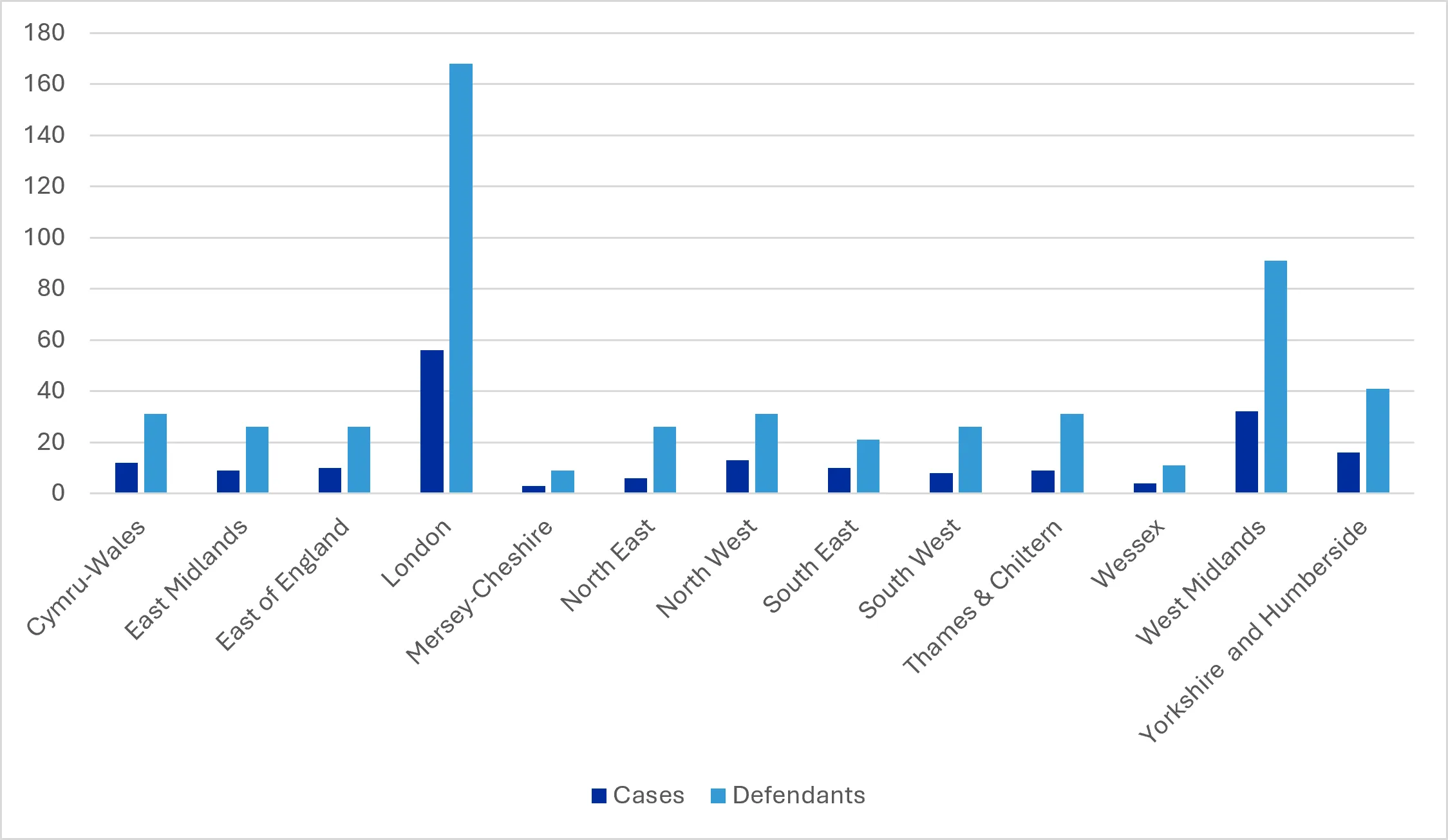
Table 6.2.2a: Number of cases and defendants by CPS Area
| Area | Cases | Defendants |
|---|---|---|
| TOTAL | 188 | 538 |
| Cymru-Wales | 12 | 31 |
| East Midlands | 9 | 26 |
| East of England | 10 | 26 |
| London | 56 | 168 |
| Mersey-Cheshire | 3 | 9 |
| North East | 6 | 26 |
| North West | 13 | 31 |
| South East | 10 | 21 |
| South West | 8 | 26 |
| Thames and Chiltern | 9 | 31 |
| Wessex | 4 | 11 |
| West Midlands | 32 | 91 |
| Yorkshire and Humberside | 16 | 41 |
As would be expected, the larger metropolitan Areas of London and the West Midlands had a higher number of cases, together with Yorkshire and Humberside. London had the most cases, with 56 cases and 168 defendants, followed by the West Midlands, with 32 cases and 91 defendants. Yorkshire and Humberside had 16 cases and 41 defendants. The North West, the Area with the fourth highest number of cases, had slightly fewer cases than Yorkshire and Humberside – 13 cases and 31 defendants.
Of the remaining Areas, Mersey-Cheshire had the smallest caseload, with 3 cases and 9 defendants. The next smallest caseloads were in Wessex, with 4 cases and 11 defendants and the North East with 6 cases and 26 defendants.
The Central Casework Divisions (CCDs) did not have any finalised joint enterprise homicide cases in the 2025-26 dataset. The CCDs have therefore not been included in the Manual Data tables or charts.
6.2.3: Number of defendants per case
Chart 6.2.3a: Total number of defendants per case
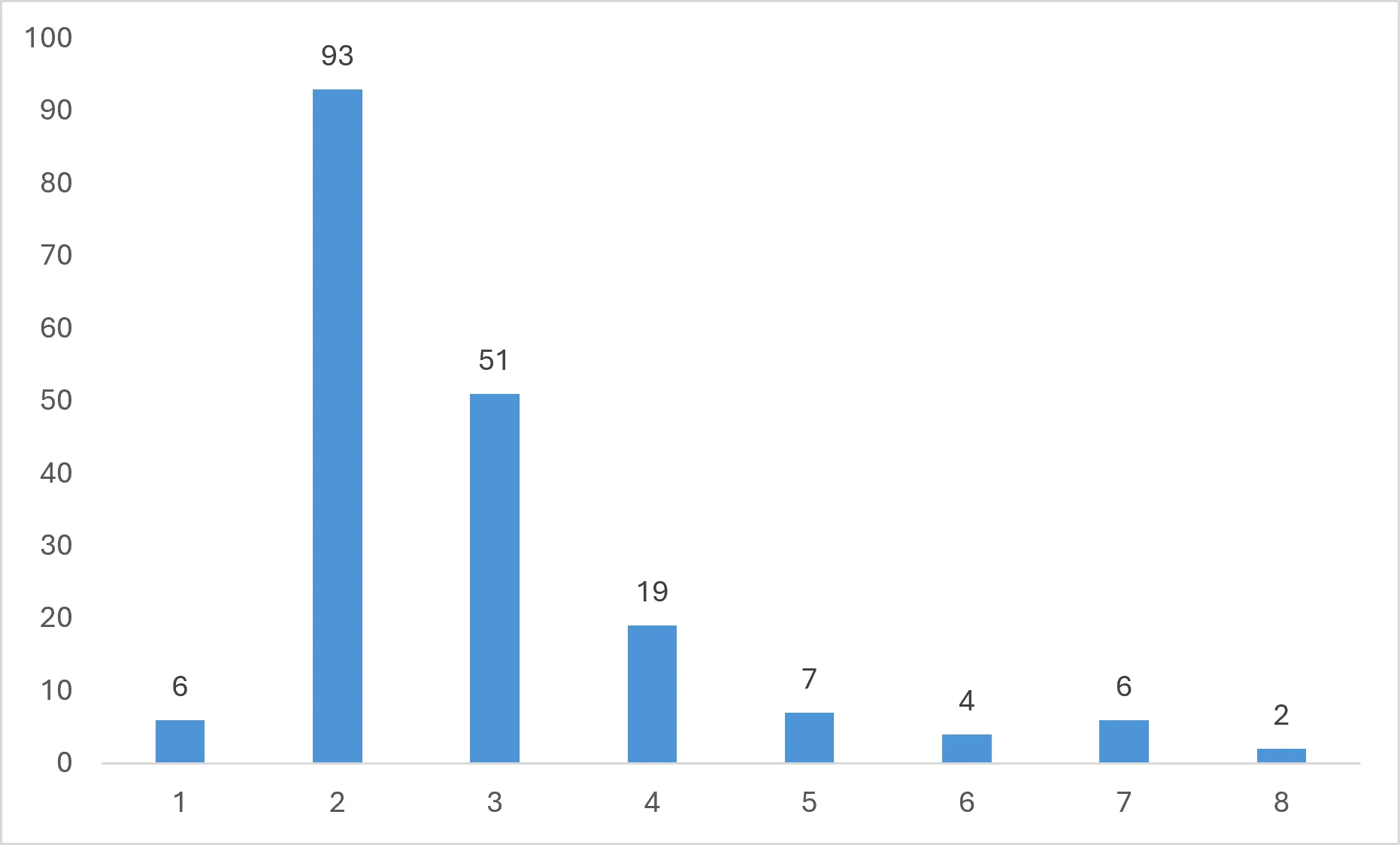
Table 6.2.3a – Total number of defendants per case
| Number of Defendants | Number of cases |
|---|---|
| 1 | 6 |
| 2 | 93 |
| 3 | 51 |
| 4 | 19 |
| 5 | 7 |
| 6 | 4 |
| 7 | 6 |
| 8 | 2 |
| 9 | 0 |
| 10 | 0 |
| 11 | 0 |
| 12 | 0 |
| Total | 188 |
The data shows that cases with fewer defendants are more prevalent in the dataset. The same prevalence was found in the 2024-25 report. In the 2025-26 scheme, 79.8% of cases involve three (3) or fewer defendants. The most prevalent number is two (2) defendants (93 cases), followed by three (3) defendants (51 cases).
The average number of defendants per case (mean) nationally is 2.90, and the median number is two (2). The lowest number is one (1) defendant (six (6) cases) and the highest number is eight defendants (two (2) cases).
Demographics
As with the system generated “flagged” data, given the small numbers at an Area level, the Area breakdowns, including percentages, should be treated with caution, particularly where they relate to a small number of cases and / or defendants, and where in some cases there may be missing data (e.g. self-defined ethnicity).
6.2.4: Age – overall
Chart 6.2.4a: Overall ages of defendants
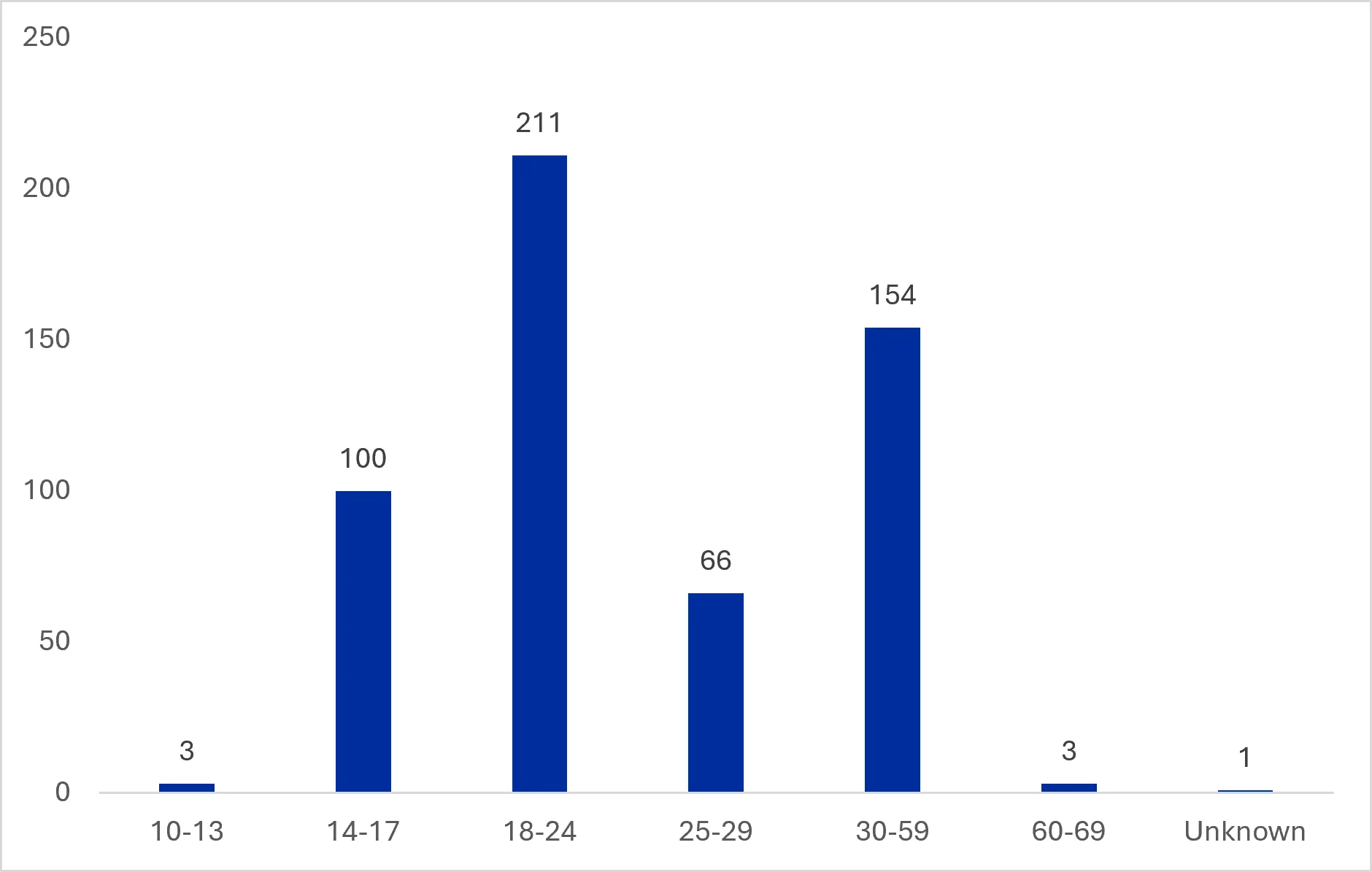
Table 6.2.4a: Overall ages of defendants
| Age | Defendants | Percentage of total |
|---|---|---|
| Total | 538 | |
| 10-13 | 3 | 0.6% |
| 14-17 | 100 | 18.6% |
| 18-24 | 211 | 39.2% |
| 25-29 | 66 | 12.3% |
| 30-59 | 154 | 28.6% |
| 60-69 | 3 | 0.6% |
| 70-79 | 0 | 0.0% |
| 80 and above | 0 | 0.0% |
| Unknown | 1 | 0.2% |
As with the report for 2024-25, the age band 25-59 used in the system generated dataset has been divided into two separate age bands (25-29 and 30-59) for the purposes of the manual dataset. This is to provide more granular data.
The highest number of defendants (211) fall into the 18-24 category, representing 39.2% of the total, followed by 154 defendants in the 30-59 age group (28.6%) and 100 in the 14-17 age range (18.6%). 19.1% of defendants were children (10-13 and 14-17), and 58.4% of defendants were under 25.
6.2.5: Age breakdown by Area
Chart 6.2.5a: Age breakdown by Area
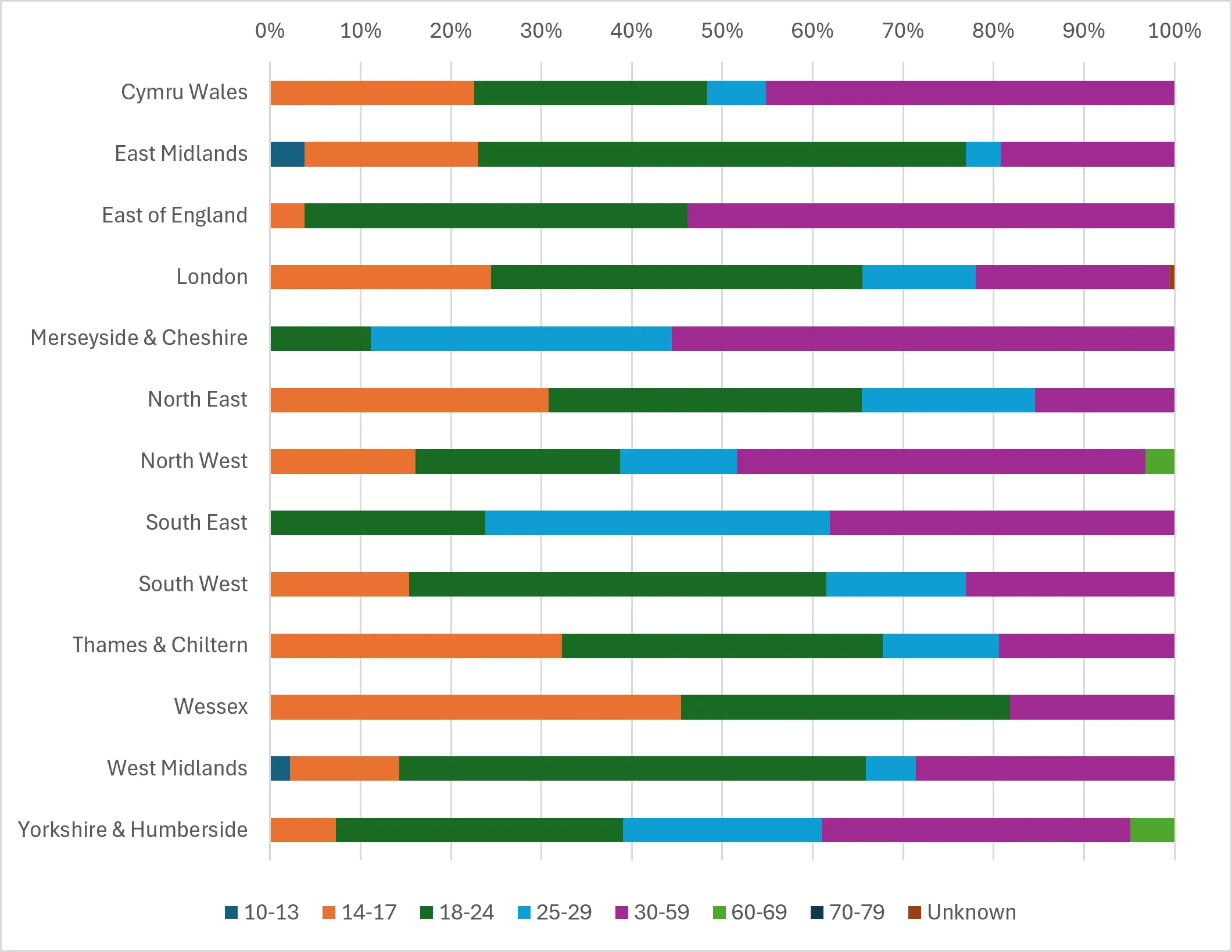
Table 6.2.5a: Percentage Age breakdowns by Area
| Area | 13 and under | 14-17 | 18-24 | 25-29 | 30-59 | 60-69 | 70-79 | Unknown |
|---|---|---|---|---|---|---|---|---|
| Total | 0.6% | 18.6% | 39.2% | 12.3% | 28.6% | 0.6% | 0.0% | 0.2% |
| Cymru-Wales | 0.0% | 22.6% | 25.8% | 6.5% | 45.2% | 0.0% | 0.0% | 0.0% |
| East Midlands | 3.8% | 19.2% | 53.8% | 3.8% | 19.2% | 0.0% | 0.0% | 0.0% |
| East of England | 0.0% | 3.8% | 42.3% | 0.0% | 53.8% | 0.0% | 0.0% | 0.0% |
| London | 0.0% | 24.4% | 41.1% | 12.5% | 21.4% | 0.0% | 0.0% | 0.6% |
| Mersey-Cheshire | 0.0% | 0.0% | 11.1% | 33.3% | 55.6% | 0.0% | 0.0% | 0.0% |
| North East | 0.0% | 30.8% | 34.6% | 19.2% | 15.4% | 0.0% | 0.0% | 0.0% |
| North West | 0.0% | 16.1% | 22.6% | 12.9% | 45.2% | 3.2% | 0.0% | 0.0% |
| South East | 0.0% | 0.0% | 23.8% | 38.1% | 38.1% | 0.0% | 0.0% | 0.0% |
| South West | 0.0% | 15.4% | 46.2% | 15.4% | 23.1% | 0.0% | 0.0% | 0.0% |
| Thames and Chiltern | 0.0% | 32.3% | 35.5% | 12.9% | 19.4% | 0.0% | 0.0% | 0.0% |
| Wessex | 0.0% | 45.5% | 36.4% | 0.0% | 18.2% | 0.0% | 0.0% | 0.0% |
| West Midlands | 2.2% | 12.1% | 51.6% | 5.5% | 28.6% | 0.0% | 0.0% | 0.0% |
| Yorkshire and Humberside | 0.0% | 7.3% | 31.7% | 22.0% | 34.1% | 4.9% | 0.0% | 0.0% |
Comparing the age categories of defendants across CPS Areas, there are some differences.
There are three (3) Areas with more than 40 defendants: London (combined), West Midlands and Yorkshire and Humberside. Percentages of defendants in the 14-17 category in these Areas ranged from 7.3% in Yorkshire and Humberside, to 24.4% in London. In the West Midlands the figure was 12.1%. Two Areas (Mersey-Cheshire and the South East), had no defendants falling into the 14-17 age range. However, Mersey-Cheshire had low numbers of cases overall (three), with the South East having ten (10) cases.
The highest number of defendants is in the 18-24 category. Of the three Areas with the most defendants, two Areas exceeded the overall average of 39.2% with the West Midlands and London averaging 51.6% and 41.1% respectively, whilst Yorkshire and Humberside fell below the overall average with 31.7%.
In the next highest group, 30-59 with an average of 28.6% of defendants falling into this category, of the three Areas with the overall highest number of defendants London had a lower percentage (21.4%), West Midlands had the same percentage as the total average (28.6%), whilst Yorkshire and Humberside had a higher percentage (34.1%).
6.2.6: CPS Prosecutions by ethnicity
The ethnicity data below refers to self-defined ethnicity – see CPS Data Limitations in the Data Annex for further information.
Chart 6.2.6a: Overall self-defined ethnicity by defendant
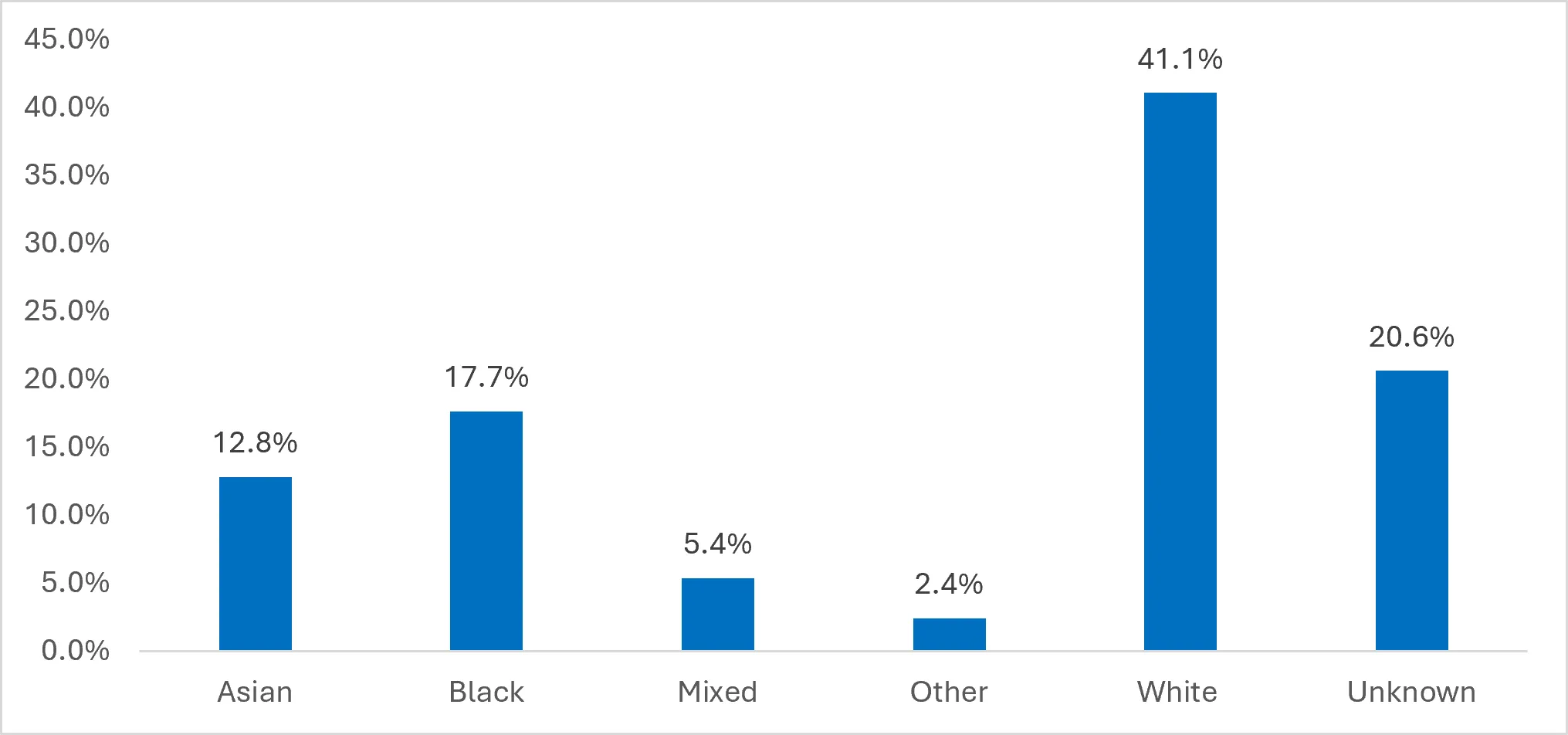
Table 6.2.6a: Overall self-defined ethnicity by defendant
| Self-Defined Ethnicity | Defendants | Percentage of total defendants |
|---|---|---|
| Total | 538 | |
| Asian | 69 | 12.8% |
| Black | 95 | 17.7% |
| Mixed | 29 | 5.4% |
| Other | 13 | 2.4% |
| White | 221 | 41.1% |
| Unknown | 111 | 20.6% |
The largest category of ethnicity is ‘White’, with 41.1% of defendants falling into this category. ‘Black’ is the next largest at 17.7% and ‘Asian’ at 12.8%.
However, ethnicity was unknown for 20.6% of defendants. The ‘unknown’ category combines the ‘Not Stated’ and ‘Not Provided’ categories from the system generated data. In general, the CPS receives information relating to defendant characteristics from the police. Where this information is missing for cases included in the Joint Enterprise Monitoring Scheme, it has been possible to obtain missing data for defendant ethnicity in some, but not all, cases. The CPS is, however, working closely with policing partners to improve ethnicity data quality through stronger data-sharing arrangements.
6.2.7: Ethnicity – Area breakdown
Chart 6.2.7a: Self-defined ethnicity by Area
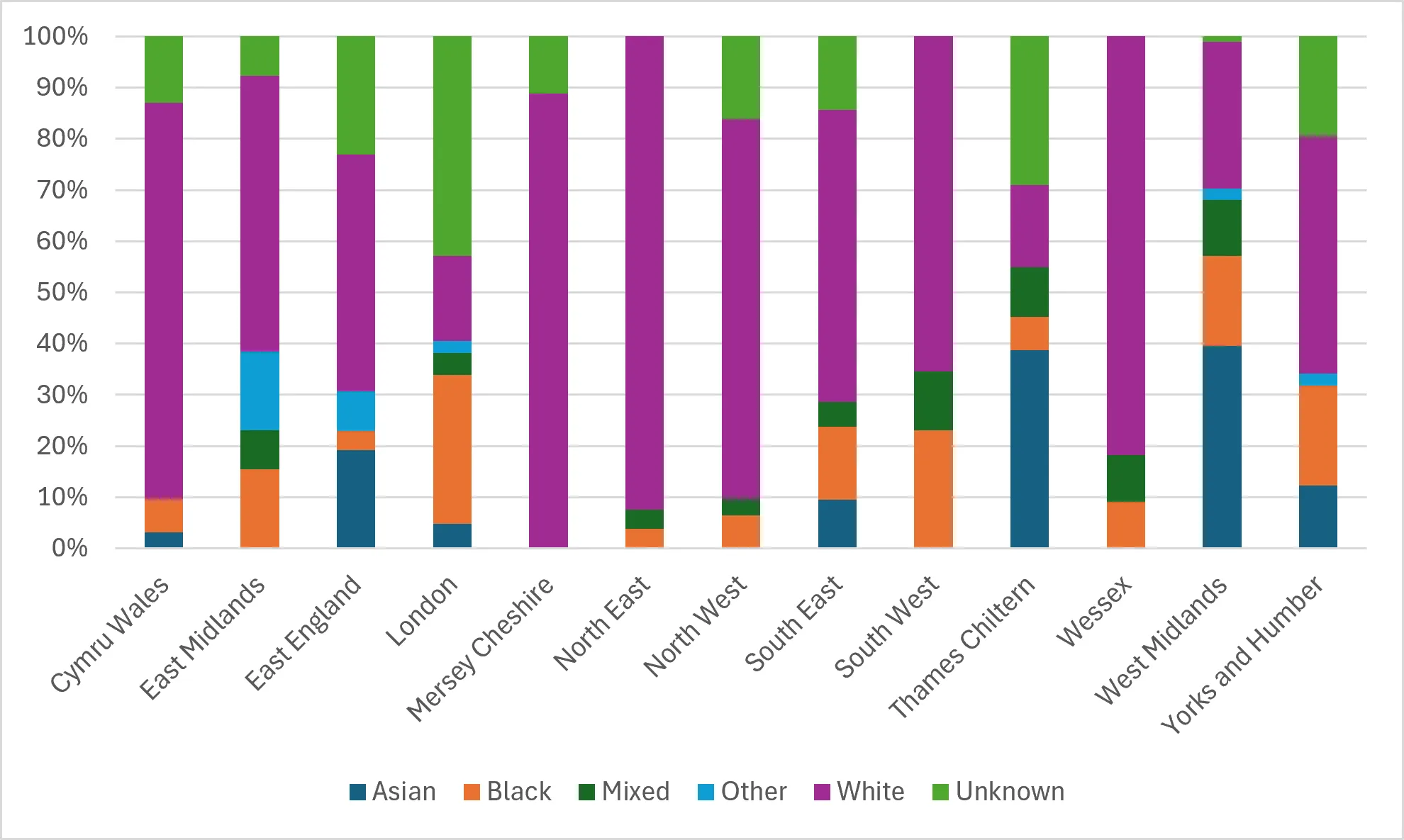
Table 6.2.7a: Percentage Self-Defined Ethnicity by Area
| Area | Asian | Black | Mixed | Other | White | Unknown |
|---|---|---|---|---|---|---|
| Total | 12.8% | 17.7% | 5.4% | 2.4% | 41.1% | 20.6% |
| Cymru-Wales | 3.2% | 6.5% | 0.0% | 0.0% | 77.4% | 12.9% |
| East Midlands | 0.0% | 15.4% | 7.7% | 15.4% | 53.8% | 7.7% |
| East of England | 19.2% | 3.8% | 0.0% | 7.7% | 46.2% | 23.1% |
| London | 4.8% | 29.2% | 4.2% | 2.4% | 16.7% | 42.9% |
| Mersey-Cheshire | 0.0% | 0.0% | 0.0% | 0.0% | 88.9% | 11.1% |
| North East | 0.0% | 3.8% | 3.8% | 0.0% | 92.3% | 0.0% |
| North West | 0.0% | 6.5% | 3.2% | 0.0% | 74.2% | 16.1% |
| South East | 9.5% | 14.3% | 4.8% | 0.0% | 57.1% | 14.3% |
| South West | 0.0% | 23.1% | 11.5% | 0.0% | 65.4% | 0.0% |
| Thames and Chiltern | 38.7% | 6.5% | 9.7% | 0.0% | 16.1% | 29.0% |
| Wessex | 0.0% | 9.1% | 9.1% | 0.0% | 81.8% | 0.0% |
| West Midlands | 39.6% | 17.6% | 11.0% | 2.2% | 28.6% | 1.1% |
| Yorkshire and Humberside | 12.2% | 19.5% | 0.0% | 2.4% | 46.3% | 19.5% |
The breakdown of defendants by ethnic background varies considerably across CPS Areas.
The Area with the highest percentage of ‘White’ defendants is the North East with 92.3% (of a total 26 defendants) compared to the national average of 41.1%. The Area with the next highest percentage is Mersey-Cheshire, the area with the smallest number of defendants overall nine (9) where 88.9% of defendants have a ‘White’ background.
In comparison in London with the largest total number of defendants (168), only 16.7% of defendants are ‘White’.
London has the highest percentage of defendants in the ‘Black’ category – with 29.2% compared to the national average of 17.7%. Of the other two Areas with the highest overall number of defendants, the percentage of defendants in the ‘Black’ category ranges from 17.6% in the West Midlands (almost the same as the national average) to 19.5% in Yorkshire and Humberside.
The ‘Asian’ category represents 12.8% of the total, with the highest figures in the West Midlands (39.6%) and Thames and Chiltern (38.7%).
Of the ‘Unknown’ category (20.6% in total), the only three (3) Areas with figures exceeding the average were London (42.9% of the total), Thames and Chiltern (29.0%) and East of England (23.1%).
6.2.8: Age and ethnicity
Chart 6.2.8a: Age band and self-defined ethnicity of defendants
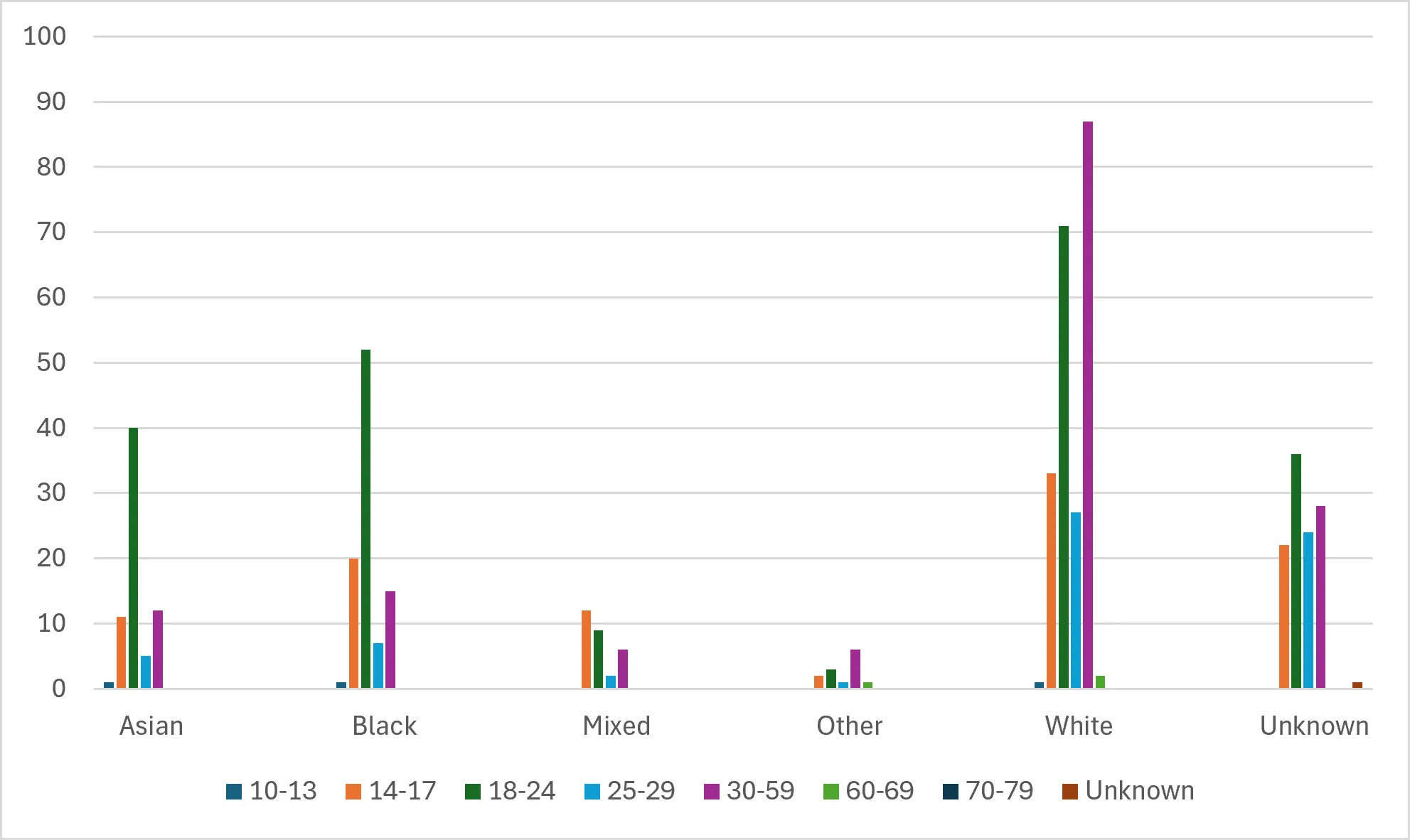
Table 6.2.8a: Age band and self-defined ethnicity of defendants
| Asian | Black | Mixed | Other | White | Unknown | |
|---|---|---|---|---|---|---|
| Total | 69 | 95 | 29 | 13 | 221 | 111 |
| 10-13 | 1 | 1 | 0 | 0 | 1 | 0 |
| 14-17 | 11 | 20 | 12 | 2 | 33 | 22 |
| 18-24 | 40 | 52 | 9 | 3 | 71 | 36 |
| 25-29 | 5 | 7 | 2 | 1 | 27 | 24 |
| 30-59 | 12 | 15 | 6 | 6 | 87 | 28 |
| 60-69 | 0 | 0 | 0 | 1 | 2 | 0 |
| 70-79 | 0 | 0 | 0 | 0 | 0 | 0 |
| 80 and above | 0 | 0 | 0 | 0 | 0 | 0 |
| Unknown | 0 | 0 | 0 | 0 | 0 | 1 |
When age and ethnicity are taken together, defendants in both the ‘Black’ category and the ‘Asian’ category were most frequently aged 18-24, while defendants in the ‘White’ category were most frequently in the 30-59 age group, followed by 18-24.
The ethnicity split within the 14-17 category (total of 100 defendants) ranges from 33 ‘White’ defendants to two (2) in the ‘Other’ category. There were 20 ‘Black’ defendants in this age band, with roughly similar numbers of ‘Mixed’ (12) and ‘Asian’ (11) defendants.
6.2.9: Ethnicity – completed prosecutions / population – overall
Chart 6.2.9a: Self-defined defendant ethnicity v population
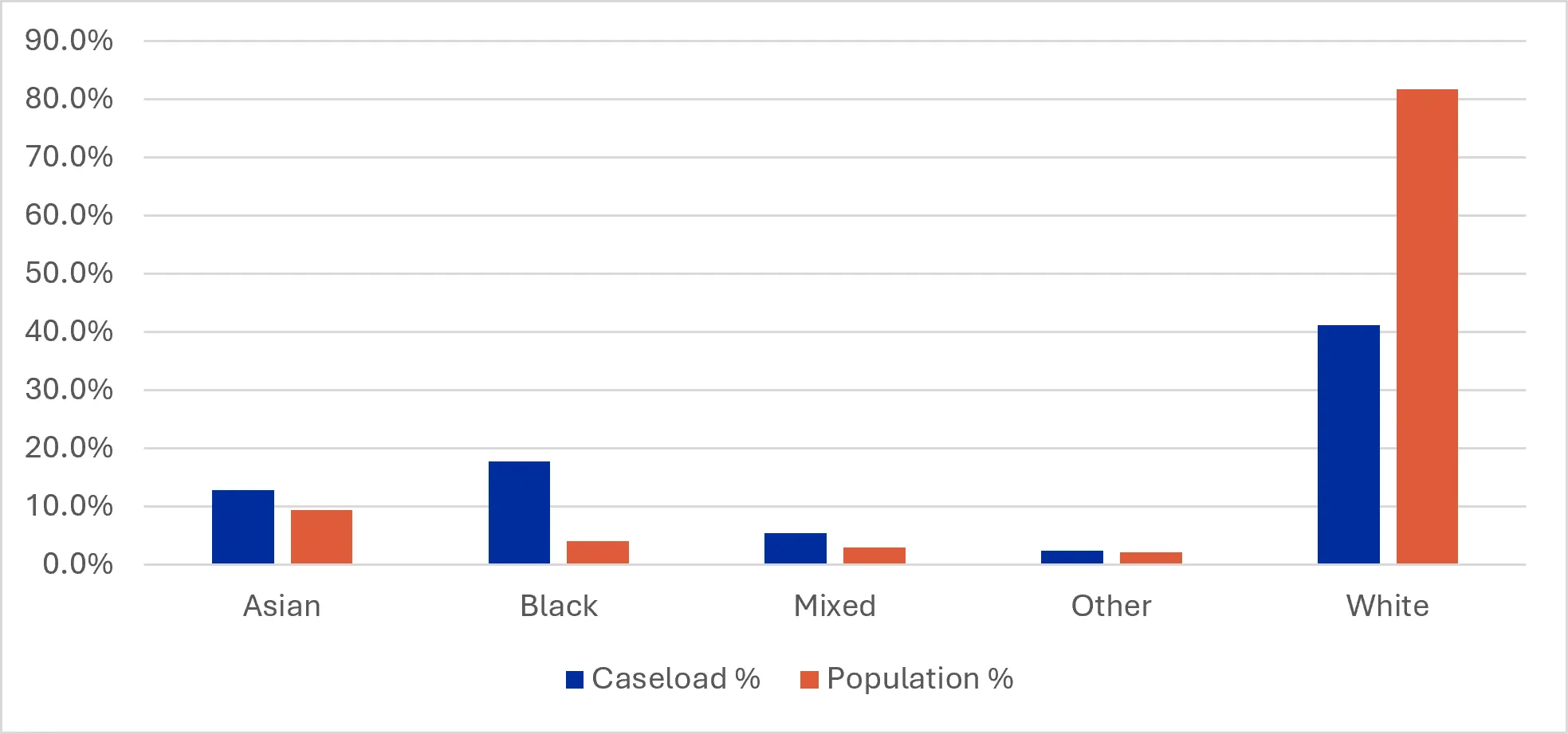
Table 6.2.9a: Self-defined defendant ethnicity v population
| Caseload % | Population % | |
|---|---|---|
| Asian | 12.8% | 9.3% |
| Black | 17.7% | 4.0% |
| Mixed | 5.4% | 2.9% |
| Other | 2.4% | 2.1% |
| White | 41.1% | 81.7% |
| Unknown | 20.6% |
Source: Population, Office for National Statistics - Census 2021
The ethnicity of the defendants subject to a completed prosecution can be compared with that of the overall population for England and Wales. As with the previous report, note that the ethnicity population data is based on the ONS/census data (2021).
For ‘Asian’, ‘Black’, ‘Mixed’ and ‘Other’, the proportion in the CPS caseload exceeds that of the overall population, by various amounts.
The proportion of Black defendants in the CPS caseload exceeds the population considerably, 17.7% of the CPS caseload, compared with 4.0% of the population.
The percentage of defendants in the Mixed category is 5.4% and in the Asian category is 12.8%, compared with 2.9% and 9.3% respectively of the population as a whole.
6.2.10: Ethnicity – completed prosecutions / population – Area breakdown
Table 6.2.10a: Self-defined defendant ethnicity v population by CPS Area
| Area | Asian | Black | Mixed | Other | White | |
|---|---|---|---|---|---|---|
| Total | Caseload | 12.8% | 17.7% | 5.4% | 2.4% | 41.1% |
| Population | 9.3% | 4.0% | 2.9% | 2.1% | 81.7% | |
| Cymru-Wales | Caseload | 3.2% | 6.5% | 0.0% | 0.0% | 77.4% |
| Population | 2.9% | 0.9% | 1.6% | 0.9% | 93.8% | |
| East Midlands | Caseload | 0.0% | 15.4% | 7.7% | 15.4% | 53.8% |
| Population | 7.9% | 2.6% | 2.4% | 1.3% | 85.9% | |
| East of England | Caseload | 19.2% | 3.8% | 0.0% | 7.7% | 46.2% |
| Population | 4.2% | 2.3% | 2.4% | 1.1% | 90.1% | |
| London | Caseload | 4.8% | 29.2% | 4.2% | 2.4% | 16.7% |
| Population | 20.7% | 13.5% | 5.7% | 6.3% | 53.8% | |
| Mersey-Cheshire | Caseload | 0.0% | 0.0% | 0.0% | 0.0% | 88.9% |
| Population | 2.8% | 1.1% | 1.9% | 1.2% | 93.0% | |
| North East | Caseload | 0.0% | 3.8% | 3.8% | 0.0% | 92.3% |
| Population | 3.7% | 1.0% | 1.3% | 1.0% | 93.0% | |
| North West | Caseload | 0.0% | 6.5% | 3.2% | 0.0% | 74.2% |
| Population | 11.3% | 3.0% | 2.4% | 1.6% | 81.7% | |
| South East | Caseload | 9.5% | 14.3% | 4.8% | 0.0% | 57.1% |
| Population | 5.1% | 2.1% | 2.8% | 1.4% | 88.7% | |
| South West | Caseload | 0.0% | 23.1% | 11.5% | 0.0% | 65.4% |
| Population | 2.5% | 1.3% | 2.0% | 0.8% | 93.5% | |
| Thames and Chiltern | Caseload | 38.7% | 6.5% | 9.7% | 0.0% | 16.1% |
| Population | 12.1% | 4.0% | 3.6% | 2.0% | 78.3% | |
| Wessex | Caseload | 0.0% | 9.1% | 9.1% | 0.0% | 81.8% |
| Population | 4.3% | 1.3% | 2.1% | 1.0% | 91.3% | |
| West Midlands | Caseload | 39.6% | 17.6% | 11.0% | 2.2% | 28.6% |
| Population | 13.3% | 4.5% | 3.0% | 2.1% | 77.0% | |
| Yorkshire and Humberside | Caseload | 12.2% | 19.5% | 0.0% | 2.4% | 46.3% |
| Population | 9.1% | 2.2% | 2.2% | 1.5% | 85.1% |
At an Area level (where the comparison is with the local population), black defendants are overrepresented in all CPS Areas except for Mersey-Cheshire (although note the small numbers of defendants in some of these Areas).
Asian defendants are overrepresented in six (6) CPS Areas (Cymru-Wales, East of England, South East, Thames and Chiltern, West Midlands and Yorkshire and Humberside).
Role of the defendant – overall, principal or secondary
6.2.11: Average number of defendants by Area – principal and secondary
Chart 6.2.11a: Mean average number of defendants by Area – overall, principal and secondary
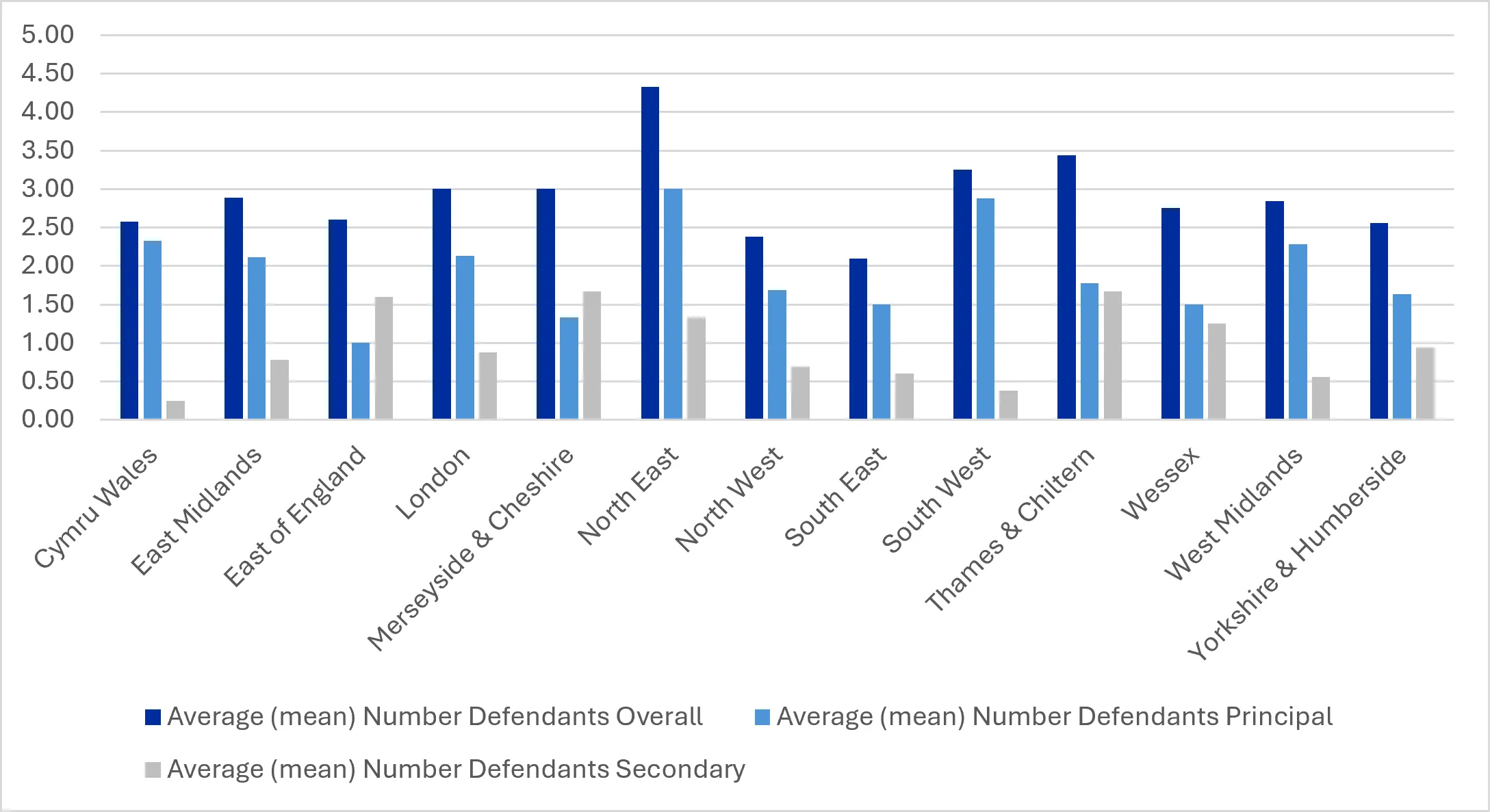
Table 6.2.11a: Mean average number of defendants by Area – overall, principal and secondary
| Area | Average (Mean) Number of Defendants Overall | Average (Mean) Number of Defendants Principal | Average (Mean) Number of Defendants Secondary |
|---|---|---|---|
| Total | 2.90 | 1.93 | 0.97 |
| Cymru-Wales | 2.58 | 2.33 | 0.25 |
| East Midlands | 2.89 | 2.11 | 0.78 |
| East of England | 2.60 | 1.00 | 1.60 |
| London | 3.00 | 2.13 | 0.88 |
| Mersey-Cheshire | 3.00 | 1.33 | 1.67 |
| North East | 4.33 | 3.00 | 1.33 |
| North West | 2.38 | 1.69 | 0.69 |
| South East | 2.10 | 1.50 | 0.60 |
| South West | 3.25 | 2.88 | 0.38 |
| Thames and Chiltern | 3.44 | 1.78 | 1.67 |
| Wessex | 2.75 | 1.50 | 1.25 |
| West Midlands | 2.84 | 2.28 | 0.56 |
| Yorkshire and Humberside | 2.56 | 1.63 | 0.94 |
The number of principal defendants (379) is considerably higher than secondary defendants (159). See Section 2 (Background) above for an explanation of the difference between a principal and a secondary defendant.
Compared to the average number of defendants per case (mean) of 2.90, the average is 1.93 principals and 0.97 secondaries, with all Areas except the East of England and Mersey-Cheshire having a higher proportion of principal rather than secondary defendants.
There is some Area variation, with the average number of defendants per case ranging from 2.10 in the South East to 4.33 in the North East.
The fact that the average number of principal defendants exceeds the average number of secondary defendants per case reflects the nature of the offending, whereby the ‘principal’ is considered to have committed the offence, and the ‘secondary’ has assisted the principal in the commission of the offence. In cases where there is a ‘group’ attack on a victim, depending on the circumstances and evidence, all defendants may be prosecuted as joint principals.
Data on the principal or secondary role of a defendant is not available from the monitoring flagged dataset. The data is obtained directly from Areas, from information gathered during the CMP meetings.
6.2.12: Sex – principal / secondary
Chart 6.2.12a: Sex of principal and secondary defendants
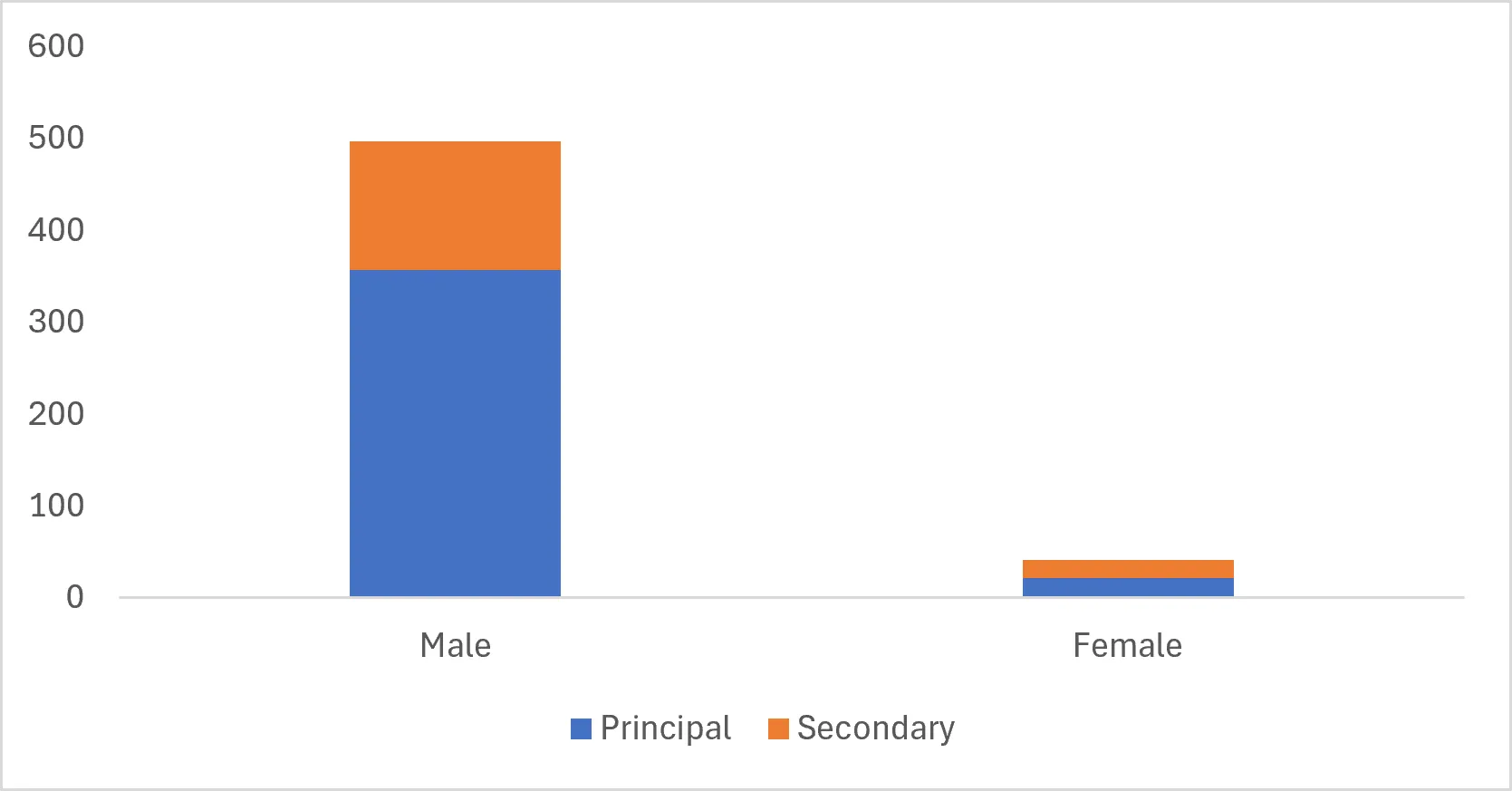
Table 6.2.12a: Sex of principal and secondary defendants
| Sex | Principal | Secondary | Principal (percentage of sex) | Secondary (percentage of sex) |
|---|---|---|---|---|
| Total | 379 | 159 | ||
| Male | 357 | 140 | 71.8% | 28.2% |
| Female | 22 | 19 | 53.7% | 46.3% |
92.4% of defendants are male (497). Of the 41 female defendants, slightly more were in the principal category than the secondary. A larger proportion of males fell into the principal category (71.8%) than the secondary.
6.2.13: Ethnicity – principal / secondary
Chart 6.2.13a: Self-defined ethnicity of principal and secondary defendants
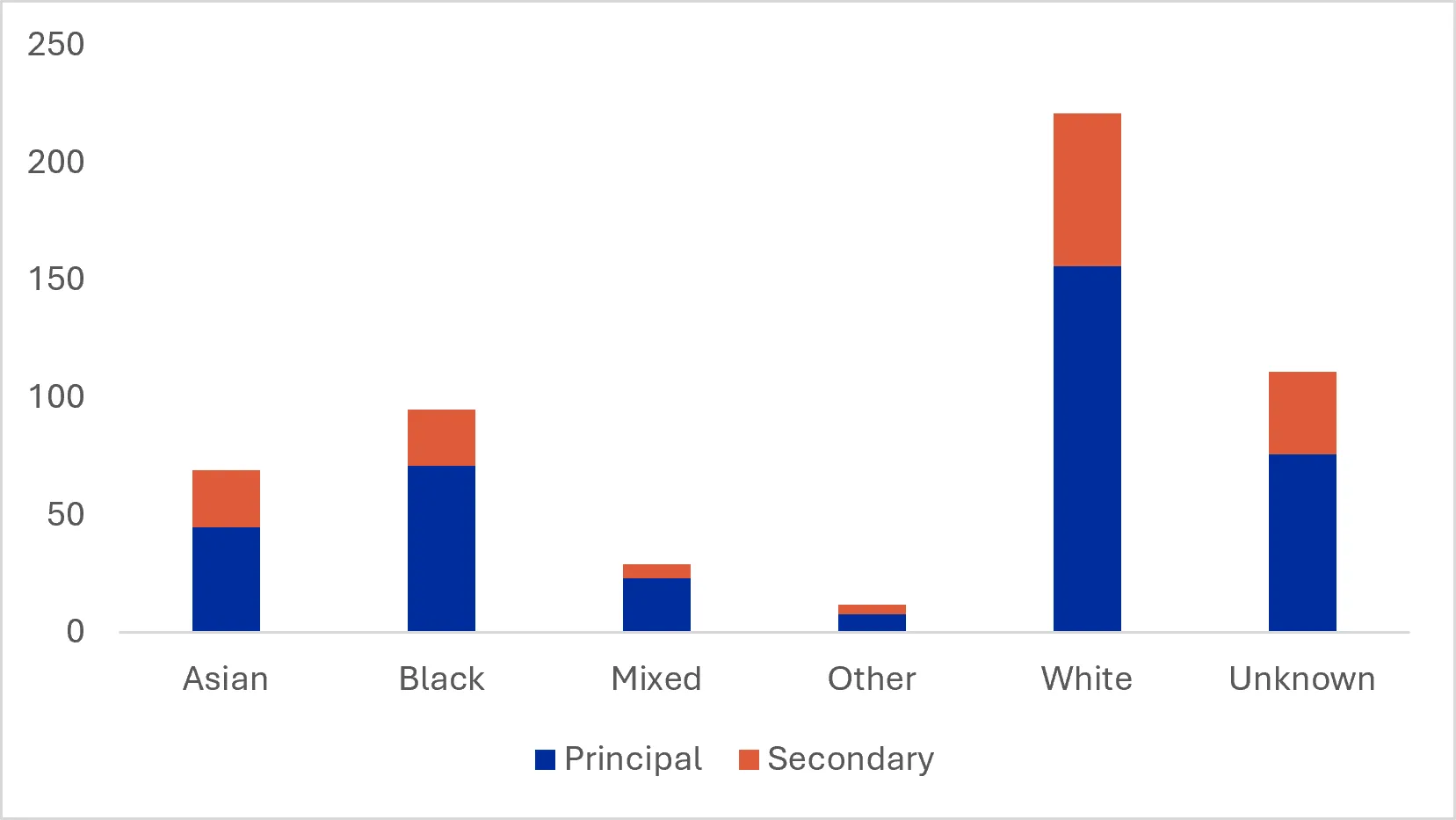
Table 6.2.13a: Self-defined ethnicity of principal and secondary defendants
| Self-Defined Ethnicity | Principal | Secondary | Principal (Percentage of Ethnicity) | Secondary (Percentage of Ethnicity) |
|---|---|---|---|---|
| Total | 379 | 159 | 70.4% | 29.6% |
| Asian | 45 | 24 | 65.2% | 34.8% |
| Black | 71 | 24 | 74.7% | 25.3% |
| Mixed | 23 | 6 | 79.3% | 20.7% |
| Other | 8 | 4 | 66.7% | 33.3% |
| White | 156 | 65 | 70.6% | 29.4% |
| Unknown | 76 | 35 | 68.5% | 31.5% |
When broken down by ethnicity the group with the highest percentage of principal defendants is the ‘Mixed’ category. The group with the smallest percentage of principal defendants is the ‘Asian’ category.
6.2.14: Cases prosecuted as “Gang”-related
Chart 6.2.14a: Number of cases prosecuted as “gang” related
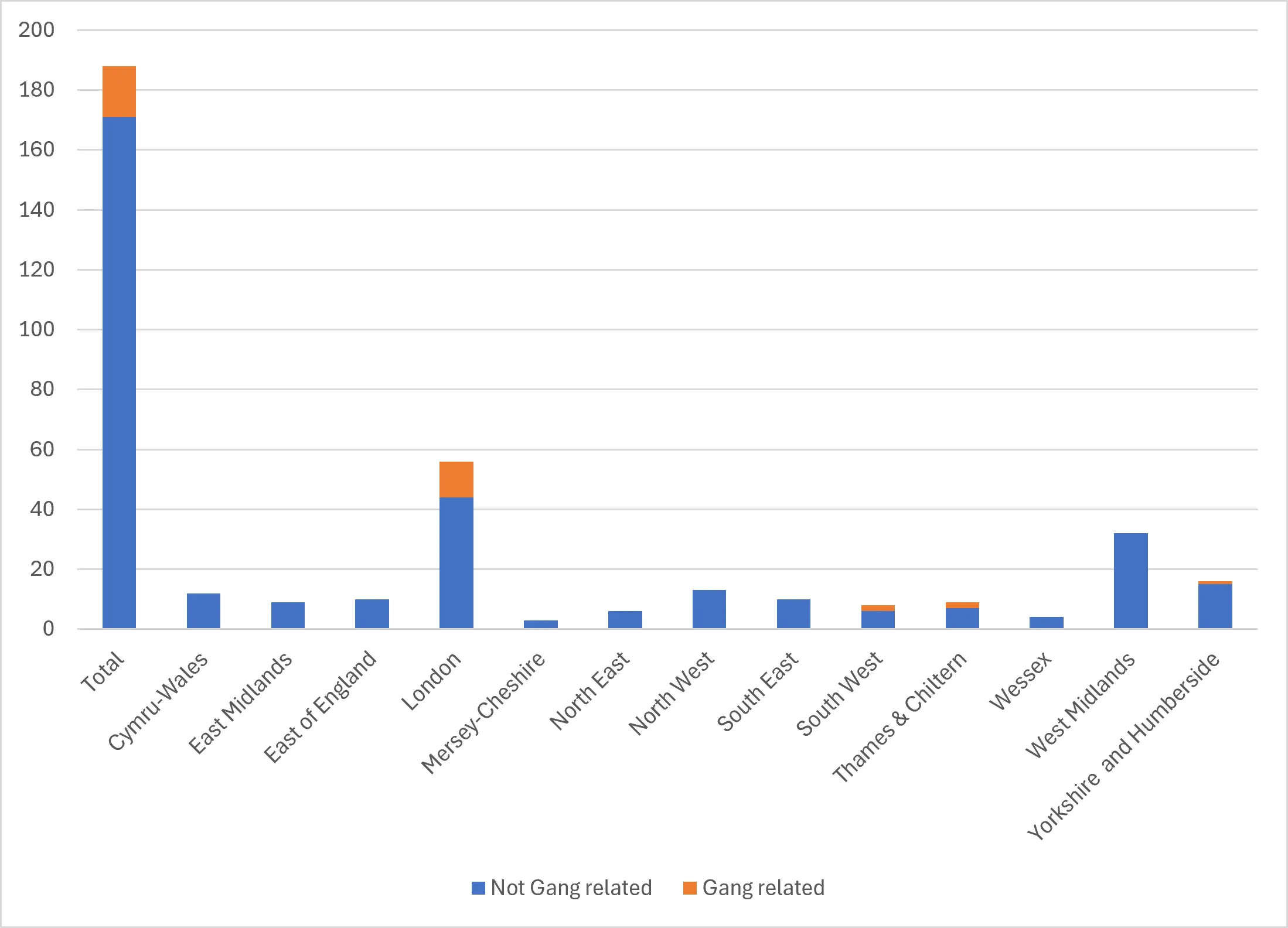
Table 6.2.14a: Number of cases prosecuted as “gang” related
| Area | Not Gang related | Gang related | % Gang related |
|---|---|---|---|
| Total | 171 | 17 | 9.0 |
| Cymru-Wales | 12 | 0 | 0.0 |
| East Midlands | 9 | 0 | 0.0 |
| East of England | 10 | 0 | 0.0 |
| London | 44 | 12 | 21.4 |
| Mersey-Cheshire | 3 | 0 | 0.0 |
| North East | 6 | 0 | 0.0 |
| North West | 13 | 0 | 0.0 |
| South East | 10 | 0 | 0.0 |
| South West | 6 | 2 | 25.0 |
| Thames and Chiltern | 7 | 2 | 22.2 |
| Wessex | 4 | 0 | 0.0 |
| West Midlands | 32 | 0 | 0.0 |
| Yorkshire and Humberside | 15 | 1 | 6.3 |
Of the 188 cases, the prosecution sought to adduce evidence of alleged ‘gang’-related offending in 17 of them (9.0%). 70.6% of these cases were in London (12).
Data on whether a case was considered “gang-related” is not available from the system generated dataset. This data is obtained directly from Areas, from information gathered during the CMP meetings. As with other elements considered at the CMP meeting, the assessment as to whether there is a ‘gang’ element to the case or whether the prosecution should advance evidence of this in court may change during the life of a case.
6.2.15: Mental health, including neurodiverse conditions
Table 6.2.15a: Number of defendants with a mental health issue
| Mental health issue | Defendants | Percentage of total defendants |
|---|---|---|
| Total | 538 | |
| Yes | 58 | 10.8% |
| Unknown | 480 | 89.2% |
Mental health issues were reported for 58 defendants out of the total 538, representing 10.8%. This includes neurodiverse conditions.
Information on whether each individual defendant was deemed to have any mental health issues was gathered through a field on the CMP form asking “mental health issues identified?”.
Note that the legal team complete the CMP Form with the data available to them at the time of the meeting. Mental health issues affecting a defendant may come to light at a later date and would be kept under review throughout the life of a case. However, the updated information may not be available for the purposes of the monitoring scheme.
Victims
This report marks the first time that victim data has been included in our reporting, providing a new baseline for understanding information about victims in these cases and future reporting.
The CPS supports victims and witnesses through the Victims Programme, using lived experience and feedback to improve communication. Victim Service Standards set clear expectations for consistent, empathetic support, backed by staff training.
Special Measures help vulnerable, intimidated and child witnesses give their best evidence. The CPS supports eligible victims by applying for appropriate measures where needed, including registered intermediaries for some child victims, and provides video guides to help victims understand their options.
The CPS also offers an enhanced service to bereaved families through its Bereaved Families Scheme, which provides opportunities to meet with prosecutors at key stages of the criminal justice process. In March 2026, we began delivering new training, helping colleagues to understand traumatic grief and effectively support bereaved families.
6.2.16: Number of cases and victims
As stated previously, the Manual data included 188 cases finalised in the 2025-26 financial year, with 538 defendants.
Every case has at least one victim, in some cases more. There were 218 homicide or attempted homicide victims from the cases included in this year’s report.
6.2.17: Number of victims per case
Chart 6.2.17a: Number of victims per case
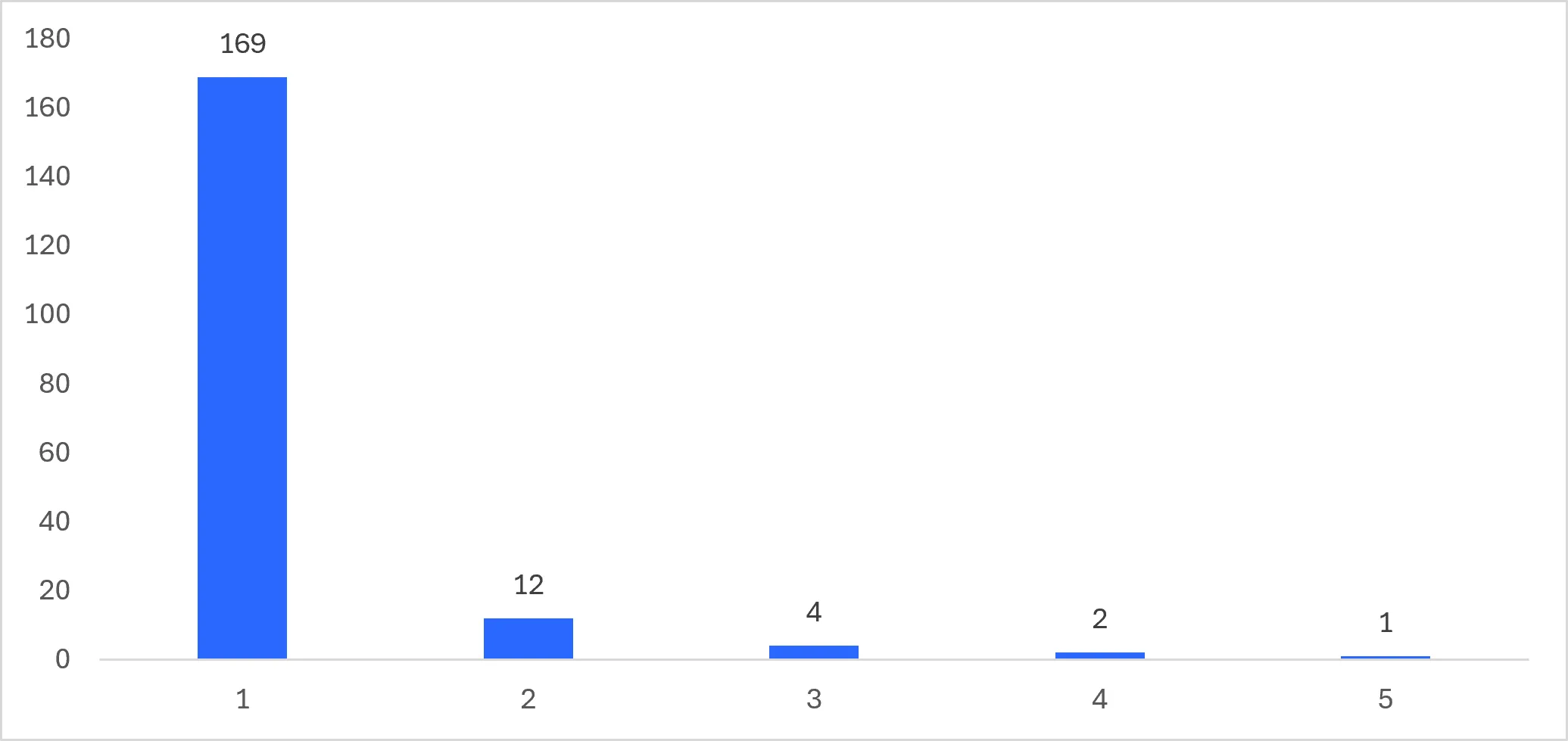
Table 6.2.17a: Number of victims per case
| Number of cases | Number of victims |
|---|---|
| 169 | 1 |
| 12 | 2 |
| 4 | 3 |
| 2 | 4 |
| 1 | 5 |
In the majority of cases there was a single victim (169). In some cases, however, there were more. There were twelve cases with two (2) victims, four (4) cases with three (3), two (2) cases with four victims, and one (1) with five (5).
Joint enterprise homicide or attempted homicide cases which resulted in more than one victim included those where fires were set deliberately at the homes of victims, vehicles used as weapons, drive-by shootings, and stabbings following violence between two groups.
6.2.18: Ages – victims
Chart 6.2.18a: Ages – victims
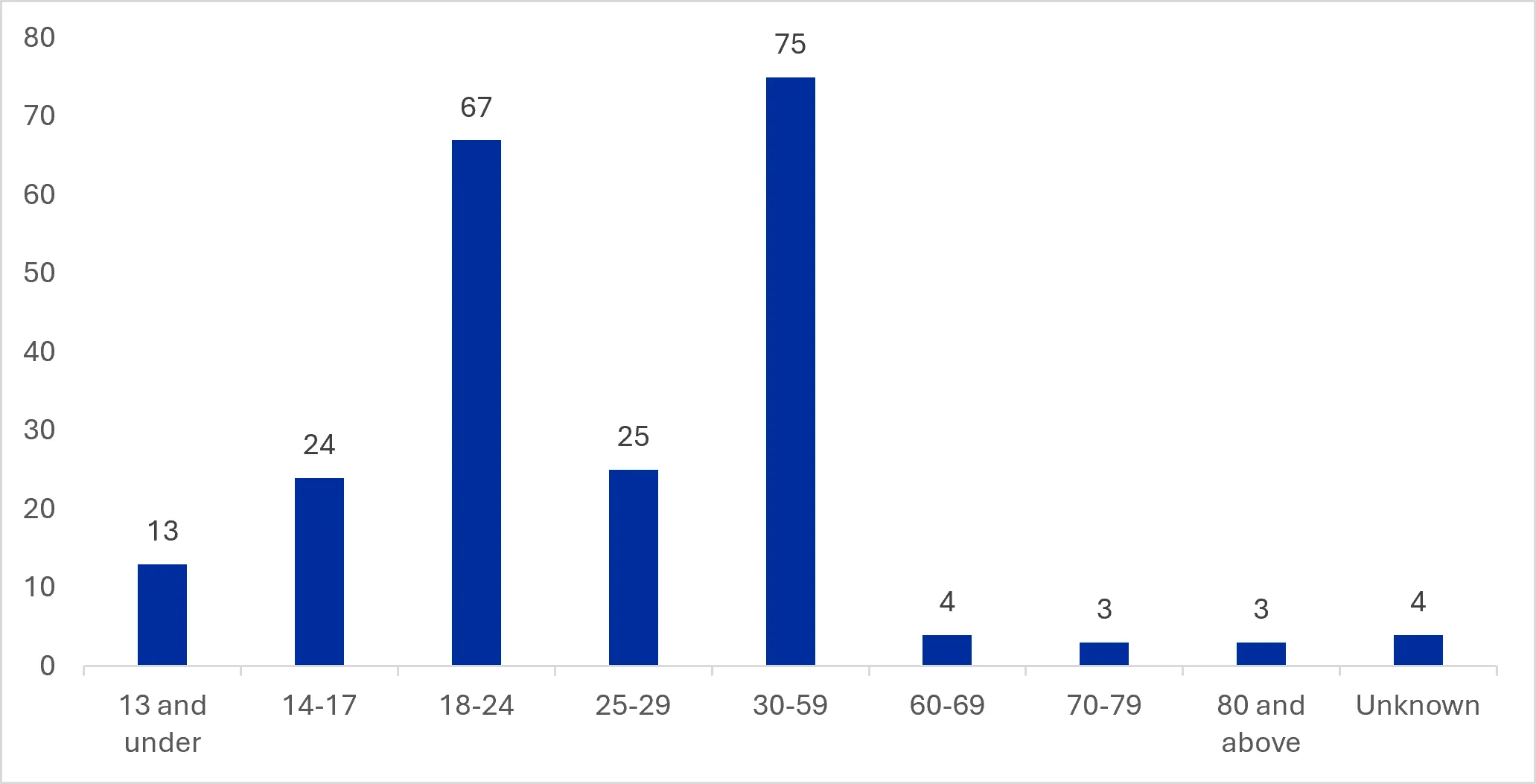
Table 6.2.18a: Ages – victims
| Victim ages | Number of victims | Percentage of victims |
|---|---|---|
| 13 and under | 13 | 6.0% |
| 14-17 | 24 | 11.0% |
| 18-24 | 67 | 30.7% |
| 25-29 | 25 | 11.5% |
| 30-59 | 75 | 34.4% |
| 60-69 | 4 | 1.8% |
| 70-79 | 3 | 1.4% |
| 80 and above | 3 | 1.4% |
| Unknown | 4 | 1.8% |
| 218 |
Thirteen of the victims (6.0% of all victims) in these joint enterprise cases were aged 13 or under.
These cases reflect the wide-ranging nature of the cases prosecuted as joint enterprise homicide and attempted homicide, including for babies and very young children where family members and care givers have been charged with murder, manslaughter, or causing or allowing the death of a child.
In the 14-17 age range there were 24 victims (11.0% of all victims). At the other end of the age range were six (6) victims aged seventy and above, with three (3) of these victims aged eighty and above.
The two age ranges with the highest number of victims were the 30-59 age range, with 75 victims and the 18-24 age group with 67 victims. These two age ranges also had the highest number of defendants, although for defendants the highest number was in the 18-24 age group with 211 defendants and 154 defendants in the 30-59 age group.
There were 25 victims in the 25-29 age category, and four (4) in the 60-69 category.
37 of the victims were children (13 and under, and 14-17), representing 17.0% of the total. 104 of the victims (47.7%) were under 25.
6.2.19: Ethnicity – victims
Ethnicity is reported for suspects and defendants only. We have not published manual data on the ethnicity of victims. Although details of ethnicity is available for some victims, the percentage of victims for which the ethnicity is recorded as “unknown” precludes any meaningful analysis. This is particularly the case for the victims of homicide offences. This approach to our manual dataset is in line with general CPS data publication practice for system generated data.
6.2.20: Sex of victims
Table 6.2.20a: Sex - Victims
| Victims | Percentage of victims | |
|---|---|---|
| Male | 195 | 89.4% |
| Female | 23 | 10.6% |
| Unknown | 0 | 0.0% |
| Total | 218 |
The majority of the victims (195) were male (89.4%), with 23 female victims (10.6%).
7: Engagement and next steps
The CPS continues to engage with a range of stakeholders at both national and local level to understand their perspectives and ensure our approach in the application of joint enterprise remains informed, relevant, and responsive to the views of all involved.
Other engagement included discussions with parliamentarians, criminal justice partners, academics, legal practitioners, and families directly impacted by joint enterprise prosecutions. These conversations provided valuable insight into the issues of greatest concern and inform our understanding of the emerging issues and support a coordinated, evidence-led approach to improving outcomes in joint enterprise cases.
Key points raised by stakeholders include:
- Suggestion that the CPS review how joint enterprise cases are presented, including whether the prosecution advocate’s “opening note” (written plan for their speech explaining the case to a Jury) should be scrutinised and whether senior external Counsel should be made more aware of relevant CPS work and guidance.
- Consider whether further policy or guidance is needed on cases involving victims who may have been exploited into acting as accessories to serious crime such as “county lines” drug trafficking networks.
- Issue raised about cases involving both child and adult defendants to identify any relevant issues or learning.
- Concern about how mental health, autism and neurodiversity are considered in cases involving young defendants.
Progress made:
- The CPS consultation on gang-related offending and musical expression evidence has closed. Updated guidance will be published later this year to support clear, fair and consistent prosecutorial decision-making and enable stakeholder scrutiny.
- The CPS has developed two ‘Case Strategy’ training packages for CPS staff that use case studies to examine issues of disproportionality. The first, launched in November 2025, focuses on ‘adultification’ and explores how young people, particularly from ethnic minority backgrounds, may be perceived as older and more culpable than they are. The second, launched in June 2026, addresses assumptions and misconceptions in the context of joint enterprise casework, drawing on case studies and academic research. These ‘Case Strategy Packs’ are designed to help prosecutors identify and challenge misconceptions and to support fair, independent and evidence-based decision-making.
- The CPS has produced a series of videos exploring lived experiences of racial bias in the criminal justice system, including in the context of joint enterprise, adultification, and the disproportionate treatment of children from ethnic minority backgrounds. The CPS will continue to share these resources across the organisation and with criminal justice partners to raise awareness, support learning, and help identify the risk of bias in decision-making.
- The CPS holds regular meetings with joint enterprise lead prosecutors in each Area to discuss issues and shape CPS plans and policy relating to joint enterprise. External speakers, including academics and legal practitioners, are also invited to offer fresh perspectives on prosecuting these cases.
- The CPS has launched a programme of work on women and girls as defendants, including engagement with criminal justice partners and specialist stakeholders to improve understanding of how vulnerability, coercion, exploitation and abuse can influence women’s pathways into offending and involvement in serious offending through the actions or influence of others. This work will support the development of CPS policy and operational practice in this area.
Key actions to be taken:
- The CPS will hold a National Scrutiny Panel on the use of drill music as evidence in criminal cases. The panel will bring together third sector, legal and academic stakeholders to review anonymised completed cases where drill music was considered as evidence. This will help answer stakeholder questions, gather feedback, and support a fair, transparent and proportionate approach.
- Following stakeholder concerns about the low percentage of defendants recorded as having mental health issues in last year’s scheme, we have engaged with CPS Joint Enterprise SPoCs to ensure such issues are appropriately identified and recorded, recognising that mental health issues may not become apparent until a later stage of the process. This will remain a key area of focus in the coming year. We have also worked with cross-system partners to explore how mental health-related work across the criminal justice system can be better aligned. The CPS will place particular emphasis on children and mental health issues through engagement with our network of youth justice specialist prosecutors and relevant stakeholders. In addition, work is planned to improve data collection, quality assurance, and the identification of mental health issues in joint enterprise cases.
- We will review CPS instructions to Counsel and Opening Notes in joint enterprise cases, aligned with the publication of updated guidance on gangs and drill music evidence in Autumn 2026.
- Later this year, the CPS will be rolling out a further training package on “perspective taking” understanding some of the lived experiences of those who feature disproportionately within our casework, including the wider impact of our decision making.
8: Local Scrutiny Involvement Panels
As part of the national monitoring scheme, CPS Areas are asked to convene a Local Scrutiny and Involvement Panel (LSIP) each year to review at least one completed joint enterprise case with local community representatives, academics and other experts.
Scrutiny panels help ensure the CPS approach to prosecutions is informed by lived experience and local expertise. They bring together community representatives and local experts to provide independent challenge on CPS casework decisions and the support given to victims, survivors, defendants and affected families. This year’s panel participants have included a variety of stakeholders such as representatives from the Youth Justice and Local Criminal Justice Boards, community organisations, school pupils, police officers and magistrates.
General criteria for case selection include:
- Joint enterprise homicide or attempted homicide cases involving multiple defendants from ethnic minorities (where available);
- Cases that may involve gang narratives or drill music as evidence;
- Cases that raise matters or issues worthy of scrutiny and discussion by the panel, such as, where the role of secondary parties was contested, legal applications refused by a Judge and mixed verdicts or acquittals
These cases reflect stakeholder priorities, but variation in joint enterprise case volumes across CPS Areas made it difficult for some to identify suitable cases. Cases are anonymised for scrutiny, which can also make selection of cases challenging in Areas with a small number of cases, but which are also high profile. As with last year, Areas may combine panels to increase the pool for discussion.
Key themes and learning from LSIPs
Panel discussions this year highlighted a number of themes relating to prosecutorial decision-making, fairness and public confidence in joint enterprise cases. For example:
- One panel debated the significant challenges concerning potential risks faced by witnesses. Even where legal mechanisms such as anonymity orders or hearsay evidence might have been available, the practical risks to witnesses remained a critical consideration.
- One panel benefited from the participation of members of a Young Persons Panel and students from local schools, colleges and universities. Their perspectives helped to inform discussion, particularly in relation to the experiences of children and young people, perceptions of the criminal justice system, and factors that may influence involvement in serious violence.
- One panel discussed sentencing outcomes and agreed that the sentences imposed demonstrated the court’s recognition of graduated responsibility, reinforcing confidence in the CPS approach. Panel members considered that differentiating between levels of involvement supports fairness, public confidence, and the principle that justice must be proportionate to individual culpability.
- Several panels discussed the benefits of the recently delivered CPS training package on adultification and the launch of the next engagement pack focusing on assumptions and misconceptions which utilises joint enterprise case studies.
- Discussions in one panel, focussed on the perception of individuals being found ‘guilty by association’, particularly where young people may be seen as acting in concert because of friendships or proximity to the offending. The discussion highlighted the importance of clearly evidencing an individual’s actions, intent and level of involvement in joint enterprise cases. Having reviewed the case, panel members were satisfied that the prosecutorial decisions were supported by the evidence and reflected the individual culpability of those involved.
- One panel highlighted the importance of considering the nature of any weapon involved when establishing a suspect’s level of awareness, intent and individual culpability. Panel members noted that certain weapons may provide stronger evidence of an intention to cause serious harm or death.
- Several panels emphasised the importance of a child-centred approach in cases involving children and young people, including consideration of developmental vulnerabilities, early engagement with youth expertise, effective information sharing between agencies, and enhanced scrutiny where vulnerability, exploitation, trauma or indicators of modern slavery may be present.
Panel members across the country identified several areas that could benefit from further scrutiny through future LSIPs, including:
- Continued scrutiny of complex joint enterprise cases, especially where there may be disproportionality or where there are complex issues relating to the assessment of individual roles and culpability.
- Examining cases involving serious violence where no obvious weapon is present. Panel members recognised that such cases can present particular evidential challenges, especially in relation to establishing intent and the application of joint enterprise principles.
- Cases where prosecutorial decisions evolve as the evidential picture develops. Members expressed interest in examining cases where the approach to the application of joint enterprise principles changed during the course of the investigation or prosecution. Panel members felt that studying these cases will provide valuable insights into the decision-making process and support ongoing improvements in practice.
- Cases involving allegations of gang involvement, with particular attention to the evidential basis for such claims and how these are presented. It was suggested to include cases where gang involvement is mentioned but not substantiated, as well as those involving conspiracy allegations.
- Opportunities to enhance future panel discussions through viewing CCTV evidence that has been presented in open court, to provide greater context and support panel members with a more informed understanding of the facts of a case.
9: Conclusion and next steps
During the period of 2025-26 the CPS prosecuted 188 cases of homicide and attempted homicide brought on a joint enterprise basis.
As with last year, the proportion of defendants under 18 remain notable at 19.1%, including three (3) cases involving defendants aged 10-13 years old. Most defendants were under 25 (58.4%), with the highest number in the 18-24 age group. Cases with fewer defendants also remain more common, with 79.8% involving three or fewer defendants.
Behind every joint enterprise case in this report is a victim, and tragically sometimes more than one person. These offences have a profound and lasting impact on victims, survivors, families, wider communities and life changing consequences for defendants. The CPS continues to support local and national work to reduce serious violence and homicide, particularly where children are involved as victims or defendants.
The data presented on victims in this year’s report shows that there were 218 victims of the 188 joint enterprise homicide and attempted homicide cases included in our manual dataset. 17.0% of these victims were under 18, including 13 who were aged 13 or under. 47.7% of the victims were under 25.
A small number of cases in the joint enterprise dataset remain gang-related. The CPS consultation on gang-related offending guidance has closed, and we are grateful to stakeholders for sharing their views and expertise. Updated guidance on gang-related offending and musical evidence expression will be published later this year.
Local Scrutiny and Involvement Panels remain a vital part of the Joint Enterprise Monitoring Scheme. Now in their second year, these panels provide independent local insight, strengthen transparency, and help prosecutors learn from community and stakeholder perspectives.
The Joint Enterprise Monitoring Scheme, which is an important part of the CPS Disproportionality Action Plan, will continue to be implemented in future years. As the dataset grows and we have a longer time-series, we hope to be able to identify any sustained patterns in the data.
10: Data Annex and CPS Data Limitations
This report includes a summary of statistics from the two datasets (System generated and Manual), with explanatory text. No inferential analysis has been carried out in relation to the data contained in the report.
Annex A is an Excel file containing system generated data.
Annex B is an Excel file containing manual data.
Understanding CPS data
In these data, a suspect or defendant represents one person (or on occasion ‘one company’) in a single set of proceedings, which may involve one or more charges. A set of proceedings usually relates to an incident or series of related incidents that are the subject of a police file. If a set of proceedings relates to more than one person, then each is counted as a suspect/defendant. In these proceedings the CPS refer to these as ‘multi-handed’ cases. Sometimes one person is involved in several sets of proceedings during the same year: if so, he or she is counted as a suspect/defendant on each occasion.
The casework data in these reports, comprise suspects and defendants dealt with by the 14 CPS Areas and the specialised casework handled by the Central Casework Divisions.
The data that forms the basis of this data release is derived from the CPS Case Management System (CMS) and its associated Management Information System (MIS). The data is held within a database within the MIS, based on suspects/defendants. Data has been broken down by overall volumes and proportions.
The victim data is derived from the CPS Witness Management System (WMS) and its associated Management Information System (MIS). Suspect/defendant and victim/witness data is held within separate databases within the MIS. Data cannot be correlated between the separate databases. The data tables include total data on all suspects/defendants and victims.
In relation to victim data, data is only recorded on the Witness Management System if the case is handled by a Witness Care Unit that uses the WMS. Not all cases are processed by WCUs; early guilty plea cases or more serious or sensitive cases are not channelled through the WCU. Additionally in a few police areas the WMS is not used. Therefore, data in the periods reported in the tables are likely to be understated.
The WMS records victim and witness data and, where recorded, the system includes data reporting equality profiles of victims (and witnesses). The WMS can only provide data on the volumes of victims associated with prosecution proceedings, by sex and age (where available), rather than the outcome of those prosecutions. It does not include any data which reports the volumes of victims associated with pre-charge proceedings and therefore cannot include data on police referrals and CPS charging.
Monitoring flags
The CPS maintains a central record of pre-charge and prosecution outcomes with reference to a number of case monitoring flags, including cases involving offences of child abuse, crimes against older people, domestic abuse, hate crime, modern slavery, and rape.
CPS data are dependent upon lawyers and administrative staff identifying and correctly applying the monitoring ‘flags’ or case-markers to applicable cases that are recorded on the CPS’ electronic Case Management System (CMS).
Monitoring flags are applied at case level. The flag may apply to only one suspect/defendant (in cases where a number of suspects/defendants are considered together) and equally may apply to only one offence a suspect/defendant is charged with (if a suspect/defendant is charged with more than one offence). It is not possible, other than by manually examining CPS case files, to say whether the flag applies to either one or more suspects/defendants or whether it applies to one or more offences.
The data that is produced through the application of the flag is primarily used for monitoring performance on all cases that involve allegations or charges where these categories of criminal offending apply. CPS data is accurate only to the extent that the flags have been correctly applied. Also note that:
- A flag is usually applied at the onset of any case referred by the police to the CPS and remains in place even if the charge is not proceeded with, is amended, or dropped.
- A flag may be applied at a later point which differs from that originally identified by the police.
- Although charges specifically related to a flag may be considered at the time of the pre-charge decision, the defendant may in fact be charged with another offence. Similarly, there may be cases where a person is convicted of a lesser offence than that with which they were proceeded against.
- On flagging, we regularly publish management information to aid transparency and accountability, making clear any limitations. The way we measure our data allows us to track and monitor trends, including decisions to take no further action, to properly scrutinise how we’re approaching monitored cases and highlight areas for improvement.
A flag remains in place, even if a decision is taken to charge an alternate offence or where a charge is subsequently amended, to ensure we are properly applying our policies. The flag allows us to track and monitor trends, around decision to take no further action and review all monitored cases to understand how they progress and identify potential learnings.
Joint enterprise homicide
From April 2024, all homicide and attempted homicide cases brought on a joint enterprise basis should have the Joint Enterprise monitoring flag applied to them on CMS.
The flag should also be applied to pre-charge cases where the police are seeking advice or a charging decision on an allegation of joint enterprise homicide or attempted homicide.
For these purposes homicide and attempted homicide has the same meaning as the CMS Principal Offence Category 'Homicide’, which includes offences of murder, attempted murder, manslaughter, causing or allowing the death of a child or vulnerable adult, child destruction, driving offences causing a death, and inchoate versions of all these offences.
In line with all CPS monitoring flags, the flag should be applied at the onset of any joint enterprise (or secondary liability) homicide or attempted homicide case referred by the police to the CPS. The flag will remain in place even if the charge(s) are not proceeded with, are amended, or dropped. If a case is referred by the police for other charges but at a later date charges of joint enterprise homicide/attempted homicide are preferred, the flag is applied at that point.
Pre-charge decision data
Timeliness to charge
The timeliness of the decision to charge includes both CPS time and police time and is a calculation of the number of calendar days that have elapsed since the first submission of a case was sought by the police, to the date in which the last decision was made to charge.
The data includes cases where the police have submitted a file for early advice as well as those for charging decision. The data includes cases where the police were required to submit further evidence prior to a decision to charge. This generally includes more than one submission and more investigation.
The publication has now been expanded to include a breakdown of timeliness where early advice has been sought and given and additionally where the referral was for a charging decision from the outset. Cases submitted for early advice are sent to the CPS during the investigative process and are therefore likely to record a higher number of average days to reach the point where the file is complete enough for a charging decision to be considered.
The timeliness of a charging decision is determined by three key factors: whether the case has been sent to the CPS for early advice during the investigative process, how quickly the police can complete the necessary enquiries; and how quickly the CPS can then review the evidence provided by the police and finalise the charging decision.
Timeliness to charge (mean average)
Mean average: The mean is the number you get by dividing the sum of a set of values by the number of values in the set. The ‘mean average days from referral to charge’ is calculated by dividing the sum of the number of calendar days by the number of suspects with a charge decision.
The number of calendar days being the days that have elapsed between each suspect being referred (for a charging decision or early advice) and the date each decision to charge was made.
Timeliness to charge (median)
Median average: the median is the middle number in a set of values when those values are arranged from smallest to largest. The ‘median average days from referral to charge’ is calculated by arranging the suspects by their number of calendar days in order from smallest to largest and then identifying the middle number.
The number of calendar days being the days that have elapsed between each suspect being referred (for a charging decision or early advice) and the date each decision to charge was made.
Percentage of consultations in 28 days
This measure is the proportion of pre-charge consultations completed within 28 days of receipt of material. The consultation to which the measure applies may come from the first submission of the file, or the second or subsequent submission following an action plan.
Cases not included in the measure:
- Cases in which the suspect is in custody and the charging advice is urgent and have a target of three (3) hours rather than 28 days. Only certain police forces (who are live on the charging model) identify these consultations.
- Consultations with a ‘Pending Response – Further Investigation’ outcome are excluded, because these are not legal reviews – they are a means to administratively finalise cases when (for example) there has been no update to an action plan after 3 months.
- Early Advice consultations are excluded, because they deal with early-stage investigative advice before a pre-charge decision is sought.
- Files rejected at triage which are sent back to the police and not submitted for a consultation.
Average consultations
A case referred to the CPS for a pre-charge decision may require more than one consultation before the charging decision can be made. Average consultations are derived for each suspect by dividing the number of completed consultations recorded on pre-charge cases by the number of suspects with completed charging decisions.
Pre-charge decisions
Of all the suspects referred by the police, pre-charge decisions are those where CPS has completed making a decision on whether to charge, take no further action, recommend an out of court disposal, administratively finalise or ‘other.’ The volume of pre-charge decisions, for each different crime type, completed by the CPS will be a total of those referred by the police (flagged by the police and CPS at registration) together with any flagged by CPS prosecutors and administrators later, but before the final pre-charge decision is completed. The total pre-charge decision data is based on the date the charging advice was completed and provided to the police. Therefore, data in this data release may include pre-charge decisions on cases referred by the police to the CPS in previous quarters or years.
Pre-charge legal decisions are charge, take no further action or recommend an out of court disposal.
Charged
Charging decisions are where CPS is satisfied that the legal test for prosecution, set out in the Code for Crown Prosecutors is met there is enough evidence to provide a ‘realistic prospect of conviction’ against each defendant and the prosecution is in the public interest.
No Further Action (NFA)
NFA decisions are where CPS has decided that no further action should be taken; the case cannot proceed to charge as it does not meet the Code for Crown Prosecutor test, for either evidential or public interest reasons.
Out of court disposals
A simple caution, conditional caution, reprimand, final warning, or TIC (taken into consideration) recommended by the CPS at pre-charge stage.
Pre-charge non-legal decisions are pending response – further investigation finalised and ‘other.’
Pending response – further investigation
Decisions recorded as Pending response – further investigation (formerly known as Administrative Finalisations) are finalised in the CPS Case Management System for administrative reasons following any further requests of the investigating authority. These are not legal decisions and may not be the end of the case.
The change in the term used is designed to allow better understanding by the public and provide a clearer explanation of what has happened to the case. This follows recommendations to change the terminology used by Her Majesty’s Crown Prosecution Service Inspectorate and in the November 2020 shadow report: The Decriminalisation of Rape. A report by The Centre for Women’s Justice, the End Violence against Women Coalition, et al. in response to the England and Wales Governments ‘end to end’ Review of the Criminal Justice System’s Response to Rape.
The reasons for recording a pending response – further investigation outcome include:
- Early advice provided case returned to the police – this reason is selected when early advice has been given to the police with an action plan and if no response is received within one month, the case will be finalised administratively as pending response - further investigation.
- Action plan or rejection sent, pending response – this reason is selected when three months have passed following charging advice where the police have been asked to provide further material or where a file submission has been rejected at triage because items are missing. The police have not responded to the action plan or rejection and provided the additional material to allow a legal consultation to take place.
- Police decision to take no further action – this reason is used where the case has been returned to the police, with or without a lawyer’s advice and/or actions, and the police decide to take no further action on the allegation.
- Charge advised, pending response – this reason is used for cases where the CPS have advised the police to charge but the suspect has not been charged, due to the suspect not answering police bail or being located, will also be administratively finalised. If the suspect is subsequently located and charged the case is reopened in CMS.
- Other including death of suspect, administratively finalised – this reason is used on cases where the suspect has died, or the result of the charging decision is not known or has not been given for that suspect.
Prosecution outcomes data
CPS outcomes are recorded on a defendant basis. In some cases, a number of defendants may be prosecuted together. All defendants may be convicted; all may be acquitted; or some may be convicted, and others acquitted.
Conviction outcomes
Guilty pleas
The defendant pleads guilty. The data includes defendants who pleaded guilty to some charges and were either convicted or dismissed after trial of other charges.
Convictions after trial
The defendant pleads not guilty but is convicted by the magistrates or by a jury after evidence is heard.
Proofs in absence
These are mostly minor motoring matters which are heard by the court in the absence of the defendant.
Non-conviction outcomes
Acquittals/dismissals after trial
The defendant pleads not guilty and, following a trial, is acquitted by the jury or proceedings are dismissed by the magistrates.
Prosecutions dropped
Consideration of the evidence and of the public interest may lead the CPS to discontinue or drop proceedings at any time before the start of the trial. The figures include both cases discontinued in advance of the hearing, where the CPS offered no evidence and those withdrawn at court. Also included are cases in which the defendant was bound over to keep the peace.
Administratively finalised (post-charge)
When the prosecution cannot proceed because the defendant has failed to appear at court and a bench warrant has been issued for his or her arrest; or the defendant has died; been found unfit to plead; or where proceedings are adjourned indefinitely. If the police trace a missing defendant, then proceedings can continue.
Discharged
Committal proceedings in which the defendant is discharged.
Reasons for non-convictions
All cases resulting in an outcome other than a conviction are allocated a reason explaining why the case failed. If more than one reason applies, the principal reason is selected. Cases resulting in a post-charge administrative finalisation are allocated the reason 'Admin Finalised'; no other reason need be recorded. If the defendant pleads not guilty, evidence is heard and the defence is required to present its case; and the case then results in acquittal or dismissal, then the reason 'Acquittal after trial' is allocated; no other reason applies. A reason must be allocated for all other non-conviction outcomes i.e., discontinued, withdrawn, no evidence offered, no case to answer, prosecution stayed, indictment stayed, left on file, judge directed acquittal, discharged committal.
Acquittals after trial: The defendant is found not guilty by the magistrates or jury after a contested hearing in which the defence is called on to present its case. (Cases dismissed no case to answer or judge directed acquittals are not included).
Post-charge administrative finalisation: When a prosecution cannot proceed because a defendant: has failed to appear at court and a bench warrant has been issued for his or her arrest; or the defendant has died or is found unfit to plead or where proceedings are adjourned indefinitely. If a bench warrant is executed the case may be reopened.
Victim/witness Reasons: This reason should be used when the evidence of the victim/witness supports the prosecution case, but one or all the following apply:
- the victim/witness does not attend, or
- refuses to be called, to give evidence, or
- withdraws/retracts a complaint, and
- includes victim/witnesses who have been intimidated but it is inappropriate to compel them to attend court.
and
If the evidence of the victim/witness fails to support the prosecution of the defendant including issues of credibility leading to a non-conviction outcome, but the victim/witness has not retracted.
Data shows two separate breakdowns, with each providing an overall victim/witness reasons figure, a victim reasons figure and a witness reasons figure.
The first breakdown shows the volume and proportion of all prosecutions, and the second breakdown shows the volume and proportion of non-convictions.
Disclosure reasons: These are reasons identifying where an issue with the disclosure of unused material occurred including timeliness or failure to provide material.
Evidential reasons: These include all other evidential reasons.
Public interest reasons: These include all other public interest reasons.
Other: This applies to cases where there is a CPS process failure, such as papers or evidence not being served and the court refuses to grant an adjournment, where a non-conviction outcome stems from either an issue of diplomatic immunity; or the deportation or extradition of the defendant or where no other reason applies.
Principal offence category data
The Principal Offence Category indicates the most serious offence with which the defendant is charged at the time the prosecution was finalised. Where the nature of the charges alters during the life of a case, the Principal Offence at the time of finalisation may be different than would have seemed appropriate at an earlier stage of proceedings. In all such cases the Principal Offence category to be recorded is that which applies at finalisation, regardless of whether this is more serious, or less serious, than would have applied earlier in the life of the case.
Offences are divided into twelve categories: homicide, offences against the person, sexual offences, burglary, robbery, theft and handling, fraud and forgery, criminal damage, drugs offences, public order, motoring, and all other offences excluding motoring.
Pre-charge principal offence category data
The pre-charge principal offence category indicates the most serious alleged offence being considered at the first consultation for that suspect irrespective of the outcome of the charging decision. If a decision is made to charge a suspect, the pre-charge principal offence category should be allocated based on the most serious offence considered not the most serious offence which may be subsequently charged. In all such cases the principal offence category to be recorded is that which applied at the first consultation, regardless of whether this is more serious, or less serious, than would have applied later in the life of the case.
Offences are divided into twelve categories: homicide, offences against the person, sexual offences, burglary, robbery, theft and handling, fraud and forgery, criminal damage, drugs offences, public order, motoring, and all other offences excluding motoring.
Demographic data
The equality profiles of suspects, defendants and victims, by sex and age are reported in the quarterly data tables. Additionally, ethnicity is reported for suspects and defendants only. All information about the suspect / defendant is received by the CPS from the police or other investigating authority.
Sex: data on the sex of suspects, defendants and victims are held in the CPS Management Information System, however the records are not complete. The sex of the suspect/defendant is unknown in some cases and may not be recorded in others.
Throughout our publication we refer to sex rather than gender, because the binary classification better reflects how individuals are generally reported or managed through the CJS. For example, prisons are either male or female institutions, with prisoners normally placed based on their legally recognised gender. However, given the range of recording practises throughout the CJS, it is likely that most recording includes a mixture of physiological and personal identity. Similarly, we refer to females/males and women/men in this publication, as a reflection of the binary classification in use.
Age: data on the age of suspects, defendants and victims are collated by the CPS with reference to a series of age bands calculated from the date of birth recorded by the police. This means that the age band suspects/defendants are allocated to represents their current age rather than their age at the time the offence was committed. Individual ages cannot be disaggregated from these bands. The age band information should not be viewed as a comprehensive record of suspects/defendants' ages.
Suspects/defendants with no date of birth recorded are allocated to a 'not provided' category.
Ethnicity: up to the end of January 2021, data on the ethnicity of suspects/defendants/victims were collected by the CPS in accordance with the agreed Criminal Justice System definitions for the 16+1 self-defined ethnicity (SDE) categories. From February 2021 to December 2025, this was changed to collect self-defined ethnicity in accordance with the agreed Criminal Justice System definitions for the 18+1 categories.
From January 2026 a further change was implemented on the Case Management System to provide for the collection of suspect, defendant, victim and victim ethnicity data in accordance with the agreed Criminal Justice System definitions for the 19+1 self-defined ethnicity (SDE) categories. Police forces are required to use the SDE 19+1 codes when spoken contact has taken place and an individual has been given an opportunity to state their self-perceived ethnicity.
Suspects/defendants/victims may not state their ethnicity, or it may not be recorded.
It should be noted that the facility to report data by the 19+1 self-defined ethnicity categories relies on an update to police case data systems, to change from the 18+1 categories to the 19+1 categories and it may take some time for all police forces to fully implement this change. Ethnicity data are provided by the police and are subject to varying levels of error and omission at local levels. We do not consider therefore that full reliance can be placed on this information.
Regional data
Pre-charge regional data
The data reported in the police force area tables show the proceedings that originated in the stated police force. Cases referred to the CPS for a charging decision or early advice may not necessarily be completed in the geographical area covered by that Force or the corresponding CPS Area due to cross-border transfer of cases and the referral of others to the Specialist Casework Teams.
Prosecution regional data
The data reported in the police force area tables show the proceedings that originated in the stated police force. Prosecution cases completed by the CPS may not necessarily be completed in the geographical area covered by that Force or the corresponding CPS Area due to cross-border transfer of cases and the referral of others to the Specialist Casework Teams.
Data caveats
Crown Prosecution Service (CPS) caseload data are derived from its Case Management System (CMS) and associated Management Information System (MIS). The CPS collects data to assist in the effective management of its prosecution functions. The CPS does not collect data which constitutes official statistics as defined in the Statistics and Registration Service Act 2007.
These data have been drawn from the CPS's administrative IT system, which, as with any large-scale recording system, is subject to errors with data entry and processing. The figures are provisional and subject to change as more information is recorded by the CPS. We are committed to improving the quality of our data and from mid-June 2015 introduced a new data assurance regime which may explain some unexpected variance in some future data sets.
The official statistics relating to crime and policing are maintained by the Home Office and the official statistics relating to sentencing, criminal court proceedings, offenders brought to justice, the courts and the judiciary are maintained by the Ministry of Justice.
Manual dataset
For this dataset, manually collected data has been provided by each CPS Area and has been extracted from the CPS case management system and case files meeting the national monitoring scheme criteria, which is then collated by a central team in CPS Headquarters. As with any large-scale recording system, the process is subject to possible errors with data entry, processing and the manual searches undertaken.
The number of prosecutions included in this dataset is small compared with the overall CPS caseload. As a result, percentage figures should be interpreted with caution, as small changes in the number of cases or defendants can result in relatively large changes in reported percentages. This is especially important when comparing CPS Areas, where case and defendant volumes can vary considerably.