
Independent Assessor of Complaints Annual Report 2025-26
- Foreword
- Volume of complaints received
- Complaints for consideration in 2025/26
- Origins of complaints
- Outcomes of complaints considered by the IAC
- Timescales
- PHSO referrals
- Follow-up
- Other activity
- Case studies
- Feedback
- Progress on my priorities for 2025/26
- The Year Ahead
- Annex A: About the IAC
Foreword
I took up my duties in March 2025, so this is my second annual report as the Independent Assessor of Complaints (IAC) for the Crown Prosecution Service (CPS). However, last year’s report reflected my predecessor’s work, so this is my first report on cases I have considered.
I am grateful to Lauren Fensome, Assistant to the IAC, and Mercy Kettle, Manager of the Public Correspondence and Complaints Team, for their invaluable help and support. I also recognise and appreciate the cooperation and openness I have received from staff of the CPS in the course of my work.
The 2025/26 year saw the number of complaints referred to the IAC increase again, by 33% compared with the previous year. This is on top of a 25% increase in 2024/25.These are very substantial increases.
This report provides details of the complaints made at Stage 3 of the CPS complaints process - the independent review stage. It sets out the numbers of complaints and their outcomes, as well as highlighting key findings and recommendations made for improvement. I hope this report is helpful in providing a public record of the work to provide answers for individual complainants, as well as summarising the findings of my independent reviews.
All organisations must be willing to accept that mistakes will occur and, crucially, to learn from them. The CPS manages hundreds of thousands of cases each year, and complaint volumes should be viewed in that context. Nevertheless, when failures do arise, their impact on victims and on the wider interests of justice can be profound. It is therefore essential that service failings are properly examined, openly acknowledged and appropriately addressed.
The CPS complaints process provides a structured means for complaints to be reviewed and investigated, enabling lessons to be identified and acted upon where appropriate. I encourage the CPS to continue embedding learning from complaints into practice, strengthening communication with victims, and using the insights from this process to drive sustained improvements in service delivery. My report aims to contribute to these goals and to the overall accountability of the Crown Prosecution Service.
Chris Vinestock, June 2026
Volume of complaints received
The 2025/26 financial year again saw the highest ever number of complaints made to the IAC, with 132 new complaints received (99 in 2024/25). In addition, there were 72 complaints received in previous years and brought forward to 2025/26.
Chart 1: Annual number of complaints received by the IAC
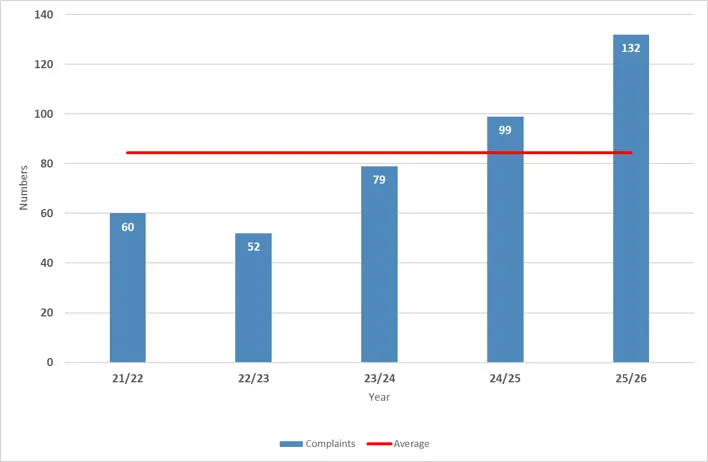
Table 1: Annual number of complaints received by the IAC
| 21/22 | 22/23 | 23/24 | 24/25 | 25/26 | Average over five years |
|---|---|---|---|---|---|
| 60 | 52 | 79 | 99 | 132 | 84.4 |
To put this in context, the chart below shows the number of complaints received at each stage of the CPS complaints process over the last five years. Since 2021/22, the number of prosecutions has increased by 14%, so some increase in complaints might be expected. However, the number of Stage 1 complaints has increased by 24% since 2021/22 and, whilst the number has fluctuated year to year, Stage 2 complaints have increased by nearly 16%. The number of Stage 3 complaints has more than doubled (+120%) in the same period.
Chart 2: Complaints received by Stage
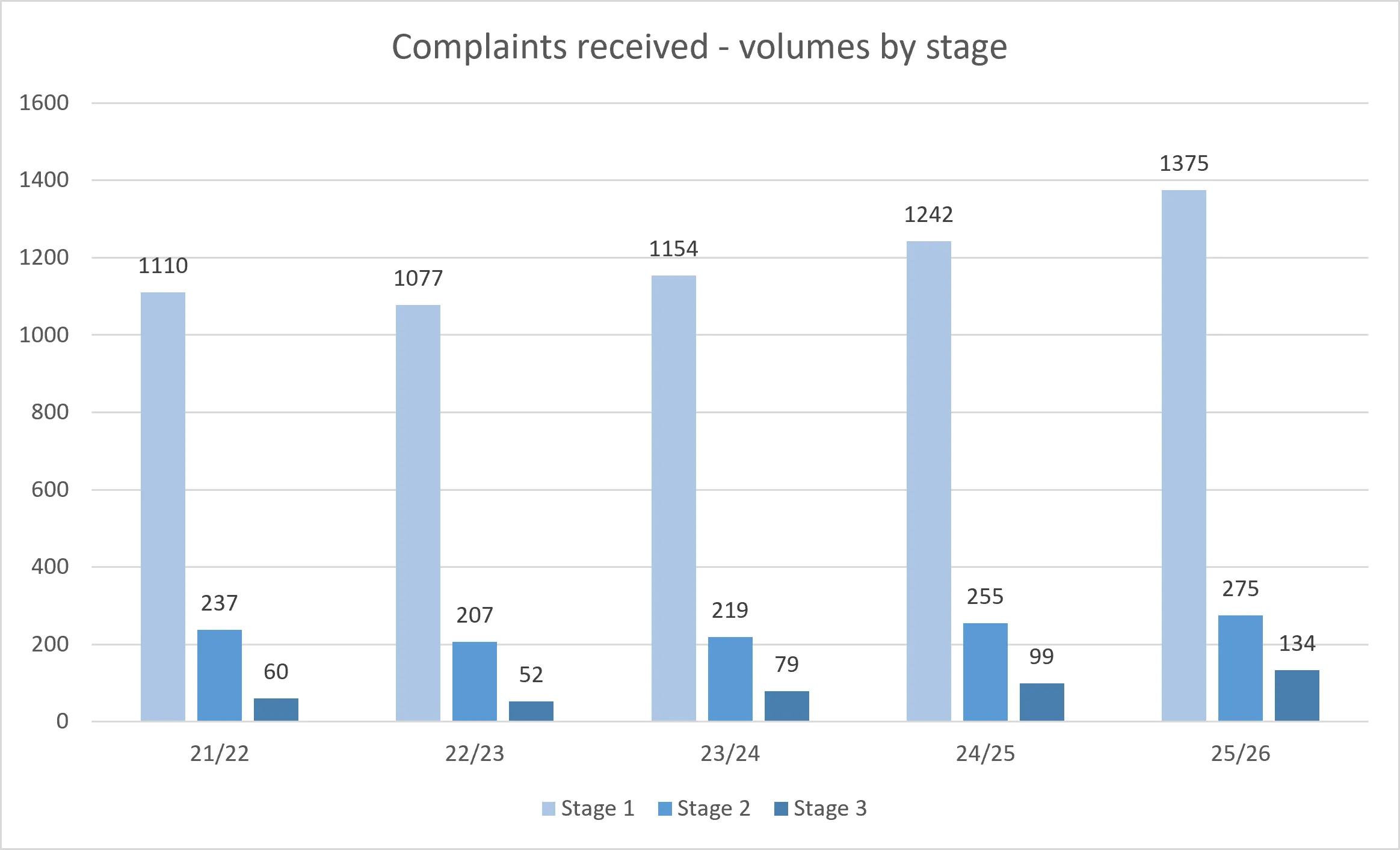
Table 2: Complaints received by stage
| 21/22 | 22/23 | 23/24 | 24/25 | 25/26 | |
|---|---|---|---|---|---|
| Stage 1 | 1,110 | 1,077 | 1,154 | 1,242 | 1,375 |
| Stage 2 | 237 | 207 | 219 | 255 | 275 |
| Stage 3 | 60 | 52 | 79 | 99 | 134 |
As last year, I have also analysed the numbers of complaints received by each area and compared these with the number of complaints that might be expected if complaints across all areas reflected the number of prosecutions in each area. Whilst this is a fairly crude approach, it is intended to allow comparisons of complaints numbers adjusted to reflect activity levels in each area.
The table below shows the numbers of complaints received, by Area, and the number progressing to Stage 3 (London North and London South data has been combined to avoid distortion arising from all London RASSO cases being handled by London South). The data shows that Cymru Wales and Central Casework Divisions generate more Stage 3 complaints than might be expected.
The numbers of complaints at Stage 3 are relatively small, meaning that conclusions should be drawn with caution. However, analysis of all complaints is more robust. The analysis again shows that Cymru Wales and Central Casework Divisions generate more complaints than the number of prosecutions might suggest, with East Midlands and Mersey-Cheshire generating fewer complaints than expected.
Whilst the analysis might be influenced by different case types or different propensities to make complaints, it should prompt further work to understand complaints patterns and the measures or interventions that may result in fewer complaints or quicker resolution of concerns. For example, in some CPS areas, telephone calls are made to complainants to understand and attempt to resolve complaints at an early stage.
Complaints received by Area, with ‘Expected’ figures to reflect activity
| Area | Stage 3 complaints 2025/26 | Stage 1 complaints 2025/26 | Activity: Prosecutions in 2025/26 year* | 'Expected' Stage 3 complaints adjusted for activity | 'Expected' Stage 1 complaints adjusted for activity | Stage 3 complaints: difference from 'expected' | Stage 1 complaints: difference from 'expected' |
|---|---|---|---|---|---|---|---|
| Cymru Wales | 16 | 123 | 29,991 | 8 | 85 | 8 | 38 |
| East Midlands | 10 | 77 | 39,524 | 11 | 112 | -1 | -35 |
| East of England | 13 | 79 | 31,822 | 9 | 90 | 4 | -11 |
| London North & South | 24 | 239 | 71,472 | 19 | 202 | 5 | 37 |
| Mersey-Cheshire | 6 | 42 | 29,196 | 8 | 83 | -2 | -41 |
| North East | 4 | 61 | 28,239 | 8 | 80 | -4 | -19 |
| North West | 9 | 147 | 49,059 | 13 | 139 | -4 | 8 |
| South East | 7 | 86 | 32,359 | 9 | 91 | -2 | -5 |
| South West | 2 | 63 | 23,807 | 6 | 67 | -4 | -4 |
| Thames & Chiltern | 10 | 92 | 26,068 | 7 | 74 | 3 | 18 |
| Wessex | 4 | 78 | 22,649 | 6 | 64 | -2 | 14 |
| West Midlands | 10 | 110 | 50,694 | 14 | 143 | -4 | -33 |
| Yorkshire & Humberside | 11 | 132 | 50,651 | 14 | 143 | -3 | -11 |
| Other (Central Casework) | 6 | 46 | 1,059 | 0 | 3 | 6 | 43 |
| Total | 132 | 1375 | 486,590 | 132 | 1375 | 0 | 0 |
| *CPS data summary Q4 2025 2026 | |||||||
Complaints for consideration in 2025/26
There were 204 Stage 3 complaints for consideration in 2025/26, whether received during the year (132) or brought forward from the previous year (72).144 were considered at Stage 3 during the year, with the remaining 60 awaiting consideration at the year-end. In 2024/25, 80 cases were considered at Stage 3 – i.e. rejected or reviewed by the IAC.
The position at the end of 2025/26 is shown in the chart below:
74 cases were rejected in the year. This compares with 62 last year, so is a broadly similar proportion of complaints. The reasons for rejection were:
Chart 3: Complaints considered during year and awaiting consideration at year-end
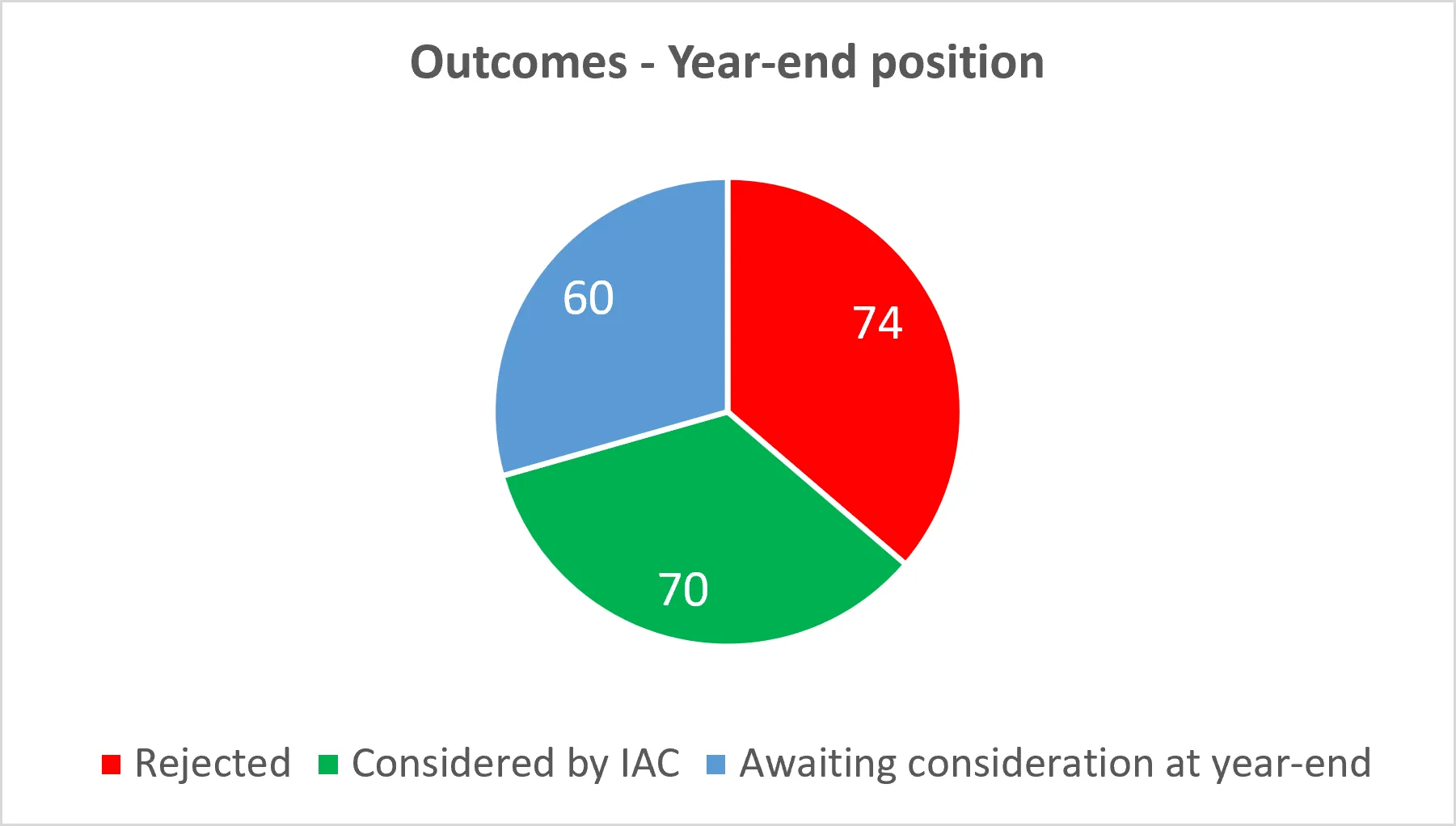
Table 3: Complaints considered during year and awaiting consideration at year-end
| Rejected | Considered by IAC | Awaiting consideration at year-end |
|---|---|---|
| 74 | 70 | 60 |
- 58 primarily about legal matters, such as charging decisions, outside the IAC’s remit
- 5 related to police, courts or judges, so not in the IAC’s remit
- 6 addressed with a meeting or further response from the CPS Area
- 3 out of time for Stage 3 escalation
- 2 other - related to HR issues or would be more appropriately directed to the Information Commissioner’s Office.
Sections 4 and 5 of this report gives more detail of the complaints considered during the year.
Origins of complaints
The analysis in this section relates to complaints concluded during the year – either rejected following assessment (74) or reviews completed by the IAC (70). The chart below shows the category of complainant:
Chart 4: Origins of complaints rejected or reviewed by IAC
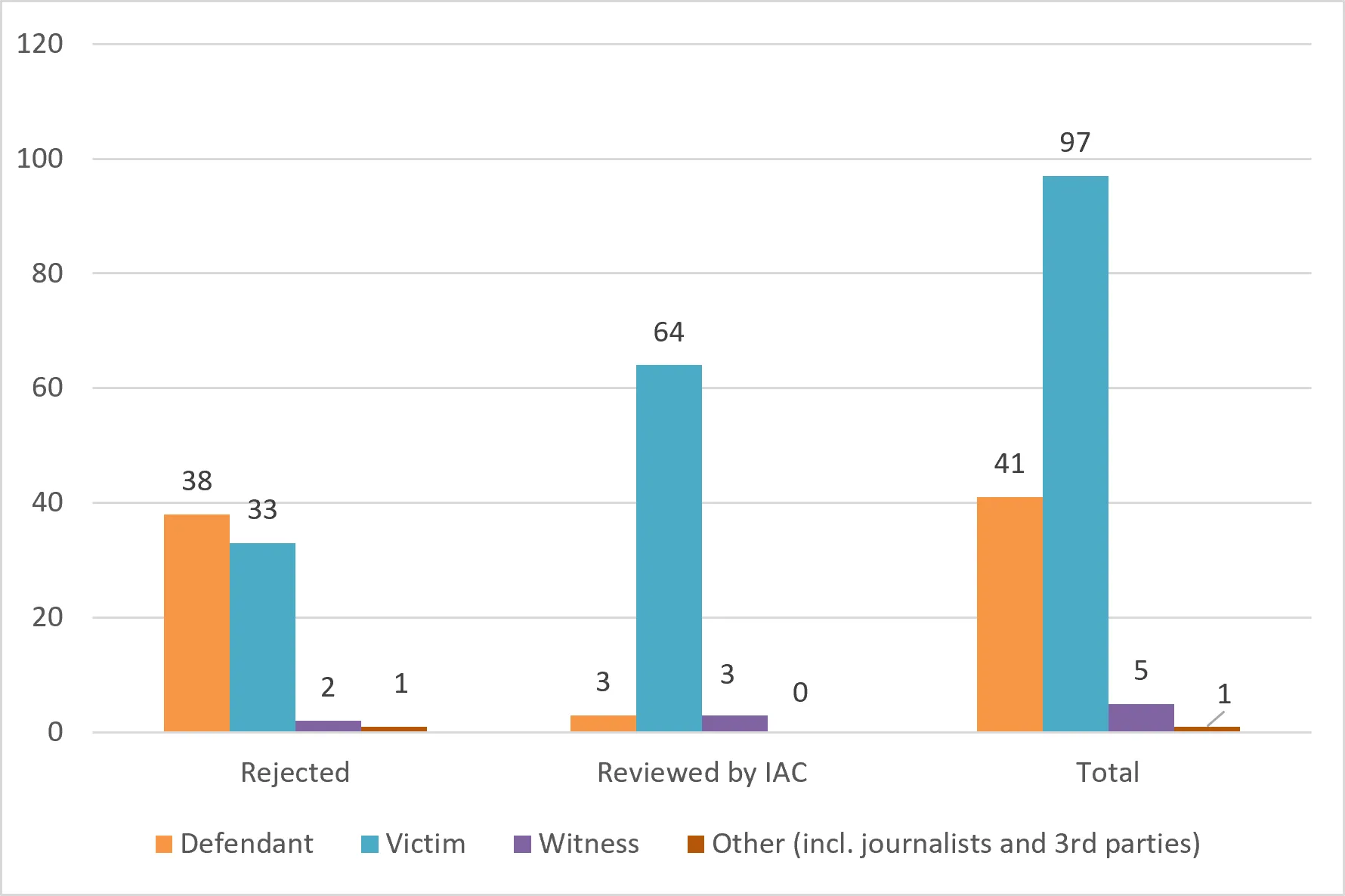
Table 4: Origins of complaints rejected or reviewed by IAC
| Complaint origin | Rejected | Reviewed by IAC | Total |
|---|---|---|---|
| Defendant | 38 | 3 | 41 |
| Victim | 33 | 64 | 97 |
| Witness | 2 | 3 | 5 |
| Other (incl. journalists and third parties) | 1 | 0 | 1 |
| Total | 74 | 70 | 144 |
Victims were the principal category of complainants, both for all complaints received and those reviewed by the IAC. Of these, the majority were victims of domestic abuse and sexual crimes. Defendants were the second largest category, but with only a small number being appropriate for review by the IAC. This was generally because the complaints related to legal matters or to actions and decisions of the police or the courts.
Outcomes of complaints considered by the IAC
During the 2025/26 year, 144 complaints were determined at Stage 3 – that is they were either assessed but not subject to detailed consideration by the IAC (74) or considered and responded to by the IAC (70). It should be noted that, because of the backlog of complaints, 50 of the complaints that were subject to detailed consideration during the year were received in previous years and related to events and service failings in 2023/24 or 2024/25. Of the complaints subject to detailed consideration by the IAC:
- Number upheld or partially upheld - 64
- Number not upheld - 6
Whilst the number of cases considered by the IAC (70) was considerably higher than in 2024/25 (when 18 cases were considered), there remained 60 cases awaiting consideration at the end of the 2025/26 year. This continues to be a concern and is considered later in this report.
22 cases involved potential breaches of the Victims’ Code, including failure to notify victims of the trial and failures to notify the victim promptly of a dropped charge or of a decision to offer no evidence. In six cases a Victim Personal Statement was not read in court, contrary to the victim’s wishes. In ten cases the CPS failed to seek compensation for the victim.Another case involved a failure by the CPS to seek a Restraining Order on acquittal to protect the victim.
I recommended goodwill payments in 19 cases, totalling £6,811.In three of these cases goodwill payment had been offered at Stage 2, but I considered that the amounts offered were less than anticipated in the CPS guidance, so I recommended higher amounts.All recommendations took account of the current £500 maximum.
I recommended that the CPS provide an apology in 18 cases. I was concerned that in some cases that reached Stage 3, the CPS had offered some sort of apology at an earlier stage, but that the apology was vague and lacked empathy and sincerity. Meaningful apologies are ones that are specific about what went wrong and why, that take responsibility, that acknowledge the impact of the error or failing, that show genuine regret and commit to putting things right for the individual (as far as is possible) and in terms of learning for the future. I invite the CPS to bear these comments in mind when making apologies in the future.
I also made recommendations about improving understanding of the perspectives and feelings of victims of crime, and about improvements to processes and checks.
The complaints that were upheld show several themes and patterns:
Case communication: In one case, an error made by the CPS meant that the victim was wrongly told that her ex-partner had been found guilty of domestic abuse, when in fact he had been acquitted and a Restraining Order had been refused. In several other cases, victims of crime were not consulted or informed of significant changes to the charges in their cases.
Complaints communication: Communication failings were again key features of many of the complaints. Timely and empathetic communication with victims and witnesses is key, and in too many cases the CPS responses to complaints lacked empathy. One complainant, the victim of rape, commented that the CPS had handled the complaint ‘in a transactional manner and as if it related to something mundane and insubstantial’. Another complainant said she felt that the CPS had not believed her, had not understood the seriousness of years of domestic abuse she had experienced, and had played down the abuse in the same way that perpetrators of domestic abuse do.I hope that the CPS can, in their interactions with victims of crime, be mindful of such comments.
Complaints handling: In 19 cases, complaints handling failings were found. These included cases where there was delay, cases where responses demonstrated a lack of empathy, cases where responses did not address key elements of the complaint and cases where the responses included factual errors, including getting the complainant’s name wrong.
Prosecutor conduct and performance: In 19 cases, concerns were expressed about the conduct, communication and performance of prosecutors. In almost all cases these concerns related to agent prosecutors. I recognise that prosecutors are working for the Crown, not for victims of crime, and that victims of crime do not always understand what prosecutors can and cannot do. My role does not allow me to consider legal matters, and I do not suggest that all concerns about or criticisms of prosecutors are appropriate or well-founded. However, I am concerned that monitoring of prosecutor performance appears limited and inconsistent, with a focus on addressing any errant conduct rather than identifying or addressing any sub-optimal conduct or performance. I am aware also that, where goodwill payments are made in respect of prosecutor failings (for example failing to seek compensation, failing to ensure Victim Personal Statements are considered before sentencing or failing to seek a Restraining Order), these costs are met from the public purse. I have recommended that the CPS reviews its approach to proactive monitoring of prosecutor performance.
Evidence and trial-readiness: In 15 cases there were failings in serving evidence and/or preparing evidence, including video and photographic evidence, for trial. This often resulted in the Crown having to Offer No Evidence – a deeply unsatisfactory outcome for the victim but also a waste of the police, CPS and court time and effort to reach trial. In some cases, there were five, six or seven prompts to serve evidence or unused material, all without success. I have therefore recommended that the CPS reviews manager overview, as well as escalation and follow-up of overdue tasks and requests. Trial-readiness checks should also help with this, but there remains work to do to ensure that evidence is promptly served, that each element is complete and that it is ready for trial.
Timescales
Under the IAC’s Terms of Reference, a full response should be provided within 40 working days of the IAC accepting the complaint for consideration.In 2025/26, 68 responses were sent within 40 working days of acceptance, with an overall average of 23 working days.In two cases, responses were slightly delayed, so they were sent at 41 working days.
This does not, however, provide the full picture from a complainant’s perspective, as it does not take into account the time taken to assemble the appropriate documents and undertake an initial assessment. This time-consuming work is undertaken by the Assistant to the IAC.Furthermore, the time allowed for IAC detailed review does not commence until the complaint is accepted by the IAC. Whilst this may be appropriate as part of the measurement of the IAC’s performance, it means that the backlog of complaints, and any delay in the IAC being ready to accept the complaint, is not taken into account.
At the start of the year, many complaints awaiting consideration had been received in 2023, so were already old. For complaints considered by the IAC during 2025/26, the period for initial assessment and awaiting acceptance by the IAC added an average of 256 working days to the time waited by complainants, with the longest delay (receipt to acceptance) being 415 working days. This is unacceptable and I will work to reduce the delay in 2026/27. At 31 March 2026, the complaints awaiting consideration were generally submitted during or after July 2025 (so had been waiting 8 months or less at the year-end).
PHSO referrals
The Parliamentary and Health Service Ombudsman (PHSO) was set up by Parliament to provide an independent complaint handling service for complaints that have not been resolved by UK government departments other UK public organisations.
The PHSO has jurisdiction over the CPS, only in respect of the Victims’ Code. It can consider complaints from members of the public only if the CPS has not met its obligations under the Code. In 22 cases that I considered in my role as IAC, I identified apparent breaches of the Victims’ Code. In these cases, complainants were made aware that they could refer the case to the PHSO.
In the 2025/26 year, the PHSO received 65 complaints regarding the CPS. This is substantially more than in previous years (average of 19 per annum in the previous four years). Most of the complaints received by the PHSO during 2025/26 were concluded at initial checks and primary investigation without an assessment. No complaints were accepted for detailed investigation during 2025/26. However, at the end of the year, the PHSO held twelve complaints that were undergoing early consideration or assessment.
Follow-up
Where the IAC makes recommendations, these are followed up to secure confirmation that they have been implemented. No recommendations made in 2025/26 have been rejected by the CPS. Three recommended goodwill payments have not yet been accepted by the complainants, and two of the most recent recommendations (March 2026) are outstanding. These will be followed up to secure a response.
Other activity
At the regular, generally quarterly, meetings with the Director General Legal Delivery and the Chief Operating Officer, I share themes from the complaints I have considered and contribute to discussion of steps to address these. I also attended the Legal Delivery Group meeting in October 2025, to report on my findings and discuss complaints handling.
I met with a representative of the Victim Transformation Programme in November to share my thoughts on improving victims’ experience of the justice system and their experiences of interactions with the CPS (See paragraph 12.10 below).
I have attended meetings of the CPS Complaints Coordinators and have shared key points from my 2024/25 report.
Whilst the number of complaints awaiting consideration limits the scope for this, I look forward to engaging with CPS managers and staff in the year ahead.
Case studies
I set out below summaries of selected cases closed in 2025/26.As in previous years, some details have been removed or been subject to minor alteration to ensure anonymity. The case studies show the impact on victims of service failure on the part of the CPS.
A member of security staff at a supermarket was assaulted and told he would be stabbed. There was video evidence supporting the prosecution, but this was not available at the trial. The defendant’s sentence was a conditional discharge. The agent prosecutor had said that the video evidence was, in any case, of insufficient quality, but it later became clear that he had not viewed the video evidence. After the trial, the CPS reviewed the video evidence and concluded that it would, if presented at the trial, have been very likely to affect the outcome.
A woman had been attacked by her partner on several occasions, and her partner was charged with assault by beating. The woman attended court to give evidence, but the case was dismissed as the required disclosures had not been served on the defence. No Restraining Order on acquittal was applied for. The woman complained to the CPS but did not receive a response until her Independent Domestic Violence Advocate became involved. The Stage 2 response was also delayed. It was found that there had been seven prompts that should have resulted in the required disclosures being made, but none had been acted on. In the Stage 1 response the CPS apologised ‘for the final outcome in this case’, commented that the CPS was ‘very sorry to read of your experience’ and informed the complainant that ‘words of advice’ had been given to the lawyer involved. The response also said that ‘we don’t always get our decision right’. This ignored the fact that the complaint resulted from a series of failings, rather than a single decision, and there was no apology at Stage 1 for the failings themselves. The complainant was distressed at the indifference of the CPS, the lack of compassion and the dismissive way the case and the complaint had been handled. There is clearly learning that can be drawn from this case, both in handling the prosecution and in responding to complaints appropriately and with empathy.
A woman was the victim of rape. The case progressed to trial. Before the trial, the victim felt that the prosecution counsel was encouraging her to drop the case. The prosecution counsel indicated that they had met the victim just before she gave evidence, but there were no records of this, and the victim and her Independent Sexual Violence Advisor were adamant that this had not taken place. The victim later asked to speak to the prosecution counsel during a break in giving evidence and after she had given evidence. No such conversation took place. It was not until six months later that the victim was told that it was not permissible to speak to witnesses once they had started giving evidence. The defendant was later found not guilty, but the victim was not told of the verdict until the following day. The CPS response stated (correctly) that the police should have informed her of the verdict and that she could contact them to complain. The CPS responses to other aspects of the complaint included inaccuracies, lacked empathy and left the victim feeling that her case and her complaint were unimportant. The complainant had other concerns about the conduct and performance of the prosecutor. I make no judgement on the validity of those concerns, but this was one of the cases that prompted my recommendation to review and improve the monitoring of prosecutor performance and feedback. The aspect of the complaint that the police were responsible for could also have been handled more helpfully.
A woman was subjected to verbal abuse, social media messages and unwanted visits from her ex-partner, who had also made threats against the woman’s friends.The case proceeded to trial, but the defence had not received the evidence. The court refused an application for an adjournment, and the prosecution offered no evidence. No application was made for a Restraining Order on acquittal (though, in any case, this might have been unsuccessful in the absence of the evidence). The Stage 1 response expressed regret that the complainant disagreed with CPS decisions, instead of apologising for its errors. There was no meaningful apology at Stage 1 or Stage 2 and the concerns about the absence of a Restraining Order were not responded to. This case demonstrated the importance of proper checks for trial readiness, of responding to all elements of complaints and of meaningful apologies.
Feedback
My reviews have prompted a number of positive comments and responses:
- “Please pass on my thanks for the time and effort that has been spent on such a thorough review.”
- “Thank you for your response, and for the time, care, and effort that clearly went into your investigation and consideration of how my complaint was handled. I am truly grateful for the acknowledgment of the failings and the understanding you have shown regarding the distress and frustration this situation has caused me.”
- “I am very grateful for the recommendations made to the CPS from the IAC.”
- “It meant a lot that [the response] recognised the difficulties in my experience and I hope that things change for the better so that no-one else has an experience like mine.”
- “I appreciate the time and effort that has been put into this investigation and hope that the lessons learned will be implemented by CPS.”
- “Many thanks for considering my complaint and treating me with compassion. It obviously doesn’t change the outcome of the trial or the harm caused, but it has helped to provide some closure which is much appreciated.”
- “I truly appreciate how seriously you’ve taken my concerns and upsets!”
Whilst these positive comments are welcomed, I must also record the fact that many complainants remain dissatisfied at the outcome and the fact that there is often no scope to put things right, because the case in question has concluded. Comments I have received include:
- “I remain very dissatisfied with the appalling way in which this very serious case was [handled].”
- “I must make it clear that I do not consider this to be adequate redress for the financial losses, distress and anxiety I've experienced. I waited very patiently through all of the processes while the whole arduous ordeal was eating at me day by day, and the empty apologies that I felt that I received along the way were incredibly upsetting and gut wrenching. I felt like I didn’t matter at all and still do.”
- “The losses and impact resulting from both the assault and the failings identified significantly exceed the amount offered. … The current goodwill payment system is inadequate in cases such as mine.”
Whilst there will remain no scope to change legal outcomes, I hope that the CPS will amend its Goodwill Payments policy to allow payments, where appropriate, to compensate complainants for losses incurred as a result of CPS failings or mistakes, for example through Compensation or Restraining Orders not applied for.
Progress on my priorities for 2025/26
Backlog
In my last Annual Report, I noted the backlog of Stage 3 complaints awaiting consideration and I indicated my wish to reduce this backlog so that complaints are considered more promptly. During 2025/26, I have considered 70 complaints (compared with 18 in 2024/25). On 31 March 2025, the oldest complaint ready for my consideration was from August 2023 (19 months). On 31 March 2026, the oldest complaint ready for my consideration was from July 2025 (8 months). I have, therefore, made some progress.
There were 72 complaints awaiting consideration at the end of the 2024/25 year.This has reduced slightly to 60 at the end of 2025/26, despite the increases in complaints received. However, these ongoing increases in Stage 3 complaints mean that delays are still longer than they should be and that it will continue to be challenging to catch up and consider all complaints promptly.
During 2025/26, the CPS agreed to allow me to work additional days, so in total I worked 103 days (43 days more than envisaged in my contract).This has helped considerably in reducing the backlog. To reflect the increases in the number of Stage 3 complaints received, from 1 June 2026 the standard number of days I am working increased to 72 days per annum. I will also be working with the CPS to explore ways of handling Stage 3 complaints more efficiently.
I indicated in last year’s report that I considered that the target timescales and measurements for complaints referred to the IAC needed to be reviewed, so that they fulfil the twin aims of ensuring the accountability and measuring the performance of the IAC and being meaningful for complainants, giving them realistic indications of when they can expect a response. The timescales are set by the CPS, but I am proposing two targets with associated measures:
Target Timescales and measures
| Target | Performance measure | |
| Acceptance by IAC | Within 60 working days of receipt of Stage 3 complaint | % accepted within 60 working days |
| Decision | Within 40 working days of acceptance | % decisions sent within 40 working days of acceptance |
These timescales would allow 100 working days (20 weeks) from receipt of a Stage 3 complaint to a decision, which is not yet being achieved.Ideally the time to acceptance would be shorter, but this needs to be realistic and allow time for collation of relevant documents and for the relevant CPS Area to provide information and initial comments. Whilst this will be difficult to achieve, it does not seem reasonable for target times for acceptance to be longer than 60 days.
I suggest that these measures are used for reporting for the 2026/27 year and that (to avoid creating unrealistic expectations in the meantime) complainants are advised of these targets for Stage 3 complaints received on or after 1 October 2026.
Liaison and reporting
Regular meetings with the Director General Legal Delivery and the Chief Operating Officer have been set up to share findings, themes and learning points. I also meet periodically with the Director of Public Prosecutions and report annually to the Board.
Goodwill Payments Guidance
I have contributed my comments and suggestions during the review of the CPS Goodwill Payments Guidance. I have suggested that the £500 maximum is increased (though I recognise that HM Treasury currently set this as the maximum) and have repeated my previous comments (which reflected those of my predecessor too) that the policy and guidance should allow the CPS to make payments in respect of direct or indirect financial loss, fully reflecting the expectations of the PHSO’s requirements.
Communication and the Victim Transformation Programme
A recurring theme, in the complaints I have considered, has been communication between the CPS and victims of crime. This includes missed communication, ineffective communication and communication that is not made at the appropriate time.
The Victim Transformation Programme seeks to address such concerns and in November I shared my thoughts with the Programme Team. I highlighted the importance of culture and process, the value of prosecutors hearing from victims of crime about their experiences of the justice process, the value of victim feedback after trials and the case for improved monitoring of prosecutor performance. I highlighted the value of improved communication to explain the justice process and suggested ways of helping victims to access relevant and targeted information at the appropriate stage. I also took the opportunity to repeat my view that there remains scope to improve coordination of the handling of complaints involving the courts and/or the police, as well as the CPS.
HMCPSI Report
Some of the themes in my 2024/25 report echoed those identified in the July 2025 HMCPSI report on the handling of complaints, and I was pleased to have the opportunity to provide some input for consideration when the CPS was preparing its response.
Complaints involving police and courts as well as CPS
In last year’s report I highlighted an area for future consideration – improving the handling of complaints involving the courts and/or the police, as well as the CPS. I have also raised this for consideration as part of the Victim Transformation Programme (referred to above). I am pleased that the CPS has taken some steps to progress this. The Director General Legal Delivery has raised this as an issue with managers and in casework forums, and it is now expected that there is proper engagement with the other agencies to decide the best collective approach to address complaints which involve courts and the police as well as the CPS. I recognise, however, that this is not a straightforward matter and that it is not something that the CPS can achieve alone.
The Year Ahead
I will continue to work to reduce the number of Stage 3 complaints awaiting consideration, with a view to achieving, by the end of 2026/27, the target timescales set out in paragraph 12.4 above. This will be my focus.
I have referred earlier in this report to the importance of giving good apologies when things have gone wrong. I would like to work with CPS colleagues on this in the year ahead.
During 2025/26 I have made recommendations relating to monitoring of prosecutor performance, the handling of victim feedback and communication with victims of crime. I recognise the cultural, as well as procedural, aspects of these priorities and would be pleased to discuss these further with the CPS, including as part of the Victim Transformation Programme. Improvements in these areas would be beneficial in improving victim experience and should also help reduce future complaints.
Annex A: About the IAC
The IAC for the CPS is completely independent of the CPS, providing an impartial service that complainants can have confidence in.
The IAC role is to:
- Investigate service complaints about the CPS following conclusion of its internal complaints process (known as Stage 1 and Stage 2).
- Look at whether the CPS properly followed the Victims’ Code guidance on the services that must be provided to victims.
- Check that the CPS has followed its complaints procedure.
- Check that the CPS followed its own policies, procedures and guidance.
The IAC’s aim is to:
- right wrongs for complainants where possible and proportionate.
- drive improvements in the CPS to reduce the likelihood of similar service complaints arising in the future.
Anyone who has complained to the CPS and remains dissatisfied with the outcome of their service complaint at the end of Stage 2, can escalate the matter to the IAC and request an independent review. Service complaints include, for example: the conduct of CPS staff, such as rudeness or being given incorrect information; poor communication; and service standards such as breaches of its own policy, or of the Victims’ Code.
Legal complaints – such as how the CPS applied the Code for Crown Prosecutors in deciding whether to prosecute; or decisions about witnesses to call at a trial or evidence to be relied upon – cannot be reviewed by the IAC. These are legal decisions that are rightly reserved for independent prosecution lawyers.
The IAC Terms of Reference are published on the CPS website.