
Crown Prosecution Service International Strategy 2030
- Introduction
- Foreword by Stephen Parkinson, Director of Public Prosecutions
- Foreword by Grace Ononiwu, CBE, Director General for Legal Delivery
- Problem, Aims, and Outcomes
- Pillar One: Building Capability and Confidence Across the CPS
- Case studies of international co-operation work in practice
- Our objectives for 2025 – 2030: Building Capability and Confidence Across the CPS
- Pillar 2 : Broadening Access to Our International Capabilities
- Our objectives for 2025-2030: Broadening Access to our International Capabilities
- Pillar 3: Strategic Partnerships and Innovation to Futureproof our Capabilities
- Objectives for 2025-2030: Strategic Partnerships and Innovation to Future Proof our Capabilities
- Strategy Delivery and Governance
Introduction
The CPS operates in an increasingly interconnected criminal justice landscape. Serious and organised crime, terrorism, economic crime, and offences facilitated by digital technologies, including online child sexual abuse, routinely transcend national borders. This causes complexities for our criminal investigations and prosecutions, as evidence, victims, suspects, and criminal assets may be located across multiple jurisdictions and, as a result, international cooperation is increasingly becoming an integral feature of our prosecution activity.
The CPS has a significant international remit. In addition to the work of our Areas and Central Casework Divisions who draft international assistance requests to secure the return of assets, individuals and evidence located overseas to support our prosecutions, the CPS has specialist teams that work to support the UK’s international criminal obligations. This includes our Extradition Unit, who not only support our extradition requests to international partners, but also fulfil our statutory duty to represent foreign authorities seeking the return of individuals located within our jurisdiction during extradition proceedings in our courts. We also have a specialist asset recovery capability within our Proceeds of Crime Division, with responsibility for seeking assistance from international partners to freeze and confiscate assets located overseas relating to UK cases, and for executing similar asset recovery requests from international partners where property relating to their cases is in England and Wales. These requests often seek the confiscation of assets following a criminal conviction in an overseas court but may also relate to the emerging international concept of non-conviction-based confiscation (in UK law, known as civil recovery).
The CPS is also the only prosecution agency in the UK with a dedicated team of liaison prosecutors who are deployed strategically across the globe, including a cadre of London-based roving prosecutors (see map below). Our liaison prosecutors work closely with our international partners to bridge the gap between our different legal systems with the aim of facilitating effective cooperation and supporting the delivery of successful outcomes for our international requests.
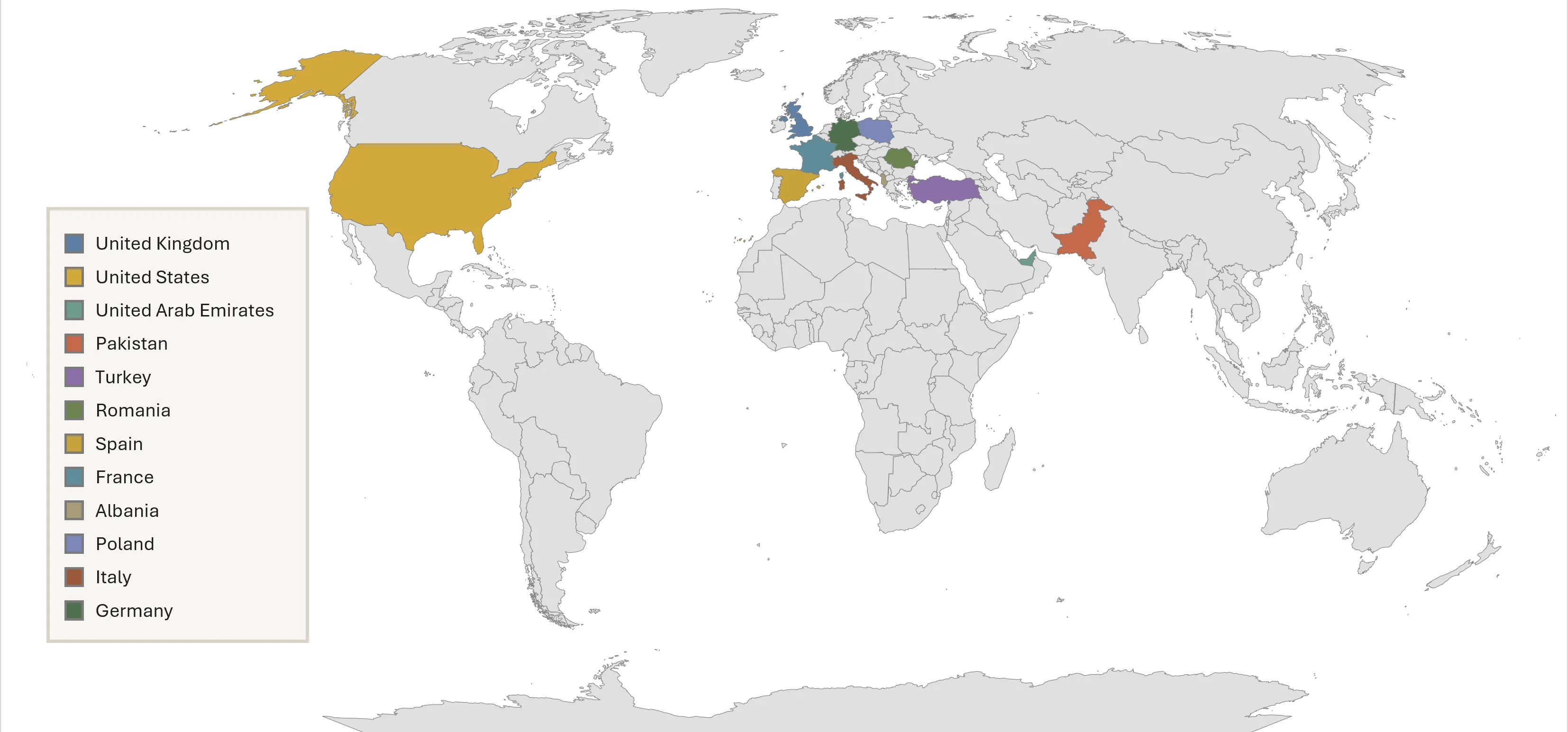
(Liaison Prosecutor Deployment Areas, 2026)
Our international work also includes how we work with overseas prosecutors, law enforcement agencies, and judicial authorities to develop and share best practice, how we engage in international networks to understand and respond to emerging crime threats, and how we use our prosecutorial insight to inform policy, legislation and cooperation frameworks.
The CPS 2025 International Strategy marked a significant step forward in our international work. Under that strategy, we strengthened our operational delivery through our Liaison Prosecutor network, improved internal coordination and knowledge sharing via our internal International Casework Lead network, enhanced access to legal guidance and support materials, and introduced digital tools to support prosecutors to manage international elements of casework. More recently, we have shared our prosecutorial expertise to support the work of the Border Security Command, and with the Home Office to support efforts to strengthen our relationship with the EU post-Brexit.
These achievements have delivered tangible benefits for domestic casework; however, the international environment we operate in has continued to evolve. International elements of our work now arise more frequently, earlier and across a broader range of cases. Criminal networks are increasingly agile, digitally enabled and internationally connected. The need to secure effective and efficient assistance from our international partners has never been greater. We also recognise that the full breadth and value of our international engagement is not always understood across government, and there are opportunities for us to share our international insights more deliberately in support of wider HMG priorities.
Our 2030 International Strategy responds to these challenges. It builds on the foundations of the 2025 strategy, setting an ambitious direction that we will embed our international engagement across our organisation to strengthen our ability to deliver justice. This recognises that international capability should inform not only individual cases but also organisational learning, policy development, and wider criminal justice system design. It recognises that our international engagement should be used more strategically to support the development of international cooperation tools that are fit for purpose in a fast paced, technologically advanced environment, and do more to support wider government policies and legislative initiatives which in turn, strengthen CPS partnerships.
Our new strategy is structured around three interconnected pillars aimed at strengthening capability at home, broadening access to international expertise across our organisation, and deepening strategic partnerships to futureproof our response to global crime. This strategy also seeks to support the objectives of all other CPS strategies, including CPS 2030, our Violence Against Women and Girls strategy 2025-2030 and Serious Economic Organised Crime 2030 strategy, by highlighting the connection between our international work and our ability to deliver better outcomes for victims, delivery efficiencies in our processes, reinforce national security and border priorities, and sustains the CPS’s role as a confident, credible and engaged actor in an increasingly interconnected justice system.
Problem, Aims and Outcomes
| Problem | Aims | Outcomes |
|---|---|---|
| International crime is growing in scale and sophistication, making cross-border elements routine in CPS casework. A consistent, embedded approach to international engagement is needed to improve outcomes, reduce delays, and maximise partnerships. | 1. Building Capability and Confidence Across the CPS |
|
| 2. Broadening Access to Our International Capabilities |
| |
| 3. Strategic Partnerships and Innovation to Futureproof Our Capabilities |
|
Foreword by Stephen Parkinson, Director of Public Prosecutions

Crime is increasingly global in nature.
I am acutely aware of the challenges we at the Crown Prosecution Service (CPS) face in managing the volumes and complexity of international casework. Criminality is becoming ever more multi-jurisdictional and technologically sophisticated. As the landscape evolves, our response must keep pace. Our casework will be shaped by how well we adapt; how we engage and deploy the tools available to secure evidence; and how successfully we can safeguard and deliver efficient justice for victims.
Our strategic partnerships are vital in effectively addressing cross-border criminality. I am proud that the CPS has the largest network of liaison prosecutors in the world, with 14 deployed in countries across Asia, Europe and North America in addition to a cadre of London-based liaison prosecutors who travel across the globe to support our international cooperation needs.
We are also equipped with expertise across the organisation: specialist Proceeds of Crime and Extradition Units, and an International Casework Leads Network which is embedded across CPS Areas and Central Casework Divisions to support prosecutors with international aspects of their cases. While specialist international functions remain essential to our work, responsibility for effective international work must be shared across the CPS. Our International Strategy 2030 sets out how we will integrate and leverage our international capabilities across our organisation to strengthen delivery, improve outcomes, and respond effectively to the increasingly complex and international nature of crime. It also articulates how we will support wider government ambitions to strengthen international co-operation and build mutually beneficial partnerships. Working closely with overseas partners, other government departments and operational agencies, we will continue to share information and expertise that improves justice outcomes.
This strategy builds on the strong foundations laid by our 2025 International Strategy, reflecting ongoing efforts to continuously improve our service, with a particular focus on strengthening partnership working, though which we will streamline processes, reduce delay, and deliver better support to victims of crime. This strategy reflects the insights and expertise of colleagues across the CPS, and I am grateful for their contributions.
Our ambition is clear: a CPS that is outward-looking and cooperative, well engaged on the international stage, and ready to adapt to a rapidly evolving criminal landscape.

STEPHEN PARKINSON
DIRECTOR OF PUBLIC PROSECUTIONS
Foreword by Grace Ononiwu, CBE, Director General for Legal Delivery

Technology is transforming the way crime is committed. Digital platforms enable criminals to operate across borders with increasing speed and sophistication. International elements are now a frequent feature in our casework, increasing both its complexity and the demands on our people. As a result, the Crown Prosecution Service must continue to adapt to ensure we are equipped to respond effectively to crime that is inherently global in nature.
We do so from a position of strength. The CPS has well-established foundations for international engagement, built on trusted partnerships, established networks, and specialist expertise. We also have a strong track record of delivering justice in complex, cross border contexts. Together, these foundations position us to respond effectively to the increasingly borderless nature of crime.
Our international work is both broad and critical to the delivery of justice. It includes prosecuting cases with an international dimension, working closely with international partners to secure evidence, extradite suspects, and recover assets. It also extends beyond our own prosecutions. We play a vital role in supporting international justice by representing foreign states in extradition proceedings in our courts, and by progressing their requests to restrain and/or confiscate assets located in England and Wales. Through this work we aim to ensure that criminals cannot evade justice by exploiting borders.
This Strategy sets out how we will build on these strengths to meet a rapidly evolving threat landscape. It reflects our commitment to strengthening capability, deepening partnerships, and shaping a criminal justice response that is fit for increasingly complex and transnational crime.
By 2030, our ambition is clear: to be a confident, outward-facing prosecution service that fully harnesses its international capability to strengthen the delivery of justice. This is an ambitious agenda, but one that is essential to ensure we remain effective, credible, and equipped to respond to a global threat landscape.

GRACE ONONIWU, CBE
DIRECTOR GENERAL FOR LEGAL DELIVERY
Pillar One: Building Capability and Confidence Across the CPS
International elements are an increasing feature of CPS casework and arise across a wide range of offence types and at multiple stages of proceedings. To ensure quality casework decision making, international considerations must form part of everyday case strategy rather than a skillset unique to specialist teams. Prosecutors and operational staff must therefore be able to recognise international dimensions early, understand their impact to develop robust case strategies, and act with confidence to progress cases effectively. This requires international awareness to be treated as a core professional competence. Clear guidance, accessible advice pathways and visible support networks must be integrated into day-to-day practice so that ownership of international elements sits confidently across CPS Areas.
Our ambition is for international work to be embedded from the outset of a career in the CPS and recognised as a core element of professional practice. We want international awareness to be a routine and confident part of how prosecutors approach casework, underpinned by the support, learning and guidance needed to navigate international elements effectively and consistently.
Under this strategy, we want to ensure we have a workforce that is equipped with the skills, knowledge and support to manage international considerations as an integral part of case strategy.
Alongside improving our capability, we must continually improve the way in which we handle international casework. Under this strategy, we aim to embed international competence across Areas and central casework divisions by improving local international support and learning material to strengthen decision making; streamline process to improve timeliness of case progression and support better casework outcomes. With this approach, we can support the core objectives of the 2026Independent Review of the Criminal Courts and Review of Disclosure and Fraud Offences, along with wider criminal justice reform engagement across Whitehall, to improve efficiency in our criminal justice systems. By 2030, we aim to have streamlined our international processes, reduced duplication, and embed clearer escalation and support pathways so prosecutors can progress cases quickly and consistently. This means simplifying how international advice is accessed, improving local support, and ensuring international considerations are addressed early, rather than reactively.
We must also be alert and responsive to broader changes in the criminal justice system which may affect the types of cases where international elements may arise. We recognise proposed legislative and structural court reform programmes will expand the nature of cases heard in the magistrates’ courts and therefore likely increasing the volume of international work in that forum. We must therefore ensure that our people are equipped to address this change.
Digital capability is central to this ambition. We want to take an ambitious approach to the use of technology and utilise its capabilities to support our prosecutors to draft clearer, more effective international assistance requests and navigate complex case cooperation processes with greater confidence. We want to use digital systems to improve our understanding of the volume, nature, and impact of international work across the CPS, strengthening organisational insight which will allow us to monitor patterns and aid future demand modelling. We will use this strategy to explore the opportunities afforded by modern technology and AI to drive efficiencies in our processes, ensuring we work smarter, not harder. In undertaking this work we aim to align our work with the government vision of a reformed justice system.
Case studies of international co-operation work in practice
Joint UK and Italy investigation into organised immigration crime
In May 2025, a major UK–Italy investigation into organised immigration crime led to the conviction and 25 year sentence of a UK based ringleader responsible for facilitating the movement of more than 3,400 illegal migrants from North Africa to Italy in unsafe fishing vessels. The operation, which generated more than £12.3 million in criminal profits, relied on extensive cross border cooperation between UK and Italian authorities and is regarded as one of the most complex joint organised immigration crime cases undertaken by the two countries.
The joint work of the investigation between the CPS, the National Crime Agency, UK Border Security Command, the Italian Financial Police and Italian prosecutors highlighting the scale of the offending, the intensive intelligence and evidential work involved, and the closely aligned prosecutorial approaches adopted in both jurisdictions.
The case demonstrated the effectiveness of sustained UK-Italy judicial cooperation and reaffirmed a shared commitment to tackling organised immigration crime through coordinated law enforcement and prosecution efforts. This case involved substantial engagement to identify and secure evidence located in Italy which was necessary to support the CPS prosecution. The CPS Liaison Prosecutor involved in the case, said: “This case is an excellent example of team working between the National Crime Agency, CPS and Italian Law Enforcement and judicial authorities.
“It’s the role of the liaison prosecutor to act as the link between the UK prosecution team and the judicial authorities of the country that the liaison prosecutor is based in. Our role is crucial in facilitating speedy judicial cooperation. The assistance we received from Italy on this case was exceptional and provided extremely quickly. The role of the Italian Financial Police and Italian prosecutors was crucial to the successful outcome of this case.
“Due to the complex nature of the evidence in this case, I had to work closely with several different Italian agencies – including the National Anti-mafia and Counter Terrorism Prosecution Office in Rome and the District Anti-mafia Prosecution Office in Messina. I supported early discussions on case strategy, provided advice and guidance on Italian judicial procedure and international cooperation requests, and ensured information was shared between the two countries effectively and efficiently.”
Father and stepmother of Sara Sharif sentenced to life for her murder
The father and stepmother of Sara Sharif, Urfan Sharif and Beinash Batool, were sentenced for the murder of Sara Sharif following a ten-week trial which revealed a sustained "campaign of abuse" against the 10-year-old girl, who was discovered in her bed after the family had fled to Pakistan.
Sharif and Batool were sentenced to life imprisonment in December 2024, to serve minimum terms of 40 years and 33 years in prison, respectively. Sara’s uncle, Faisal Malik, who was living in the house at the time, was also convicted of causing or allowing the death of a child and sentenced to 16 years' imprisonment.
Sara’s father, stepmother and uncle fled the UK and travelled to Pakistan immediately after her murder, albeit alerting UK Law enforcement to Sara’s whereabouts in the former family home.
The CPS Liaison Prosecutor played a key role in securing assistance from the Pakistan authorities to assist the case, advising on the substance of the International Letter of Request (ILOR) which assisted the Pakistan authority’s ability to execute the request effectively.
The Liaison Prosecutor coordinated with Pakistani legal officials, including the High Commissioner, to execute the ILOR and assist Surrey Police in obtaining evidence. The Liaison Prosecutor helped arrange visas for police officers by working with Pakistan's High Commissioner and Foreign Minister, enabling timely visits for the UK trial. On the police’s arrival in Pakistan the Liaison Prosecutor supported the National Crime Agency's International Liaison Officer in gathering necessary prosecution evidence.
Throughout the process the Liaison Prosecutor worked closely with the CPS prosecution team to keep them informed of any issues and developments, discussing and agreeing options to resolve any challenges which arose.
The prosecutor in charge of the case, Libby Clark, said: "None of us can imagine how appalling and brutal Sara’s treatment was in the last few weeks of her short life. The injuries inflicted on her were absolutely horrendous.
"After Sara died, instead of calling 999, the three defendants immediately made plans to flee the country, thinking only of themselves and not telling police Sara was dead until they had safely landed in Pakistan.
"This was a complex case involving substantial engagement with foreign authorities. The CPS Liaison Prosecutor in Pakistan was instrumental in driving the case forward - he provided sustained engagement, careful strategic oversight, and significant input into crafting Letter of Requests which were necessary to secure important evidence located in Pakistan which we required for our prosecution. His early work in navigating the complexities of possible extradition, combined with persistent follow up and our clear evidential strategy at an early stage, ensured we secured critical material from Pakistan to strengthen the case overall, playing a significant role in helping us to prosecute this case successfully."
Successful UK confiscation order enforced by Malta
In January 2025, the enforcement of a £1 million confiscation order was granted, following a UK fraud conviction linked to online gambling activity. While the defendant cooperated in repatriating assets held in the UK and several offshore jurisdictions, significant funds located in Malta required international enforcement action. Initial attempts to secure enforcement through a Mutual Recognition Certificate were unsuccessful, requiring sustained engagement over several years, including the use of a Letter of Request and continued liaison via Eurojust.
The case demonstrates the critical importance of persistent international engagement and the central role of the CPS Liaison Prosecutor in overcoming legal and procedural barriers. Working closely with the Liaison Prosecutor facilitated direct engagement with Maltese authorities, clarified evidential requirements, and coordinated practical steps to meet local procedural expectations, including arranging a virtual case conference and supporting the provision of tailored evidence ahead of the hearing.
This collaborative approach ultimately enabled Malta to recognise and enforce the UK confiscation order - marking the first such enforcement by Malta - and highlights how expert liaison support and strong international relationships are essential to delivering asset recovery outcomes in complex cross-border cases.
The CPS Specialist Prosecutor in the Proceeds of Crime Division said: "This case shows how vital sustained international engagement is to achieve results. The support of the CPS Liaison Prosecutor, working closely with Eurojust and Maltese counterparts, was instrumental in navigating procedures and ensuring the right evidence was in place. Their involvement turned a complex and protracted process into a successful outcome."
Our objectives for 2025 – 2030: Building Capability and Confidence Across the CPS
| Outcome | Strategic Priorities |
|---|---|
| We are prepared to respond to increasing volume and complexity of international casework | We will:
|
| We utilise digital means to enhance the quality and timeliness of our international work | We will:
|
| Our people have access to the tools and support they need to address international aspects of casework | We will:
|
Pillar 2 : Broadening Access to Our International Capabilities
The CPS holds a wide range of international capabilities, relationships and operational insights developed through casework cooperation activity and sustained engagement with overseas partners and networks. This engagement gives the CPS a unique vantage point where, through our international work we gain insights into future threats, understand how other jurisdictions are responding to shared problems and identify opportunities to improve our cooperation and prosecutorial abilities. Used effectively, this intelligence can inform our approach to case strategy and develop our processes which support wider justice system reform.
International work is inherently threat agnostic and is rapidly becoming a critical enabler of CPS effectiveness across all crime types. This strategy is therefore designed to act as an enabler to other CPS strategies and objectives, recognising that effective international cooperation is essential to achieving their aims rather than operating as a standalone function. We recognise that delivery of our Violence Against Women and Girls Strategy 2025-2030 and Serious Economic and Organised Crime 2030 Strategy, is interconnected with our ability to respond to evolving offending patterns, including the growth of online enabled abuse, sextortion and digitally facilitated coercive behaviour and fraud, where evidence, perpetrators and platforms are often located overseas. This requires effective international engagement to disrupt networks and pursue offending effectively. Strong international partnerships also enable the CPS to learn how other jurisdictions are modernising their criminal justice responses to shared challenges, ensuring our prosecutorial approach remains effective, resilient and fit to deliver our strategic objectives.
Under this strategy, we want to ensure that we are using our specialist knowledge and engagement opportunities to benefit all functions of our organisation and we will use this strategy to drive greater collaboration across the CPS. We will improve our awareness of international justice matters and share our insights across our departments to inform our work. We will promote international engagement opportunities and encourage greater join up with overseas partners so external insights have positive internal impact. In doing so we will be better equipped to respond to evolving crime types, legislative developments and support the full breadth of CPS activity.
Our objectives for 2025-2030: Broadening Access to our International Capabilities
| Outcome | Strategic Priorities |
|---|---|
| We utilise our international capabilities to support the delivery of CPS objectives | We will:
|
| We collaborate across the business to strengthen our international relationships and cooperation abilities | We will: Strengthen organisational visibility and understanding of CPS international work by developing a communications plan that clearly articulates how international work supports casework, policy development and system modernisation, and how staff can access tools, expertise and engagement opportunities Increase awareness of, and accessibility in, international learning and engagement opportunities, ensuring international experience and insight are accessible to a wider range of CPS colleagues and leveraged for organisational benefit Use CPS international engagement in a targeted way to examine how peer jurisdictions address common prosecutorial challenges, translating comparative insight into learning that supports CPS priorities Review CPS guidance to embed international considerations more consistently, strengthening cross-referencing so prosecutors can readily identify relevant international issues, support sound decision making and progress cases efficiently. |
Pillar 3: Strategic Partnerships and Innovation to Futureproof our Capabilities
The CPS participates in a wide range of expert groups and networks, including the International Association of Prosecutors Network, the Camden Asset Recovery Interagency Network (CARIN) and other international forums. In addition to the work of our specialist international, extradition and asset recovery teams, this engagement provides the CPS with a unique operational vantage point to obtain insights into emerging crime threats, cooperation barriers and system pressures that affect not only individual cases, but the effectiveness of international justice responses to shared challenges. We recognise that these insights not only resolve casework challenges but can also be used to support government initiatives by informing policy, legislative development and international cooperation frameworks which support our ability to deliver justice.
In an increasingly uncertain global environment, where securing our borders from rapidly evolving crime types is crucial, we recognise that our prosecutorial expertise is a critical asset in supporting government policy and safeguarding national security. Under this strategy, we seek to strengthen our relationship with departments and agencies across government to ensure the CPS is engaged earlier and more consistently in discussions regarding policy and legislative proposals that have an international criminal dimension. By bringing our operational experience into the policy making process at an earlier stage, we can help ensure that outcomes are practical, resilient and capable of supporting effective prosecutions in an increasingly complex and fast-moving threat environment. This approach supports shared government priorities, including national security, border integrity and the disruption of serious and organised crime upstream. We have already begun this work via our engagement with the Boarder Security Command (BSC) where we have provided insights into the legislative powers and initiatives of our international partners to tackle organised immigration crime to inform the BSC’s activity and help shape offences contained within the Border Security, Asylum and Immigration Act 2025.
This strategy also provides us with the opportunity to fully articulate the breadth of our international contribution beyond case specific activity. Through engagement with international partners, we share best practice and prosecutorial insight that supports stronger foreign justice processes and effective international cooperation. While leading externally funded capacity building programmes is outside the CPS’s core remit, we will continue to contribute by sharing our operational expertise and access our international counterparts where this supports government priorities. In doing so, we recognise that while the CPS is an independent prosecution agency, we share a common objective with government partners to prevent crime, protect the public and safeguarding the integrity of the UK’s justice system.
Under this strategy, we will also continue to strengthen our relationships with foreign partners and agencies to ensure international cooperation frameworks remain robust and fit for purpose in an increasingly fast paced and digital environment. We will use our operational expertise to identify and encourage action to address weaknesses in cooperation tools that present risks to case progression and outcomes. We have already supported government led reform, including contributing to the development of the Third Additional Protocol to the 1959 Council of Europe Convention, however, further change is required as crime, technology and data volumes continue to evolve. Under this strategy, we will work with international partners and HMG to encourage modernisation in our cooperation processes. We will increase our knowledge of the challenges and opportunities afforded by our work within our international prosecutorial communities and, through collective problem-solving and shared learning, we will strive to encourage innovation in our cooperation mechanisms, so they remain fit for purpose, resilient to change and capable of supporting justice outcomes in an increasingly dynamic global environment.
Objectives for 2025-2030: Strategic Partnerships and Innovation to Future Proof our Capabilities
| Outcome | Strategic Priorities |
|---|---|
| We strengthen our international relationships to support our ability to deliver justice; We share our expertise to develop international best practice | We will:
|
| We collaborate with international partners and HMG to remain agile to changing landscapes | We will:
|
Strategy Delivery and Governance
Delivery of this strategy will be supported by a single, integrated governance structure, providing oversight of progress and ensuring coordinated delivery alongside the CPS SEOC 2030 Strategy. This approach will support the translation of strategic ambition into practical outcomes for the CPS and its cross-agency partners, with a continued focus on delivery against agreed objectives. Progress will be subject to regular review through this framework, including monitoring against key actions, milestones and success measures. A midpoint progress report will be published to provide transparency on delivery, assess emerging priorities, and support any necessary reprioritisation.