
UPDATED: Two sentenced over targeted knife attack on Iran International journalist
UPDATED: George Stana was sentenced to 12 years' imprisonment at a sentencing hearing on 3 July 2026. Nandito Bandea was sentenced to 8 years' imprisonment. The judge found that the attack was committed for or on behalf of Iran. Stana knew or ought to have known. The judge could not be sure Badea knew or ought to have known.
Two men have been convicted following a targeted knife attack on a journalist outside his home in south‑west London.
The jury heard prosecution evidence that the attack was planned, coordinated and funded, and that it formed part of what prosecutors said was a proxy operation linked to the Iranian state.
George Stana, 25, and Nandito Badea, 21, were convicted after a trial in which jurors heard how the journalist was attacked as he walked from his home to his car in Wimbledon on 29 March 2024.
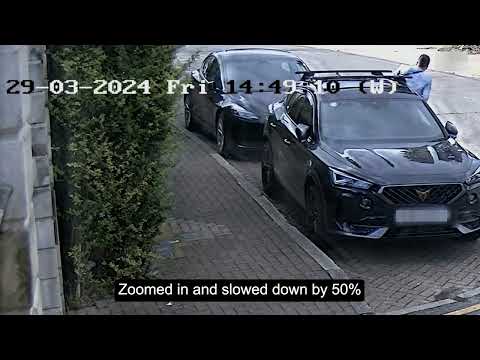
The jury was told that the defendants acted as part of a three‑man team, alongside a third man, to carry out a planned stabbing. One attacker restrained the victim while the other stabbed him three times to the leg with a knife. The attackers then ran to a waiting car and fled the scene.
He was left seriously injured and bleeding and required emergency treatment at St George’s Hospital, where his wounds were closed with sutures.
The Crown Prosecution Service proved that the attack was not a robbery or spontaneous assault but the culmination of months of surveillance, planning and preparation. Prosecutors presented extensive CCTV footage, mobile phone and communications data, financial evidence, eyewitness testimony and travel records to show how the defendants targeted their victim, waited for him to emerge from his home, and executed the attack before immediately leaving the UK.
The prosecution case was that the victim was targeted because of his work as a journalist for Iran International, a broadcaster critical of the Islamic Republic of Iran although the jury verdicts do not mean this is proved. The court may determine this at sentence.
Following the attack, the defendants abandoned their vehicle, disposed of clothing and travelled by taxi to Heathrow Airport, where they boarded a flight to Geneva later the same day. They were arrested in Romania in December 2024 and extradited back to the United Kingdom to face trial.
George Stana and Nandito Badea were both found guilty of wounding with intent, contrary to section 18 of the Offences Against the Person Act 1861.
Frank Ferguson, Head of the Crown Prosecution Service's Special Crime and Counter Terrorism Division, said: “We presented overwhelming evidence that this was a deliberate, targeted attack on a journalist, carried out after months of planning and surveillance.
“The evidence showed that the defendants were not acting on impulse, but were recruited, funded and directed to carry out violence which they executed with defined roles and clear intent.
“The jury was entitled to assess that evidence in determining whether intent to cause really serious harm had been proved.
“The case demonstrated how the defendants monitored the victim’s movements, waited for him to leave his home, and then acted together to restrain and stab him before making an immediate and organised escape from the UK.
“Extensive CCTV, communications and financial evidence, alongside expert testimony, showed how this attack was ordered, financed and carried out.
“These convictions reflect the strength of that evidence and the seriousness of an offence designed to silence a journalist through intimidation and violence.”
Building the case
The Crown Prosecution Service proved the case against George Stana and Nandito Badea by presenting a converging body of evidence which demonstrated planning, coordination, intent and funded activity.
CCTV footage and automatic number plate recognition evidence were used to track the defendants’ movements before, during and after the attack, including their presence near the victim’s address over an extended period and the use of a designated getaway vehicle.
Mobile phone and communications evidence showed repeated contact between the defendants and between the defendants and third parties, as well as extensive location data confirming hostile reconnaissance in the weeks preceding the attack.
Financial investigation evidence demonstrated that the defendants’ travel, accommodation and daily expenditure in the UK were funded by third‑party accounts, rebutting any suggestion that their presence in the UK or their actions were coincidental or spontaneous.
Eyewitness testimony and CCTV footage established the coordinated nature of the attack itself, including the use of role differentiation between those restraining the victim, carrying out the stabbing and facilitating escape.
Expert evidence placed the offending in its wider context and supported the prosecution case that the attack was targeted and ordered, rather than opportunistic, and that the defendants acted knowingly for payment.
Taken together, this evidence enabled the prosecution to prove that the defendants acted together with intent to cause really serious harm and to rebut alternative explanations put forward on their behalf.
Notes to editors
- George Stana [DOB: 14/12/2000] was convicted of Wounding with intent, contrary to section 18 of the Offences Against the Person Act 1861, for an offence committed on 29 March 2024
- Nandito Badea [DOB: 08/12/2004] was convicted of Wounding with intent, contrary to section 18 of the Offences Against the Person Act 1861, for an offence committed on 29 March 2024.