
Performance analysis
This section provides a summary of the CPS’ performance against our CPS 2025 strategic aims and outcomes, most of which come from the delivery of the Business Plan 2023-24. It is important to review and reflect on the achievements and progress made under these key change projects as they will ultimately drive improvements across our key performance metrics and deliver on CPS 2025.
1. Our people
Support for the success and wellbeing of our people enables everyone to thrive.
Transforming the way, we support all victims continues to be a key area of improvement – and part of this is ensuring we have the organisational capability and skillset as well as the dedicated expertise across the CPS. Organisational objectives on rape and serious sexual offences and violence against women and girls have been supported and enabled by resourcing and capability strategies designed to deliver the right people with the right skills at the right time. As a continuation of the focus on rape, we have increased national capacity across our RASSO Units, meeting our resourcing commitment in the cross-Government Rape Review; recruiting 194 specialist, trained staff into our rape and serious sexual offences teams. In addition, we have also reviewed the welfare support available to CPS teams dealing with sensitive and distressing cases.
Last year saw a shift in organisational focus towards more discrete growth due to changes in the fiscal environment. As such, our areas of focus over the last year have been on retention, development, deployment and harnessing the productivity of our workforce towards areas of demand. Recruitment controls were introduced in October 2023 to maintain affordability whilst ensuring ringfenced frontline high-priority recruitment activity continued. Continuity of targeted recruitment efforts contributed to a growth of 191 FTE (2.7 %). The organisation-wide vacancy rate was 4.1% at the end of March 2024, with vacancy rate of 6.3% for our Senior Crown Prosecutor grade.
Labour market challenges have continued, including fewer people choosing criminal law as a profession, a shortage of sought-after criminal practice legal skills across England and Wales, and an increased need for specialist skills, including legal leadership. We have continued a ‘growing our own’ approach for legal roles, which helps reduce reliance on the external market whilst offering a progressive, clear and achievable career path for our people. This has included maintaining increased Legal Trainee intake and development for lawyers to support progression into Senior Crown Prosecutor roles. These efforts have run concurrently with strengthening the legal leadership pipeline by developing a workforce planning approach for senior roles, introducing curated development around legal management, and extending the Leading with Confidence talent management programme to prosecutors. In 2023-24 of the 1,661 vacancies filled, 767 of these were filled through internal promotion (including temporary promotion), with over 50% of legal roles filled internally.
The growth targets of recent years have brought some challenges for teams investing time in induction and training of large volumes of new people. However mitigating actions are in place, and this is expected to decrease next year as new managers become more experienced and growth slows.
We have also supported our leaders and managers to ensure our hybrid working principles and policy provide a balance between flexibility and operational need.
All parts of our workforce are diverse and inclusive
Workforce inclusion is an essential element of both our People Strategy and the Inclusion and Community Engagement (ICE) Strategy, which inform our understanding of the steps needed to represent the views of the communities we serve.
External benchmarks are used to evaluate CPS’ inclusion policies and practices against other Civil Service Departments and external organisations. The feedback received contributes to the continuous improvement process, driving further employee engagement. Current accreditations which we hold include Disability Confident Leadership status, Carer Confident Level 2, and Inclusive Employers Silver Status. The CPS ranked number 36 in the 2022 top 75 employers in the Social Mobility Index and has retained its place as a Top Ten Employer for Working Families for the seventh consecutive year.
Our Annual Equalities in Employment Report reviews our data and demonstrates our commitment to continuous improvement with regards to workforce representation and experience. The 2022 Annual Equalities in Employment Report (published in Spring 2023) provided evidence to take forward three national recommendations. As a result of this, dedicated reviews have focused on the employee experience of disabled staff, an examination of our recruitment processes and detailed research to understand the barriers for progression of ethnic minority colleagues into senior roles. Reviewing these areas has given us a number of evidence- based recommendations to act on, which will be taken forward next year.
The ‘Count me in’ campaign continues to raise awareness about the benefits of declaration and the ability to disclose equality information on an ongoing basis, using various communication channels. We have seen a slight increase in representation rates in both the wider workforce and at senior levels, and representation across each protected characteristic (except for LGBTO) remains equal to, or higher, than the Civil Service average.
We have appointed seven internal Diversity Champions and supporting Ambassadors to extend the impact and reach of our diversity priorities across the CPS, building capacity and spreading expertise and corporate understanding on diversity and inclusion. This ensures our work is fully aligned with the Civil Service Diversity and Inclusion Strategy alongside our ICE Strategy.
This year we have reviewed our nine staff networks, encouraging transition to association status, aligning our networks to wider CPS diversity and inclusion priorities, and giving a voice to the ‘lived experience’ of our people from different backgrounds.
The Equality Diversity and Inclusion Advisor role ran from 2022 to 2024 to boost staff engagement and confidence. It supported specific projects that provided colleagues with the opportunity to share their work experiences through a private, fair, and safe source of advice. Staff can still contact the CPS Speak Out Champion if they have any ideas or feedback about how CPS works. This channel can also be used to report issues with a business, people, or operational change, talk about undesirable or unwelcome behaviours, check local practices against national policies and ask for personal or emotional support.
Table 1 highlights the progress made on increasing representation in our workforce to date, and highlights where there are areas for improvement particularly at our most senior grades.
Table 1 – Success Measure: Diversity of our staff
| 2023-24 Gender | 2022-23 Gender | |||
| Female | Male | Female | Male | |
| All Staff | 68% | 32% | 67% | 33% |
| Grade 6/7 | 63% | 37% | 62% | 38% |
| SCS | 58% | 42% | 55% | 45% |
2023-24 | 2022-23 | |||
Black, Asian | White | Black, Asian | White | |
| All Staff | 23% | 77% | 23% | 77% |
| Grade 6/7 | 21% | 79% | 21% | 79% |
| SCS | 10% | 90% | 9% | 91% |
2023-24 | 2022-23 | |||
Disabled | Not disabled | Disabled | Not disabled | |
| All Staff | 19% | 81% | 16% | 84% |
| Grade 6/7 | 17% | 83% | 15% | 85% |
| SCS | 29% | 71% | 13% | 87% |
2023-24 | 2022-23 | |||
LGBO | Heterosexual/ | LGBO | Heterosexual/ | |
| All Staff | 6% | 94% | 6% | 94% |
| Grade 6/7 | 5% | 95% | 5% | 95% |
| SCS | 9% | 91% | 7% | 93% |
| Source – Staff declarations on the CPS’ HR system as at Q4 2023-24. Figures for Ethnicity, Disability and Sexual Orientation are expressed as a percentage of those staff who made a declaration. | ||||
Our people have the skills and tools they need to succeed
Over the last year, we have continued with the principle-led approach to Hybrid Working. While we are currently reviewing this approach against business needs and staff feedback, we are keen to ensure any new approach provides a similar balance between delivering business and providing flexibility for our colleagues.
As part of our talent strategy, a refreshed Leading with Confidence internal talent programme has been launched, seeing an increase of applicants from within the legal profession. To support our succession into senior level legal roles, a Deputy Chief Crown Prosecutor support package was put in place. We will be reviewing the success of this programme as the selection process concludes for our senior legal leader recruitment campaigns.
Our managers continue to be offered bespoke development through the Aspiring Manager, Manager Induction and Experienced Manager Programmes, which is further underpinned with a continuous suite of bite sized, accessible learning with a focus on performance management, wellbeing, and confidence.
As a continuation of organisational effectiveness, we have introduced the Colour Insights tool which is aimed at building high performing teams and has seen over 500 profiles produced. The development of our people, across all roles and professions is at the heart of what we do. Designed and delivered by the expert practitioners of our Learning Services Team, we have ensured our people have the skills, knowledge, and capability to address the changing nature of crime, now and for the future.
Through our specialist team, we have designed a comprehensive programme of bespoke prosecutor development from lawyer induction through to specialist learning, ensuring our prosecutors are skilled and fully equipped for the ever-growing complexity of our casework.
We continue to invest in the potential of all our people through highly successful in-house initiatives, such as the Prosecutor Pathways Programme, nurturing talent and growing our future workforce of skilled and able prosecutors. In addition, the CPS continues to develop our professions, expanding our Operational Delivery Profession development offer through programmes such as the Paralegal Development and Victim Liaison Officer induction.
Our supportive culture promotes wellbeing
Against a backdrop of increased workloads, maintaining the wellbeing of our people and providing them with appropriate workplace support is imperative. We offer a broad wellbeing provision through our Employee Assistance Programme (EAP) and Occupational Health (OH) Providers to all staff across the CPS. In 2023 we also reintroduced the provision of health checks, which received 96% positive feedback. Alongside this we have continued to focus on financial wellbeing, in light of the rise in cost of living experienced over the last few years. In all areas we work closely with our suppliers to continuously improve our wellbeing offer, making use of organisational wellbeing data in order to provide an evidence-based service for staff.
We have continued to review our wellbeing support for those in RASSO roles across the CPS, building and refining our people’s need, moving to an ‘opt-out’ model for reflective sessions. These sessions provide a safe space for individuals to reflect on how the sensitive content of RASSO casework may be impacting people, with regards to how they relate to others around them at work and home and mental and emotional wellbeing. There has been a substantial increase in participation in these sessions, receiving extremely positive feedback from a range of internal and external stakeholders. In addition, there is wide recognition that distressing materials are not limited to RASSO cases. As such, there is wider work in progress to expand the specific offer to include those involved in distressing cases and those at the front of engaging with victims.
Over 200 of our mental health first aiders attended refresher training this year, embedding our commitment to build a community of skilled colleagues across the CPS whose aim is to support the mental and emotional wellbeing of our people.
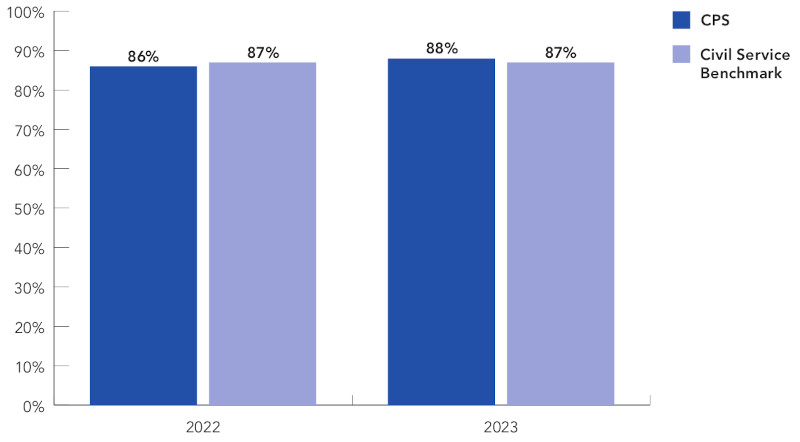
Table 2 – Success Measure: % of staff who agree with the people in my team can be relied upon to help when things get difficult in my job4
Our people lead with our values
Our values remain critical to the way we lead and manage across the CPS, as well as shaping how we work with partners across the wider criminal justice system. The way we lead with our values has been evidenced through how we collaborate, listen and engage with our people to shape the culture of the CPS.
We recognise that good leadership starts from the top of the organisation. We ensure that senior leader objectives clearly articulate the expectation to lead with our values across all corporate portfolios, embedding and leading the CPS strategic priorities and aligning with Cabinet Office protocols for performance management. This ensures our leaders are held accountable for their impact across the CPS.
Phase one of the leadership framework was launched in 2023 to highlight the key influencers of leadership across the CPS – from the Civil Service level to our organisational values. Whilst there is more to do, this provides a key foundation which is threaded within the leadership and management development programmes.
Coaching and mentoring remain a core component of our leadership development offer. This year over 300 hours of internal and external coaching was accessed by 157 people, demonstrating a dedicated focus to career and professional development.
To further support the importance of leading with our values, the CPS has a Nominated Officer for whistleblowing sitting alongside an independent Speak Out Champion and an additional Whistleblowing Champion. These roles raise the profile of the importance of speaking up and demonstrate our continued commitment to a positive and open culture where employees have the confidence and support to voice their concerns. The number of concerns raised with the Speak Out Champion remain less than 2% of the CPS workforce but demonstrate an increased confidence in speaking up.
Last year, a new Early Resolution and Advice Team was created to drive a cultural shift towards early resolution of workplace conflict and ensure the appropriate escalation of cases into,where necessary, more formal processes. Alongside the introduction of the team, there has been an increased focus on building and developing people management capability and confidence aligned to our organisational values.
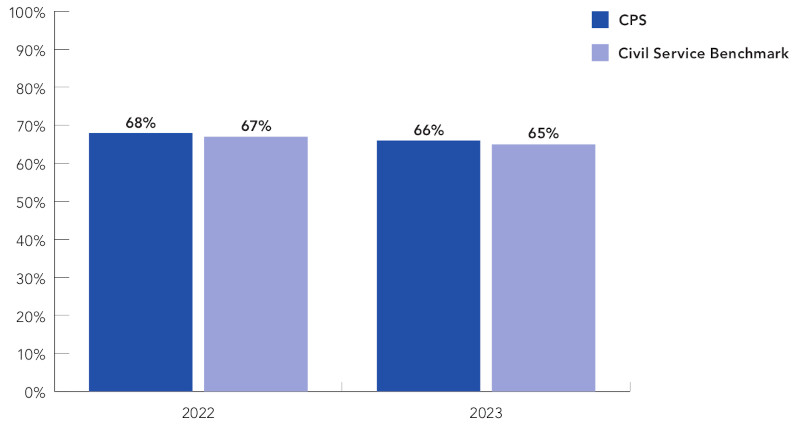
Table 3 – Success Measure: % of staff who agree with “I believe the actions of senior managers are consistent with my organisation’s values" 5
2. Digital capability
Our investment in digital capability helps us adapt to the rapidly changing nature of crime and improve the way justice is done
The challenges facing the criminal justice system require solutions with digital and data at their heart. This year we have focused on ensuring that everything we’re doing makes it easier and safer for our colleagues to deliver justice – and we have benefitted from a number of long-term projects coming to fruition. We have conducted seven major procurements for critical systems – maintaining performance whilst managing significant increases in demand and working within a reduced budget. We have been able to do this in part due to our improved in-house skills and capabilities.
Through this work we are also learning more about what is required to innovate, support, and improve our technology and data without relying on a single supplier. Over the next 12 months we look forward to developing our culture, skills, and ways of working to ensure we can continue to develop and continuously improve services for our users – both staff and the public – to the benefit of everyone involved in the criminal justice system.
We have confidence in the security of our systems
It is essential that we can demonstrate to the public and to those data subjects who share their information with us that our systems are secure. Our determination to safeguard our information ensures internal and external stakeholders can depend on the confidentiality, integrity, and availability of our services. This is underpinned by a robust framework that enshrines security as a shared responsibility across all levels of the organisation.
Last year, the CPS achieved 100% compliance with all mandatory GovS007 Technical Standards. Our performance is evaluated annually via the Cabinet Office’s Departmental Security Health Check. Our overall compliance across all functional areas for 2023 was 98%.
To remain resilient against the ever-evolving landscape of cyber threats, we have significantly increased our cyber intelligence and threat-hunting capabilities. This initiative is led by our Cyber Security Team (CST), who ensure the identification, analysis, and management of cyber threats, vulnerabilities, and risks. Consolidating a deep understanding of the cyber security landscape, we encourage risk owners to take proportionate responses and implement effective mitigations. Our risk profile is overseen by our internal Risk and Assurance Team, and we report, on a biannual basis, to the Audit and Risk Committee.
Our collaborative endeavours with the National Technical Authorities (NTA), the Government Security Group (GSG), the National Cyber Security Centre (NCSC), and our counterparts in the criminal justice system underscore our collective resolve to mitigate the ramifications of cyber incidents.
The enhancement of our Cyber Security, Education, and Training Awareness (CSETA) programme reflects our commitment to fostering a culture of cyber awareness within the CPS. This initiative has been integral in reducing our susceptibility to phishing attacks and identifying staff who may be in need of supplementary training. The recent baseline assessment of this programme underscored its effectiveness in increasing cyber awareness.
The CPS is taking part in GovAssure, the new, mandated cross-government cyber-assurance programme aimed at strengthening the security and resilience of government’s essential functions against cyber threats. We have evaluated our five critical systems to Stage 4 of GovAssure, and our self-assessments are currently undergoing independent review. This will result in our cyber security measures being objectively verified against high standards of security and assurance.
In parallel, CST has collaborated with our Commercial and Procurement divisions to further refine the security requirements for our suppliers. By embedding the ‘Cyber Essentials’ criteria into all third-party contracts associated with IT systems or services, we will ensure adherence to governmental standards of technical security measures, thus minimising the risk of breaches. This development coupled with a ‘supplier assurance’ needs assessment, enables our suppliers to fully comprehend and meet our stringent security expectations which includes a mandatory ‘Security Management Plan’ (SMP) for all services.
We innovate, including with emerging technology
The experience of delivering justice is distinctly different from five years ago – especially with regards to the digital tools available to our staff. This year we have improved a number of the digital solutions we use in making charging decisions. We have digitised the charging process across the CPS, providing a consistent way for police to request information and supporting prosecutors to be able to make timely decisions. We have also focused on the digital experience for our out-of-hours CPS Direct team. To improve their ability to focus on legal decision making, we have rolled out three digital updates – a modern call-handling solution that provides greater resilience at a lower cost; a way to digitally log charging decisions even when our core systems are being upgraded; and a new tool to easily view new cases and material and identify the Police and Criminal Evidence Act 1984 (PACE) clock.
Our Future Casework Tools programme is developing our new mission critical applications to reduce our reliance on our heritage system. Through the co-design with users and use of modern, cloud-based technology we are identifying efficiencies and delivering incremental benefits. So far, we have saved 36,000 working hours for users through better design and greater automation.
Our biggest success of the year was the launch of the Casework App, which was designed through ongoing user research. The app enables staff to work on case material in a new, user- friendly way. It includes search capabilities, so staff can look for key terms and phrases across a whole case – including in pictures and handwritten statements – and a functionality to complete document-related tasks. Since launch, colleagues have viewed over a million documents within the app and feedback has been overwhelmingly positive, with staff reporting that it is simple to use, easy to understand, and saves them time. As in other areas of our work, we are focusing on continuous improvement, and have made over 500 improvements since launch. As well as internal recognition, the Casework App team’s excellent work has been recognised externally, winning the DevOps Project of the Year Award.
We have also started work which is looking to save staff time when completing high-volume admin tasks. Two particular areas of improvement this year have been the automation of emails to be moved into our case management system (CMS) so that they can be applied quickly to the relevant case, and the archiving of old multimedia evidence to ensure we are managing our information appropriately.
In addition, we have started to pilot an app that enables colleagues to identify the most urgent tasks they need to complete. This will support us in reducing delays across the justice system, as well as providing insight into workloads for leadership teams. As we look to the year ahead, we are exploring the viability of a number of other applications which will aim to support operational colleagues – from capturing the legal decision and review of a case, to management of material from police.
We have also worked to improve victims and witness experience through reducing barriers to accessing information with prompts such as QR codes and making it easier for witnesses to claim expenses and have those claims processed more efficiently.
We are transforming the way in which we share case material and improve case progression with our criminal justice partners through the Digital Case File project. Digital Case File is a multi-year, multi-agency project, looking to digitalise the information exchanged between the CPS and the police during our review and the building of cases. We are now over 50% of the way through our joint police-CPS testing.
Last year, we implemented interfaces which interact with Common Platform, the new system delivered by HMCTS. These have enabled us to work collaboratively within magistrates’ courts, with defence professionals and the judiciary, to complete online case-progression forms and receive material directly into our system from our justice partners.
We also explored cross-system opportunities through initiatives such as the digital jury bundles proof of concept, aiming to enable a more effective and efficient presentation of evidence for jurors to assess in court, and to reduce preparation time. Last year, we worked with partners across judiciary, HMCTS, and defence to run mock trials, deploying an operational impact assessment tool to create a digital twin of the real-world Crown Court estate. This allowed visualisation of the impact at a national scale in a flexible, intuitive, and interrogable manner. As a result, we have been awarded funding from HM Treasury in the Spring Budget to take forward a pilot in conjunction with HMCTS. We are estimating that this could realise savings of up to 55,000 hours a year in court preparation time and reducing the length of trials.
Table 4 – Success Measure: Number of partners who share multimedia evidence with us on digital systems
| Period | Q1 2022-23 | Q2 2022-23 | Q3 2022-23 | Q4 2022-23 | Q1 2023-24 | Q2 2023-24 | Q3 2023-24 | Q4 2023-24 |
|---|---|---|---|---|---|---|---|---|
| Total Forces/ Investigative Authorities | 48 | 48 | 48 | 48 | 48 | 48 | 48 | 48 |
| Submitting at least one type of multimedia evidence digitally | 47 | 47 | 47 | 48 | 48 | 48 | 48 | 48 |
| Submitting Body Worn Video digitally | 47 | 47 | 47 | 48 | 48 | 48 | 48 | 48 |
| Submitting Achieving Best Evidence digitally | 44 | 44 | 44 | 46 | 46 | 46 | 46 | 46 |
| Submitting CCTV digitally | 45 | 45 | 45 | 45 | 48 | 48 | 48 | 48 |
| Submitting 999 calls digitally | 46 | 46 | 46 | 48 | 48 | 48 | 48 | 48 |
| Submitting other types of multimedia evidence digitally | 35 | 35 | 35 | 35 | 35 | 35 | 35 | 44 |
3. Strategic partnerships
The CPS is a leading voice in cross-government strategies and international cooperation to transform the criminal justice system
The CPS is a critical organisation in the criminal justice system and must work effectively and efficiently with a range of partners. This requires developing the essential capabilities, skills and relationships which allow us to deliver fair and independent prosecutions.
We must balance our operational knowledge and performance with futures thinking and high‑quality research to be confident in our capacity to deliver improvements, and to prepare for unforeseen challenges. This year we have continued building capability in these functions so that critical insights can be fed into planning early, and decisions informed as much as possible by key evidence.
Over the past year we have focused on how we can build on our strategic partnership work and ensure we have the skills and tools necessary to establish long-lasting, collaborative partnerships with partners and stakeholders, recognising that these interrelationships are the foundation of a healthy criminal justice system.
Major partnerships work delivered this year included the rollout of the new charging model, the launch of the National Operating Model for prosecuting adult rape cases and a new Crown Court Operating Model. These large-scale changes delivered via joint and cross-system governance demonstrate the importance of our positive relationships with partners.
We have invested time in ensuring the CPS’ operational expertise has been fully available to parliamentarians so that policy development and legislation is informed by our insights. We have continued our efforts on high-profile engagements in Westminster and with Members of Parliament in their constituencies to ensure the role of the CPS is understood.
Over the past year, we have also revised our International Strategy and restructured our international team (both in the UK and overseas) to help support UK domestic casework outcomes.
We lead on futures thinking to understand issues across the criminal justice system
In this year’s futures cycle, we prioritised our work around three insights: Artificial Intelligence in Criminal Justice, the Impact of an Ageing Population on the CPS and Crime in Virtual Reality and Augmented Reality. We engaged with relevant teams and experts across the CPS to align our recommendations with existing priorities and projects. These actions have been built into teams’ plans and long-term strategies to help us prepare for the potential future scenarios we might face.
We have also prioritised building a network of experts from across the CPS, government, academia and the private sector, improving our insights and building influence through knowledge sharing. As a result, we collaborated with partners on the Ministry of Justice’s futures work, developing long-term common assumptions about the future of the criminal justice system.
We influence change across the criminal justice system through trusted relationships
This year we welcomed the reintroduction of the Criminal Justice Board (CJB). We have fully engaged in its work to tackle outstanding court caseloads, including the exploration of levers to encourage early guilty pleas. Through CJB sub-governance structures, we have worked closely with partners to make decisions on, and drive forward, activity to deliver system-wide improvements in the short-medium term and are also considering longer term planning. This includes further consideration of how best to utilise data from across the system to inform both national and local decision making, such as using Local Criminal Justice Boards (LCJB), an initiative being led by the Ministry of Justice, to drive CJS data transformation.
We have concluded our programme of strategic partnerships development for senior leaders and are now mainstreaming the offer to ensure sustainability. We have also strengthened our relationship with Police and Crime Commissioners (PCCs) through engaging them on key work areas via their LCJB Chairs’ Forum to ensure they are well informed about relevant developments.
Operationally, we have rolled out the new Crown Court Operating Model which sees the CPS serving more material on the defence at a much earlier stage so that we can be more robust in our case management and encourage earlier guilty pleas. This forms part of a wider commitment with the Crown Court Improvement Group (CCIG), and we continue to embed this new way of working with the group’s oversight.
In July 2023 we launched the new National Operating Model for prosecuting cases of adult rape and, together with leaders from across police forces and the NPCC, we are continuing to roll out a new charging model. The new model prioritises the highest threat, risk and harm cases and is fully implemented in 12 of the 14 CPS Areas and 42 Police Forces (95%). The model has succeeded in simplifying and digitising the charging process and improving real time police-CPS communication. Across Areas, we have implemented improvements to the structure of the Joint Operational Improvement Meetings. These provide senior strategic oversight and direction to jointly agreed priority areas of improvement activity with the police. This has resulted in more structured and productive local engagement.
We advise Parliamentarians and Ministers on the operational implications of law and policy
We look to build confidence in the work of the CPS amongst Parliamentarians and, through them, the public. We utilise our operational insight and expertise to influence policy development and shape the debate around the criminal justice system.
At a national level we ensure the voice of the CPS is heard through our programme of work. In 2023 the CPS provided answers to 60 Parliamentary Questions and coordinated lines for six Attorney General’s Oral Questions. We continue to support the work of parliamentary select committees by providing written and oral evidence. In 2023 we provided oral evidence to eight committee inquiries and provided nine pieces of written evidence. Topics included the Criminal Justice Bill, human trafficking and policing priorities. Over the past year CPS Areas have also undertaken 20 meetings with Members of Parliament in their constituencies to explain the role and general function of the CPS. Included in this figure, are four shadowing days where MPs went to CPS offices and courts to shadow the work of prosecutors in East Midlands, North West and Cymru‑Wales.
We have continued to work collaboratively with governmental departments on several legislative proposals and Parliamentary Bills. Most notably, we have provided prosecutorial expertise and operational insights to help develop new provisions in the Public Order Act 2023, the Illegal Migration Act 2023, the Online Safety Act 2023, Economic, Crime and Corporate Transparency Act 2023, Firearms Act 2023, Protection from Sex-based Harassment in Public Act 2023, and legislative updates which banned the possession and supply of Nitrous Oxide and made it an offence to own an XL Bully Dog in England and Wales.
We continued to support and provide advice to the government on future legislation, such as the Criminal Justice Bill, and in particular, the Victims and Prisoners Act 2024 by advising on the legal and operational implications of proposed changes to victims’ entitlements and victim services.
We deliver justice across borders through effective international collaboration
This year we have re-focused our efforts in supporting UK domestic casework outcomes, which is now the primary focus of our international resources. We have revised the CPS International Strategy and restructured our international team (both in the UK and overseas) to help support UK domestic casework outcomes and achieve justice for UK victims. We have supported UK casework through various means, such as assisting with multiple enquiries concerning evidence overseas, requesting assistance linked to bilateral cooperation or ensuring that witnesses in other countries are able to give crucial evidence in UK trials via video link.
We have provided support to prosecutors and law enforcement partners to secure the successful extradition of individuals to the UK for the most serious offences, including Piran Ditta Khan from Pakistan for the murder of PC Sharon Beshenivsky. In addition, we have discharged our statutory duties to advise and act on behalf of foreign requesting authorities in export extradition cases, including the high-profile US request for Julian Assange. Over the last year, we finalised 1,624 such cases, including pre-arrest advice to foreign judicial authorities. This is essential work in maintaining the high levels of mutual trust and confidence with foreign judicial authorities which enables domestic CPS prosecutions to gain the reciprocal benefit of effective international co‑operation.
In September we hosted the International Association of Prosecutors Conference, bringing together prosecutors from 90 countries. In addition to enhancing international cooperation, reinforcing valuable relationships, and showcasing UK values, it gave us a unique opportunity to raise numerous cases and issues with international prosecution colleagues to speed up international assistance. Additionally, we entered into separate bilateral agreements with foreign partners on topics including organised immigration crime, which will facilitate enhanced engagement going forwards. Through technical developments and closer working, we have further enhanced our front-line prosecutor capabilities with a continued emphasis on developing robust international casework strategies. We have responded to prosecutors’ needs by delivering specific international guidance, enhancing accessibility via the new International Assistance Hub and expanded the capabilities of the International App to include extradition requests to EU Member States.
We continue to proactively engage with a variety of domestic partners, including the Home Office, to secure discussions on proposals to enhance future cooperation abilities across a multitude of countries. This includes putting forward proposals for 3rd Additional Protocol to the Council of Europe Convention on Mutual Assistance in Criminal Matters.
Next year we will work closely with domestic partners on the roll out of Crime (overseas production) Orders, enhance support to the International Casework Leads network and influence HMG’s policies and activities to enhance our international cooperation abilities to deliver just outcomes.
4. Casework quality
CPS legal expertise, casework quality and collaboration across the criminal justice system keep the public safer
Casework quality remains central to the work of the CPS and we continue to revise our prosecution guidance to ensure support of effective decision-making. The Code for Crown Prosecutors sets out the key principles for prosecutors and our published guidance supplements this by addressing specific areas of our work. By reviewing these core elements, we ensure that we support and provide a clear and effective framework for our decision-making.
Cases are progressed in a timely manner
The continued impacts of the pandemic and the Criminal Barristers Association action has meant that Crown Court backlogs remain an unprecedented challenge for the criminal justice system. The pandemic restrictions meant that by September 2020 the CPS’ total caseload (magistrates’, and Crown Court) was 80% above the February 2020 pre-Covid baseline of 109,469. The CPS Crown Court caseload reached a low in March 2022 of 67,716 and in March 2024 stood at 72,262, which remains significantly higher than the pre-pandemic February 2020 baseline of 44,317 cases.
We have continued delivering our full range of core functions throughout these challenging times due to a combination of factors, including our proactive investment in digital capabilities, strong governance, a nationally led approach, and the management of regional variances in caseloads. The Central Prosecutor Team (CPT) was developed in September 2022 and is based within CPS Direct (CPSD). The team are deployed to Areas of high demand to work on high- volume pre-charge decisions, and this has enabled spikes of work to be managed effectively. The CPT currently consists of 12 senior prosecutors who review around 200 cases per week and have reviewed over 6,000 cases to date. The Operations Directorate are now looking at a more extensive deployment of staff from other Areas to tackle more complex Crown Court cases. To date ten Senior Crown Prosecutors have been deployed to CPS Areas experiencing significant pressure.
This year we have also rolled out our new operating model for both the Crown Court and magistrates’ court, with a focus on the Director’s Charging Guidance 6th Edition at pre-charge decision stage. This includes the robust completion of the Better Case Management form – to support early service of as much of the prosecution evidence as possible at Initial Details of Prosecution Case (IDPC) on cases in which the Full Code Test (FCT) have been applied – as well as early disclosure of unused material and schedules after the sending hearing.
The focus over the next 12 months will be to ensure that the criminal justice system runs as efficiently as it can, by reducing the number of ineffective hearings and unnecessary adjournments.
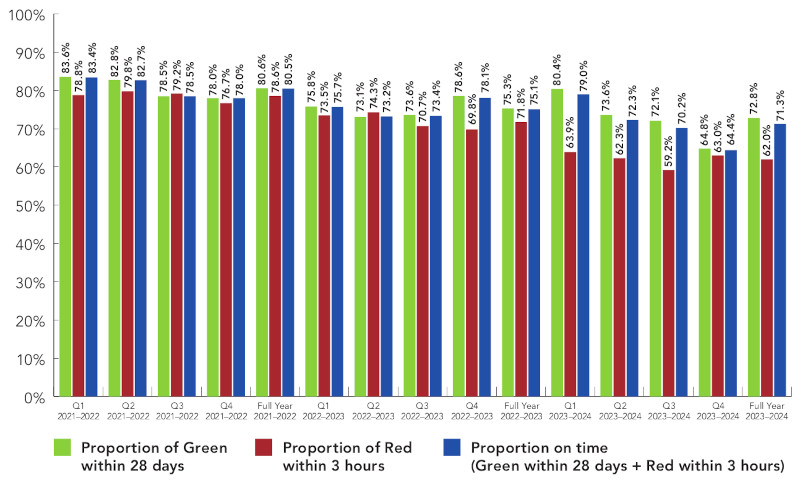
Table 5 – Success Measure: % of charging decisions completed on time 6
| Period | Q1 2021-22 | Q2 2021-22 | Q3 2021-22 | Q4 2021-22 | Full Year 2021-22 | Q1 2022-23 | Q2 2022-23 | Q3 2022-23 | Q4 2022-23 | Full Year 2022-23 | Q1 2023-24 | Q2 2023-24 | Q3 2023-24 | Q4 2023-24 | Full Year 2023-24 |
|---|---|---|---|---|---|---|---|---|---|---|---|---|---|---|---|
| Proportion of Green within 28 days | 83.6% | 82.8% | 78.5% | 78.0% | 80.6% | 75.8% | 73.1% | 73.6% | 78.6% | 75.3% | 80.4% | 73.6% | 72.1% | 64.8% | 72.8% |
| Proportion of Red within 3 hours | 78.8% | 79.8% | 79.2% | 76.7% | 78.6% | 73.5% | 74.3% | 70.7% | 69.8% | 71.8% | 63.9% | 62.3% | 59.2% | 63.0% | 62.0% |
| Proportion on time (Green within 28 days + Red within 3 hours) | 83.4% | 82.7% | 78.5% | 78.0% | 80.5% | 75.7% | 73.2% | 73.4% | 78.1% | 75.1% | 79.0% | 72.3% | 70.2% | 64.4% | 71.3% |
We have seen a slight decline in overall charging performance across the last 12 months, as outlined in Table 5. In line with previous years, performance fluctuates across quarters but the main reason for the overall decline this year has been the 6% increase in the number of pre- charge decision referrals from the police. This is further exacerbated by the pre-charge decision workload being at an all-time high. The increase in case complexity and case mix is prolonging the time it takes to verify that police file submissions are of appropriate quality to ensure a timely charging decision can be made within the Service Level Agreements.
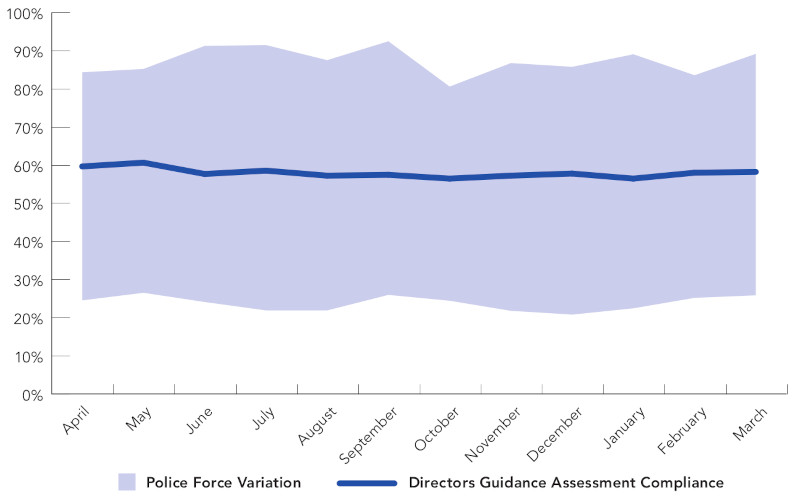
Table 6 – Director's Guidance Assessment Compliance
April | May | June | July | August | September | October | November | December | January | February | March | |
|---|---|---|---|---|---|---|---|---|---|---|---|---|
| Police Force Variation | 81.8% | 82.6% | 88.1% | 88.3% | 84.7% | 89.2% | 78.4% | 84.0% | 83.1% | 86.1% | 81.1% | 86.2% |
27.4% | 29.2% | 27.0% | 25.0% | 25.0% | 28.7% | 27.3% | 24.9% | 24.0% | 25.5% | 28.0% | 28.6% | |
| Director's Guidance Assessment Compliance | 59.4% | 60.3% | 57.6% | 58.4% | 57.2% | 57.4% | 56.5% | 57.2% | 57.7% | 56.5% | 57.9% | 58.1% |
We are a demand-led service and receive case files from policing and a small number of other investigatory agencies. The timeliness of our charging decisions is affected by the quality of the referrals we receive. We measure the quality of the files through compliance with the Director's Guidance 6th Edition (DG6). The Director's Guidance is issued by the Director of Public Prosecutions (the DPP) under the provision of section 37A of the Police and Criminal Evidence Act 1984 (PACE). It sets out what should be included in police submissions for the CPS to determine whether and what to charge in each case. Compliance is assessed by the application of the Director’s Guidance Assessment (DGA). In January 2023 police compliance as shown through DGA stood at 60%, by the end of December that year, it was 57.7%. In 41.6% of cases the prosecutor had to request further information through an Action Plan for policing to supply missing or further information either for the case to be charged or for the case to be effectively prosecuted post-charge.
Table 7 – Magistrates’ court caseloads
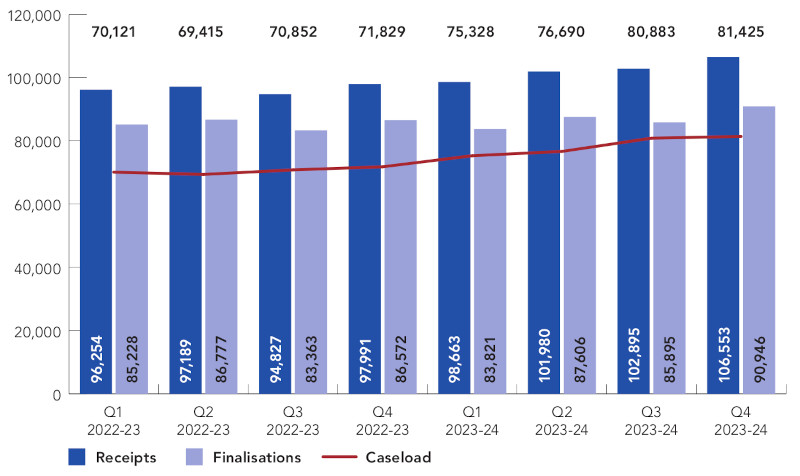
| Period | Q1 | Q2 | Q3 | Q4 | Q1 | Q2 | Q3 | Q4 |
|---|---|---|---|---|---|---|---|---|
| Receipts | 96,254 | 97,189 | 94,827 | 97,991 | 98,663 | 101,980 | 102,895 | 106,553 |
| Finalisations | 85,228 | 86,777 | 83,363 | 86,572 | 83,821 | 87,606 | 85,895 | 90,946 |
| Caseload | 70,121 | 69,415 | 70,852 | 71,829 | 75,328 | 76,690 | 80,883 | 81,425 |
Table 8 – Crown Court caseloads
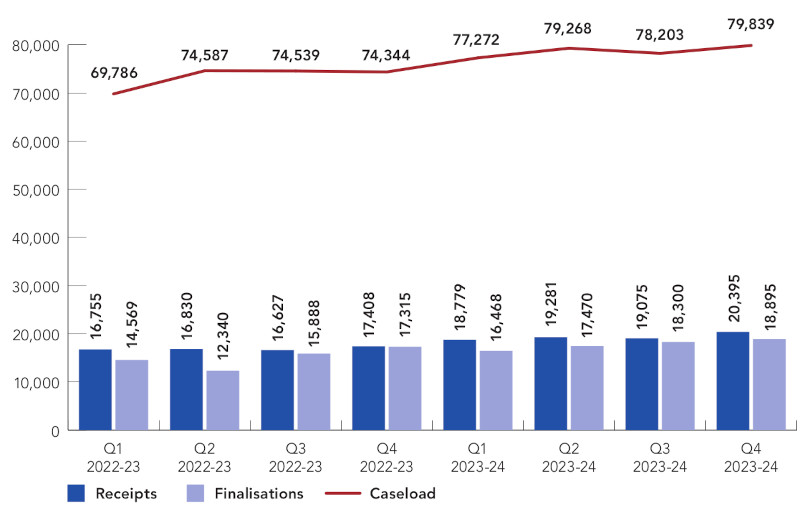
| Period | Q1 | Q2 | Q3 | Q4 | Q1 | Q2 | Q3 | Q4 |
|---|---|---|---|---|---|---|---|---|
| Receipts | 16,755 | 16,830 | 16,627 | 17,408 | 18,779 | 19,281 | 19,075 | 20,395 |
| Finalisations | 14,569 | 12,340 | 15,888 | 17,315 | 16,468 | 17,470 | 18,300 | 18,895 |
| Caseload | 69,786 | 74,587 | 74,539 | 74,344 | 77,272 | 79,268 | 78,203 | 79,839 |
The CPS has a responsibility to continually review cases and take account of any change in circumstances. If the prosecutor considers that the case no longer meets the evidential or public interest test of the Code of Crown Prosecutors then it is their duty to drop the case. If a prosecution is to be dropped it is fairer and more efficient to drop it at the earliest opportunity. Table 9 shows the proportion of dropped cases that were not dropped until the third or subsequent hearing. Dropped cases include those discontinued in advance of the hearing, where the CPS offered no evidence, those withdrawn at court, and cases where the defendant was bound over to keep the peace. We have seen a reduction in cases dropped at third or subsequent hearing in 2023-24 when compared to 2022-23.
Whilst there is a driving factor of victims and witnesses disengaging with the process and withdrawing their support for prosecutions due to delays in the system, this reduction highlights the fact that the CPS revised operating models have encouraged earlier reviews of cases. This has enabled prompt action to be taken when a witness disengages; ensuring that action is taken to either support the witness where appropriate, or that the case is promptly taken out of the system and that unnecessary hearings do not take place; thereby reducing inefficiencies across the criminal justice system.
Table 9 – Success Measure: % of Magistrates’ court cases dropped at 3rd or subsequent hearing
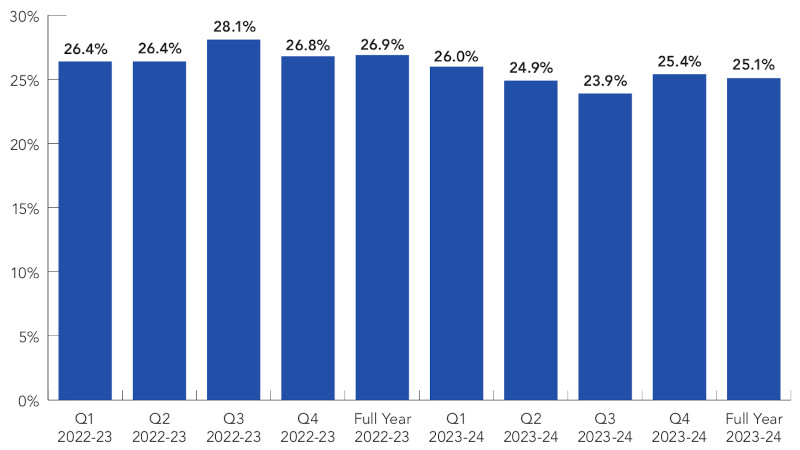
| Period | Q1 | Q2 | Q3 | Q4 | Full Year 2022-23 | Q1 | Q2 | Q3 | Q4 | Full Year 2023-24 |
|---|---|---|---|---|---|---|---|---|---|---|
| % MC dropped at third | 26.4% | 26.4% | 28.1% | 26.8% | 26.9% | 26.0% | 24.9% | 23.9% | 25.4% | 25.1% |
Cases are dealt with effectively
Under joint CPS-Police governance, a new charging model began to be rolled out from September 2022 across all CPS Areas and their respective police forces. Over the last year, the new model has been successfully rolled out to a further 10 CPS Areas and 36 police forces. This means 12 out of 14 CPS Areas and 42 out of 44 police forces are now operating under the new model. The remainder are the two CPS Areas in London and the Metropolitan Police Service and City of London Police. From January 2024 they have been operating aspects of the model as a precursor to full roll-out by the end of Q2 2024-25. The new model was jointly agreed between policing and the CPS after extensive testing. It affords priority to the most serious cases in terms of threat, risk, and harm and simplifies submission routes for all cases by using more efficient digital processes, focusing on quality, timeliness and better real-time communication between the CPS and police investigators. The initial six-month evaluation of the new model confirmed it was achieving anticipated business benefits. A second evaluation report will be produced before the end of July 2024 to further monitor progress.
This year we have also focused on improving our approach to case strategies. Our ability to express a clear case strategy is an essential element of our work and over the course of last year we have delivered a specific programme to enhance skills and capabilities in this area. This programme is designed to support the work of prosecutors in articulating a carefully planned route to a just outcome, thereby increasing efficiency and improving the way we are delivering justice.
We have played a vital role across the Criminal Justice System in implementing new legislation and policy under the Nationality and Borders Act 2022, supporting a government priority to prosecute the most egregious cases of those crossing the Channel illegally. To ensure CPS readiness and that cases are dealt with effectively, we have worked closely with Home Office and law enforcement agencies to agree a joint approach to referral criteria and evidential requirements.
We supported prosecutors by developing podcast training and published updated immigration legal guidance giving clear direction on evidential and public interest factors to support charging decisions, so the right person is prosecuted for the right offence. We also monitored the increased volume of referrals, which led to CPS South East being provided with increased assistance to make timely decisions.
We have continued to prioritise improvements in how we progress rape and serious sexual offences cases. Over the last year, we have analysed the wide range of activity and approaches undertaken by CPS Areas in response to Operation Soteria to address falls in referrals, efficiency and effectiveness of rape prosecutions, support for victims, and engagement with specialist services providers and interest groups. This analysis has been fully informed by the emerging findings of the independent academic review conducted by Professor Vanessa Munro from the University of Warwick School of Law, which formally reported in March 2024. The combined effect of this activity is the CPS National Operating Model for prosecuting adult rape. This was launched in July 2023 and consists of 29 elements required to be in place to bring uniformity to CPS activity based on best practice arising out of Operation Soteria. By the end of March 2024, CPS delivery of these elements was on track in accordance with our internal delivery plans, with 23 of the 29 having been delivered. These include joint agreements with policing concerning aspects of early advice from the CPS during investigations, revised and refreshed training for prosecutors, guidance on ‘suspect-centric’ approaches, specialist case progression resources, and dedicated communications channels for specialist Independent Sexual Violence Advisors (ISVAs). The remaining six elements are scheduled to be fully rolled out during Q3 2024-25.
Table 10 – Rape receipts and charges
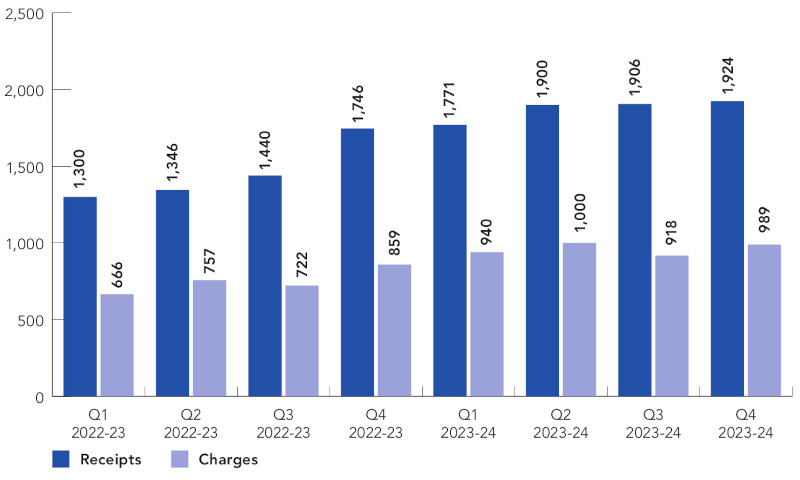
| Period | Q1 | Q2 | Q3 | Q4 | Q1 | Q2 | Q3 | Q4 |
|---|---|---|---|---|---|---|---|---|
| Receipts | 1,300 | 1,346 | 1,440 | 1,746 | 1,771 | 1,900 | 1,906 | 1,924 |
| Charges | 666 | 757 | 722 | 859 | 940 | 1,000 | 918 | 989 |
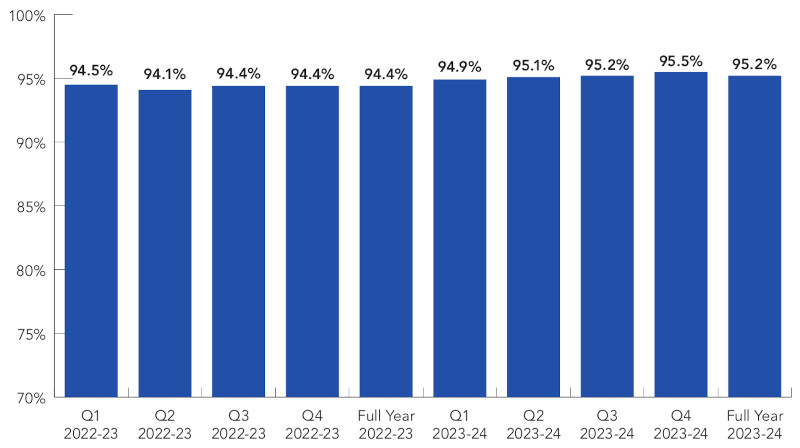
Table 11 – Success Measure: % of Judge directions that are complied with on time
| Period | Q1 | Q2 | Q3 | Q4 | Full Year 2022-23 | Q1 | Q2 | Q3 | Q4 | Full Year 2023-24 |
|---|---|---|---|---|---|---|---|---|---|---|
| % Judge Directions completed on time | 94.5% | 94.1% | 94.4% | 94.4% | 94.4% | 94.9% | 95.1% | 95.2% | 95.5% | 95.2% |
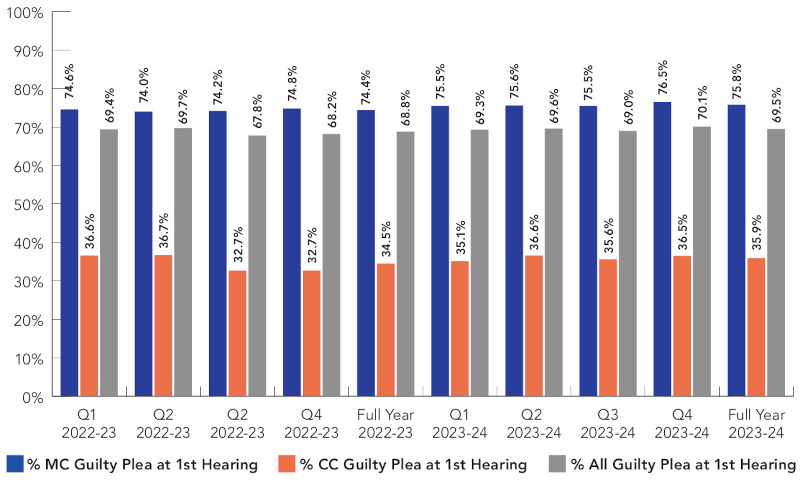
Table 12 – Success Measure: % of guilty pleas at first hearing
| Period | Q1 | Q2 | Q3 | Q4 | Full Year 2022-23 | Q1 | Q2 | Q3 | Q4 | Full Year 2023-24 |
|---|---|---|---|---|---|---|---|---|---|---|
| % MC Guilty Plea at 1st Hearing | 74.6% | 74.0% | 74.2% | 74.8% | 74.4% | 75.5% | 75.6% | 75.5% | 76.5% | 75.8% |
| % CC Guilty Plea at 1st Hearing | 36.6% | 36.7% | 32.7% | 32.7% | 34.5% | 35.1% | 36.6% | 35.6% | 36.5% | 35.9% |
| % All Guilty Plea at 1st Hearing | 69.4% | 69.7% | 67.8% | 68.2% | 68.8% | 69.3% | 69.6% | 69.0% | 70.1% | 69.5% |
Guilty pleas at first hearing are expressed as a percentage of all guilty pleas.
The quality of our casework is enhanced through partnership working
We remain determined to improve our work on progressing Domestic Abuse (DA) cases and our activity over the last year has focused on developing a DA Joint Justice Plan (DAJJP) that will transform how we investigate and prosecute domestic abuse cases, whilst providing flexibility to respond to local needs and service provision. The DA JJP promotes collaboration between the CPS and policing, which is key to securing justice for victims and holding offenders to account.
Over the summer, we conducted extensive stakeholder engagement activities and considered the academic research from Operation Soteria and inspectorate recommendations to form an evidence base for our work. This informed the core commitments and strategic priorities of the DA JJP. A national event took place in March to translate the national plan into plans for local implementation and bring delegates together at a regional level to open dialogue ahead of the full launch, expected later this year. Other aspects of the plan are still in development, and we are currently focusing on how to raise standards; and improve consistency in aspects of DA case strategy and quality, such as training to improve prosecutors’ knowledge, and understanding of the impact of trauma on DA victims.
Other activity within the Domestic Abuse Programme includes working in partnership with police and Home Office to develop Domestic Abuse Protection Orders (DAPO) pilots and set up Local Partner Steering Groups to ensure risks to implementation are mitigated in advance of commencement. We have updated guidance on DA, stalking and harassment and coercive and controlling behaviour to support prosecutors with their case strategy. Training has also been improved across violence against women and girls casework with compulsory DA refresher training and modules on stalking and coercive control offences now available to all prosecutors. A bespoke course on trauma and so‑called ‘honour-based’ abuse and forced marriage is in development and to be rolled out this year.
5. Public confidence
We work with partners to serve victims and witnesses and uphold the rights of defendants in a way that is fair and understood by all communities
We recognise the complexity and challenges in ensuring the wider public retains confidence in both our organisation and in the wider criminal justice system. This requires us to deliver both the independent and fair prosecutions that the public expect of us, as well as a service that treats victims and defendants properly.
To best serve victims and witnesses, we have undertaken further research to better understand how service users feel about their communication with the CPS and what we can do to improve. We are undertaking an ambitious programme of research on disproportionality in our charging decisions to understand and address the issue, overseen by an independent advisory board. We also recognise our important role in serving defendants as well as victims and witnesses. We have continued to reach out to our diverse communities through our Inclusion and Community Engagement Strategy and a range of different engagements and events. The insights from these events are informing the ongoing work on our most complex and difficult cases.
This year we have worked hard on communicating our role to the public and conveying our ongoing commitment on key issues such as rape and serious sexual offences and violence against women and girls. We have also prioritised victim engagement. We understand that public confidence and understanding of the CPS has an impact on victims’ experiences interacting with us, and we are committed to expanding our reach and providing valuable information to new audiences.
Victims and witnesses have a fair experience interacting with us, regardless of outcome
Improving criminal justice outcomes and the experience of victims in cases of violence against women and girls is a top priority for the CPS and supporting victims has been at the heart of our work to improve our handling of rape cases.
Close joint working between the police and prosecutors has been key to driving up the number of successful prosecutions. In 2023-24, we continued to work closely with policing through our wide-ranging Joint National Action Plan (JNAP) on rape which we completed in January, and the launch of the complementary policing and National Operating Model prosecuting adult rape. Based on the success of the JNAP we have agreed to continue joint governance between police and the CPS for rape through a Joint Rape Improvement Group to ensure we remain aligned and complementary as we continue to implement and embed our operating models. We are seeing tangible results; since the launch of the Joint National Action Plan in January 2021 there has been a 95% increase in referral and a 152% increase in charge volumes for adult rape (based on Q3 2023-24 data).
We also published leading research on misconceptions and assumptions, undertaken by specialist organisation Equally Ours. This work will support further improvements to the CPS approach to violence against women and girls (VAWG), which will be set out in our refreshed VAWG Strategy due for publication in 2024-25.
We understand how best to serve our diverse communities
This year, we have held two Community Accountability Forums on violence against women and girls. These focused on the way in which VAWG-related offences overlap and impact on victims with protected characteristics, and on female defendants in the criminal justice system, as well as the ways in which the CPS can improve its understanding of the context of female offending. We have also held two National Scrutiny Panel meetings on joint enterprise homicide cases, which have provided useful feedback on the CPS approach to this area of casework. These forums have provided rich insights from a range of diverse stakeholders drawn from the voluntary community sector, criminal justice, academia, and across government. They have helped to guide and inform the development of the CPS approach to these areas of work.
CPS Areas continue to hold Local Scrutiny Involvement Panels where a review of cases involving violence against women and girls, and hate crime, is carried out with external stakeholders, such as victims’ groups. CPS Areas have also undertaken wide ranging community engagement activities, including work experience programmes, to improve public confidence by raising awareness of our role, the support available to victims and witnesses, and to promote the CPS as an inclusive employer.
We are a leading voice in ensuring defendants are treated fairly by the CPS
Our Defendants: Fairness for All Strategy 2025 sets out our commitment to ensuring that the right person is prosecuted for the right offence and to protecting the rights of suspects and defendants.
In 2023-24, we focused on joint enterprise homicide and attempted homicide cases. A pilot data collection exercise in seven CPS Areas was undertaken, alongside two National Scrutiny Panel meetings involving expert stakeholders. Results from the pilot and feedback from the panel has led to the development and implementation of a full monitoring scheme for joint enterprise homicide prosecutions, which is now being implemented across the CPS. This scheme will enable the CPS to report on trends and ensure that it is accountable to stakeholders for its approach to this area of casework.
We have worked intensively on disproportionality throughout this year. Following the publication of independent academic research, commissioned by the CPS, on disproportionality in charging decisions in February 2023, the CPS has embarked upon a detailed programme of research to understand this issue in greater detail. Publication of this research, alongside a detailed action plan, will follow in 2024-25.
We also convened a mental health stakeholder forum throughout 2023-24, ensuring that expert stakeholders are able to shape our work on this issue. This has included an evaluation of the way in which the CPS monitors casework involving suspects with mental health conditions. Work with the police to improve the information available to investigators and prosecutors in handling cases involving suspects with mental health conditions, as well as suspects who are children, has also been taken forward.
The public understand our value
This year we have focused our communications work on priority campaign areas, such as rape and serious sexual offences and serious economic and organised crime.
We have reached wider audiences by taking part in primetime documentaries and podcasts, and by co-creating digital videos with relevant experts. We successfully promoted CPS research into harmful misconceptions around rape and showcased our work to prosecute new laws against cyberflashing, which was picked up by the media.
Our approach to building public confidence has been informed by audience research, and we increasingly use digital channels to reach and engage our target audiences. In the past year, the CPS Instagram account audience grew by 70%, and our posts had been seen more than 10 million times. Overall on social media, positive public sentiment rose by five percentage points. In the past year, we have doubled the reach of our community newsletter, with over 24,000 subscribers now hearing directly about issues that matter to them.
There has been a strong focus on recruitment this year and, through enhanced recruitment marketing activity, we have supported campaigns that have attracted record numbers of applications. Our people have been central to our recruitment campaigns, talking with passion about their own roles in ensuring justice is delivered, and the benefits of our supportive working environment.
This year we continued a programme of polling to help us understand and track the level of public confidence in our work. We surveyed levels of confidence in the fairness, effectiveness and independence of the CPS, and of the wider criminal justice system, with more than half of those surveyed online agreeing that the CPS is fair and independent.
Table 13 – Confidence that the CPS and CJS are “Fair”
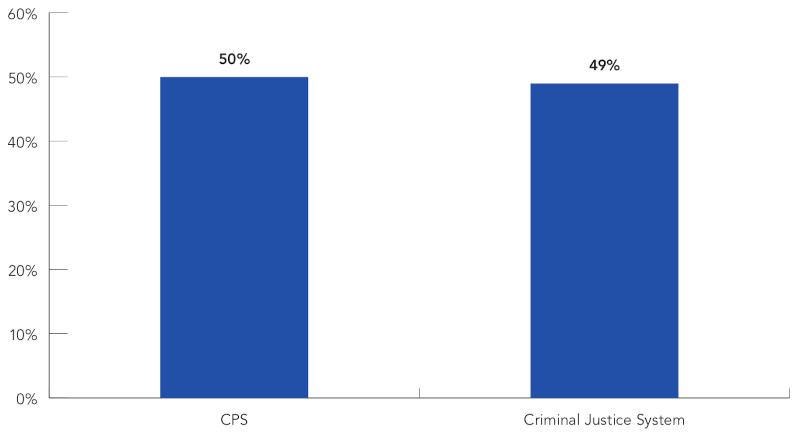
Table 14 – Confidence that the CPS and CJS are “Effective”
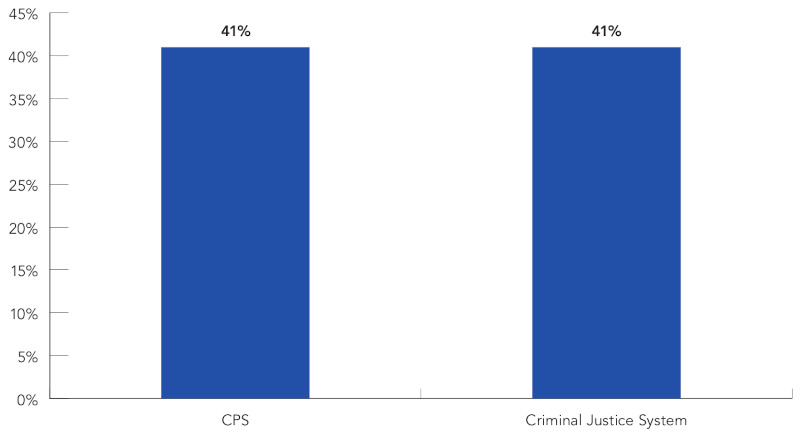
Table 15 – Confidence that the CPS and CJS are “Independent”
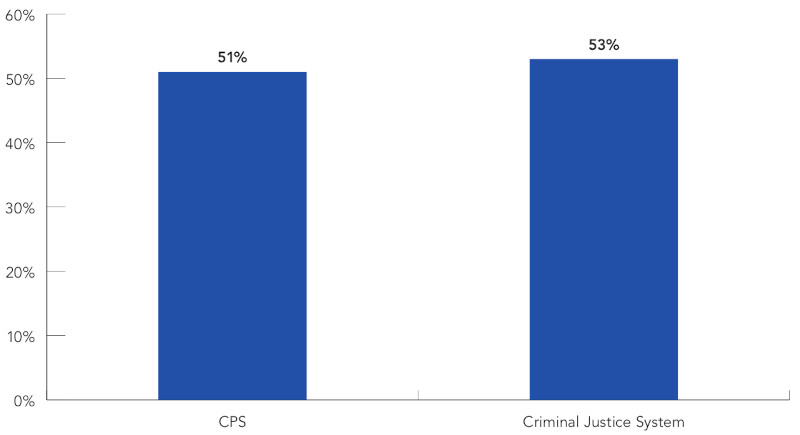
More than half of those surveyed online agreed that the CPS is fair and independent. Public confidence in the CPS as fair, effective, and independent has decreased slightly since last year. We will continue to measure public opinion by conducting an annual survey to help inform our work. We will also use the survey to better understand what is driving public sentiment and how we can improve public confidence. We will continue our work with partners and stakeholders in the criminal justice system to improve public confidence in the CPS.
- People Survey 2023 https://www.cps.gov.uk/publication/civil-service-people-survey-reports
- People Survey 2023 https://www.cps.gov.uk/publication/civil-service-people-survey-reports
- Previous data published in the Annual Report and Accounts only included the 14 CPS Area rate and will be different from the figures shown in this graph. For publication purposes we publish national data which also includes the work of the Casework Divisions, which are not region-specific and deal with specialised caseloads such as organised crime and terrorism. Future publications will be consistent with the data provided in this graph