
Performance analysis
This section provides a summary of the CPS’ performance against our CPS 2025 strategic aims and outcomes, most of which comes from the delivery of the Business Plan 2022-23. It is important to review and reflect on the achievements and progress made under these key change projects as they will ultimately drive improvements across our key performance metrics.
1. Our people
Support for the success and wellbeing of our people enables everyone to thrive.
As the organisation continues to focus on operational effectiveness to focus on the impacts of the pandemic and addressing key strategic priorities, such as the cross- criminal justice system strategy for rape, our support for our people has remained heavily focussed on ensuring the CPS has the right people available at the right time to deliver high quality casework outcomes. To reflect organisational policies as well as recruiting and inducting people into Rape and Serious Sexual Offences (RASSO) units, a new wellbeing support package has been developed to support our teams dealing with the most sensitive cases. We have supported our leaders and managers to encourage our people to adopt our hybrid working principles providing a balance between flexibility and operational need.
Over the course of 2023-24 the CPS has delivered an ambitious supply strategy to support the reduction in case backlogs, and drive efficiency within the organisation to ensure operational effectiveness. This includes an intensive recruitment schedule for our core roles, resulting in 1162 new starters which is the highest volume on record and 42% more than 2021-22 and overall, 8.4% workforce growth in 2022-23.
The labour market has been challenging, including fewer people choosing criminal law as a profession, labour shortage across the England and Wales and an increased need for specialist skills such as RASSO lawyers. To combat this, CPS has taken an innovative approach to resourcing, including supporting the implementation of the Central Prosecution Team to allow prosecutors to be deployed flexibly from locations with a stronger recruitment market to best support those areas that have a more limited supply, and undertaking new approaches to tap into different parts of the market, such as a direct to RASSO Senior Crown Prosecutor campaign resulting in 19 successful candidates.
To ensure our recruitment processes remain inclusive and help the CPS to attract the talent, we have used different methods to recruit candidates. Attraction and marketing strategies through commercial partners combined with working with our Area Business Manager (ABM) leads has further improved the recruitment process for national campaigns and associated processes. As of March 2023, we achieved a 3.8% vacancy rate against budgeted position, with vacancy rate of 3.2% for our Senior Crown Prosecutor grade.
CPS has leaned heavily into a ‘grow your own’ approach for legal roles, including increasing the Legal Trainee intake to 80 and enhancing the support around developing lawyers into Senior Crown Prosecutor roles. These ambitious growth targets have placed some strain on teams investing time in induction and training of large volumes of new people, however this an unavoidable consequence of high volume growth and mitigating actions are in place.
The Civil Service People Survey 2022 was completed by the highest number of CPS colleagues in six years. Despite a challenging backdrop of post-pandemic, cost of living and operational recovery (which continued to dominate much of 2022-23), our Employee Engagement Index (EEI) at 69% was in contrast to cross-Civil Service trends. This was our second highest EEI recorded since the survey began in 2009 and, for the fourth successive year, remains ahead of the Civil Service People Survey benchmark (65%), by four percentage points.
All parts of our workforce are diverse and inclusive
Workforce inclusion is an essential element of both our People and Inclusion and Community Engagement (ICE) strategies, which inform our understanding of the steps needed to represent the communities we serve. We were recognised as a Top Employer for Social Mobility having been recognised in the TOP 75, at 36th place in the 2022 Social Mobility Index.
Our ‘Towards Social Mobility’ plan has been refreshed to align with our ICE strategy, covering 2021-2025. The overarching aims are to provide a picture of the socio-economic status of our workforce across all professions and functions, to identify and remove barriers to attraction, retention, and career progression.
The ‘Count me in’ campaign continues to raise awareness among colleagues using various Communication channels about the benefits of declaration and the ability to disclose their equality information on an ongoing basis. We have seen a slight increase in representation rates in both the wider workforce and at senior levels, and representation across each protected characteristic remains at or higher than the Civil Service average.
A review was conducted of Diversity Champions and a refreshed cadre appointed with the introduction of Diversity Ambassadors to work with them. This new team of Champions and Ambassadors is to extend the impact and reach of our diversity priorities across the CPS, building capacity and spreading expertise and corporate understanding on D&I, ensuring our work is fully aligned with the Civil Service Diversity and Inclusion strategy alongside our internal ICE strategy. We are working with internal staff networks to provide a refreshed constitution and membership to align our corporate diversity and inclusion priorities whilst listening to the ‘lived experience’ of our people.
Additionally, a Speak Out Champion and Equality Diversity and Inclusion Advisor have been brought into the organisation to build on our engagement with staff. These roles aim to improve confidence amongst our employees to share their experiences.
By providing an independent, impartial, confidential and safe source of advice and can be approached by staff to make suggestions and improvements about the way CPS does things, raise concerns about a business, people or operational change, discuss inappropriate or unwanted behaviours, clarify local practices compared to national policies and seek personal or emotional support.
Table 1 – Success Measure: Diversity of our staff
| 2022-23 | 2021-22 | |||
|---|---|---|---|---|
| Gender | Gender | |||
| Female | Male | Female | Male | |
| All Staff | 67% | 33% | 67% | 33% |
| Grade 6/7 | 62% | 38% | 62% | 38% |
| SCS | 55% | 45% | 59% | 41% |
| 2022-23 | 2021-22 | |||
| Ethnicity | Ethnicity | |||
| Ethnic minority | White | Ethnic minority | White | |
| All Staff | 23% | 77% | 21% | 79% |
| Grade 6/7 | 21% | 79% | 20% | 80% |
| SCS | 9% | 91% | 10% | 90% |
| 2022-23 | 2021-22 | |||
| Disability | Disability | |||
| Disabled | Not disabled | Disabled | Not disabled | |
| All Staff | 16% | 84% | 15% | 85% |
| Grade 6/7 | 15% | 85% | 14% | 86% |
| SCS | 13% | 87% | 12% | 88% |
| 2022-23 | 2021-22 | |||
| Sexual Orientation | Sexual Orientation | |||
| LGBT+ | Heterosexual/ straight | LGBT+ | Heterosexual/ straight | |
| All Staff | 6% | 94% | 5% | 95% |
| Grade 6/7 | 5% | 95% | 4% | 96% |
| SCS | 7% | 93% | 6% | 94% |
| Source – Staff declarations on CPS HR system as at Q4 2022-23. Figures for Ethnicity, Disability and Sexual Orientation are expressed as a percentage of those staff who made a declaration. | ||||
Our people have the skills and tools they need to succeed
Launched in February 2022, Hybrid Working is how we work in the CPS, blending working in our offices, at court and from home, depending on the needs of the organisation, individual role, circumstances, and preferences. Now embedded, the principles have been shaped by our people, providing a balance and support in meeting our business needs. It is an open and flexible approach designed to support people to make the best decisions about where they work, based upon three principles: attending with purpose; focused on wellbeing; and collaboration being key. The CPS’ approach to Hybrid Working recently received positive feedback from the Government Internal Audit Agency which found substantial evidence that “the framework of governance, risk management and control is adequate and effective.”
Our people are at the heart of everything that we do, and success is enabled by a strong and capable workforce, supported through a comprehensive training offer for all professions. Hybrid Working has demanded a different approach to how we lead and manage. Our managers continue to be enriched through a bespoke development offer for Aspiring Manager, Manager Induction and Experienced Manager Programmes, which is further underpinned with a continuous suite of bite sized, accessible learning with a lens upon performance management, wellbeing and confidence.
The development of our Prosecutors is led by the Central Legal Training Team, providing expert training from Lawyer Induction through to Specialist learning. This is mirrored through the highly successful Prosecutor Pathways, nurturing talent and growing future prosecutors, to the tailored Paralegal Induction Programme and wider Operational Delivery Profession development offer. To ensure our people are supported with the skills and tools they need, additionally an Operational Delivery Professions Steering group has been established to drive up the capability and importance of the profession in support of high-quality casework outcomes.
Our supportive culture promotes wellbeing
In 2022 we piloted Schwartz Rounds across RASSO units – a structured forum providing an opportunity to discuss the emotional and social aspects of working in CPS. This is an additional support option that will be added into the wider RASSO wellbeing and training package in 2023. To support staff through ongoing cost of living pressures, we have launched a Financial Wellbeing campaign in line with guidance from Civil Service HR. This includes improved signposting to financial support options, money-saving benefits and educational offers to improve financial capability.
We have procured the Thrive app (an NHS approved mental health app) for an additional year as both a preventative and a supportive tool for staff’s mental health, which includes psychologist support. We continue to work to embed and improve service levels from our procured Employee Assistance Programme (EAP) and Occupational Health (OH) providers.
We have worked with our EAP provider to reintroduce a comprehensive physical Health Check offer, which has been rolled out across many CPS sites from the start of 2023 (following a pause in this service during the pandemic).
In 2022 we introduced a new support network: Domestic Abuse Allies (DAAs), to support people across the CPS who might find themselves directly or indirectly affected by a domestic abuse situation. We now have 42 DAAs based across England and Wales, offering a confidential ‘first port of call’ for staff and helping people find the support they need.
We have refined the membership of our Mental Health First Aiders (MHFA) network to ensure the most committed and knowledgeable volunteers across CPS are available to support colleagues in a MHFA capacity. In the run up to providing 3-year ‘refresher’ training in 2023 to renew our MHFAs’ skills and accreditation, we provided a successful in-person conference on the theme of ‘Reconnecting’ that, for the first time since COVID-19, allowed our MHFAs to reconnect with their knowledge, their purpose and one another.
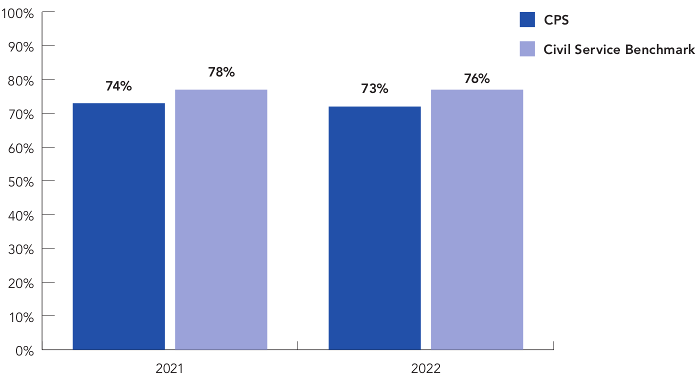
Table 2 – Success Measure: % of staff who agree with “The people in my team genuinely care about my wellbeing”1
Our people lead with our values
Our values remain critical to the way we lead and manage across the CPS, and influence and work across the wider criminal justice system. The way we lead with our values has been evidenced through how we collaborate, listen and engage with our people to shape the culture of the CPS.
We recognise that good leadership starts from the top of the organisation and ensure that senior leader objectives clearly articulate the expectation to lead with our values across all corporate portfolios, embedding and leading the CPS strategic priorities and aligned with Cabinet Office protocols for performance management, ensuring our leaders are held accountable for their impact across the CPS.
Phase one of the leadership framework was launched in 2023 to highlight the key influencers of leadership across the CPS from the Civil Service level to the organisational values. Whilst there is more to do, this provides a key foundation which is threaded within the leadership and management development programmes.
We have embedded our coaching and mentoring offer, extending the impact of good leadership and management across the CPS, delivering over 200 hours of coaching across the organisation.
To further support the importance of leading with our values, the CPS announced the appointment of a new Nominated Officer for whistleblowing to work alongside an independent Speak Out Champion. These appointments raise the profile of the importance of speaking up and demonstrate the CPS’ continued commitment to a positive and open culture where employees have the confidence and support to voice their concerns.
In October 2022, the CPS launched a revised Whistleblowing (and Raising a Concern) Policy. The revised policy and associated learning ensure employees have a fundamental understanding of the policy and provide clarity on the process and routes for raising a concern and the support that will be provided. The CPS actively participates in the annual Civil Service Speak Up Campaign to maximise employee engagement and improve awareness of the Civil Service Code, CPS values and how to raise concerns in the workplace.
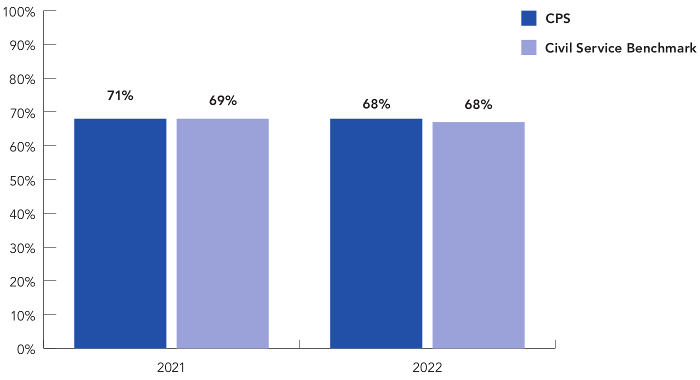
Table 3 – Success Measure: % of staff who agree with “I believe the actions of my Chief Crown Prosecutor, Deputy Chief Crown Prosecutor, Area Business Manager or Head of Directorate or Division are consistent with the CPS’ values”
2. Digital capability
Our investment in digital capability helps us adapt to the rapidly changing nature of crime and improve the way justice is done
The CPS remains committed to an ambitious programme of digital projects and, critically, we continue work to ensure the security of our systems. Over the past year we have implemented a new phishing programme to assist staff in managing risks, re-evaluated clearance requirements across the organisation and continued to test our resilience in preparation of potential threats.
As an organisation, we understand the value of better and earlier data-driven insights and have been progressing the implementation of systems that make the most of our information. Better data, analysis and insights will ultimately mean decision-makers will have more real-time information at their disposal than ever before. As a data-driven organisation, we continue to scrutinise our data strategy and have been developing a new data platform which will improve efficiency and enable us to gain better insights into the organisation as a whole.
Two major digital projects this year – Digital Case File and Common Platform – are being developed to improve case progression overall, aide communication between the CPS, police and HMCTS and improve case progression overall. These projects require flexibility and cooperation with different elements of the criminal justice system, and we have worked hard to fulfil our obligations and meet deadlines this year.
We have also benefitted from continued digital innovation, driven by our increasing capabilities in providing tailored apps and platforms. We recognise the holistic value of innovation, with improved tools and functions being made available across the CPS, from casework to our staff awards. We continue to invest in our digital capability, with new laptops, printing services and better security controls contributing to the increased efficiency and connectedness of our organisation.
Enhancing the digital confidence of our staff has also been a focus this year, as we become more digitally advanced as a service. We have conducted staff surveys to identify gaps in knowledge and understand the barriers facing staff, enabling us to devise a programme that will address these issues in the coming year. We have also decided to introduce Digital Transformation Leads in some CPS Areas, providing a digital focus and continuing work to grow staff confidence as the digital landscape keeps changing.
We recognise the importance of keeping up with advances in digital technology, looking to the future and planning ahead to ensure we are utilising the best technology and systems for our staff and service users. We remain absolutely committed to investing in digital capability so that our work on the digitisation of information and processes, including with our partners in the criminal justice system, is transformative. Our prioritisation of this will enable cases and information to be shared securely and efficiently, supporting better outcomes and the progression of fair and independent prosecutions.
We have confidence in the security of our systems
Demonstrating that our systems are secure and that data subjects – both internal and external – can rely on their integrity is essential in maintaining confidence in the CPS.
Threats, vulnerabilities and risks to our systems are captured, and reviewed monthly by a team led by our Senior Information Risk Owner (SIRO). Their analysis of all cyber security risks enables risk owners to make proportionate decisions, identify appropriate mitigations and monitor ongoing risks against agreed tolerance. We also work closely with the National Technical Authorities, the Government Security Group, and other members of the criminal justice system, to ensure the impact of any cyberattacks are recognised and addressed.
A new phishing programme has been devised and rolled out across the CPS. It has enabled us to reduce the overall phishing risk by identifying users needing further guidance and providing them with additional training and support.
Our level of compliance with government security standards, as outlined in the GovS007 Technical Standard remains consistently high. Our compliance is evaluated annually via the Cabinet Office’s Departmental Security Health Check. In 2022, they confirmed that we are meeting almost all the mandatory controls in the Security Standards. Where they are currently not being met, they reported that we are demonstrating positive steps to towards compliance, and in most cases have plans in place to make ongoing improvements.
We have completed a review of the clearances required for all roles across the business to ensure we maintain a stringent vetting regime which reflects current working practices and provides assurance to the public and our key stakeholders.
At the end of March 2022, the CPS undertook a no-notice, live-play business continuity exercise to test its response to a major cyber incident. This exercise helped develop plans last year into more defined incident management plans for cyber and IT outages. Additionally, we tested our response to a range of IT outages with key responders with the Digital and Information Directorate (DID) to ensure that our plans were as robust as could be and improvements could be identified. This work helped our response to a major network outage affecting the CPS out of hours during 2023.
The combined efforts of the Security & Information Assurance Division (SIAD) ensure robust security and information management practices, policies and procedures are maintained, audited and tested on an ongoing basis; this is further supplemented by a rigorous mandatory training regime for all CPS staff.
We use data to drive change
We have revised our data strategy to ensure it clearly sets out how we deliver on our objective to be a data driven organisation. Key to enabling this, we have made significant progress towards the development of a new data platform. This will ensure we collate data from across the organisation in a new “data lake”, which can be aligned and reported efficiently through Power BI software to readily enable insights. We will shortly complete the proof-of-concept stage which will allow us to consider whether we move towards procurement and the delivery of the full strategic platform.
We innovate, including with emerging technology
We have developed a technology strategy which puts users at the heart of everything we do so that we can learn faster, at lower risk. This has been developed collaboratively and informed by experts and suppliers in the industry. It will guide our decisions between now and 2025 when CPS refreshes the strategy for the whole organisation.
We continue to make progress in transforming the way in which we share case material and improve case progression with our criminal justice partners through two major programmes:
- Digital Case File will introduce greater digitisation of information that is exchanged between CPS and the police during our review and building of cases. We have completed the development of our Case Management System (CMS) required to commence testing with the police when they are ready.
- Common Platform Interfaces will allow us to interact with the Common Platform, the new system being delivered by His Majesty Courts and Tribunal Service (HMCTS). These will enable us to work collaboratively with the courts, defence professionals and the judiciary; to serve case material, complete key online case progression forms and reduce rekeying between agencies in tracking progress against judicial orders. We have met all our obligations in the programme and completed our development. We are ready to go live with the first release for the Magistrates Court and are working with HMCTS to complete testing of the further releases.
The CPS’ missions critical case management system whilst reliable, was developed over 20 years ago, and utilises legacy technology that provides a variable user experience. Following the decision for CPS to retain responsibility for these tools we have defined a business focused programme of work. This is underpinned by a technical strategy and roadmap that will enable incremental transformation to maintain live service, minimise risk, address user concerns, and meet business, commercial and financial requirements. Procurement is now underway for a continuity contract to run and maintain the legacy system while the transformation programme is inflight. The programme plan is informed by user’s prioritisation and a proof of concept is underway to develop a simple tool to help users manage emails connected with a case.
In 2022 alone, our internally developed applications have had over 11 million hits and are used by 75% of CPS colleagues every month, achieving a satisfaction score of 78% from 25,000 ratings. We have launched 3 new applications including the process to provide external counsel with briefs, support our colleagues to access childcare benefits, and to facilitate the DPPs monthly commendations. Our 29 live applications have received over 200 updates alongside a complete overhaul of the app we use to assess casework quality. In the year ahead, we will also use this low code capability to support an external tool to allow witnesses to claim expenses digitally replacing the current paper based manual process.
We have taken a user centred approach to resolving issues raised by colleagues with the current processes to navigate, search and redact cases. Development for a new tool to achieve this in a more intuitive and effective way is approaching its first release, with a controlled pilot (Private Beta). The tool will then be made available to wider CPS, introducing additional functionality over the year ahead.
We are proactive in investing in our digital capability
We have completed the introduction of more than 7,000 new laptops for every user at CPS. These devices are lighter, faster and safer than their predecessors. Users can login to the device in less than a minute. Previously people reported the process took more than five minutes. The devices are built and managed by our internal team using the ‘cloud’ which means that updates can be made overnight, so that we’re responding to the regular security updates that are available.
We have modernised our print services, providing colour printing at all our courts to support the quality of photographic evidence in printed jury bundles, and new devices with enhanced security and print quality features. We are also working with His Majesty Courts and Tribunal Service (HMCTS) and wider criminal justice system colleagues to run a proof of concept for digital jury bundles to increase court room efficiency.
We have transitioned our network contract across the whole CPS estate, replacing hardware nearing end of life with new equipment providing improved security controls. At the same time to support colleagues in how they work we have increased provision of broadband and have successfully piloted a Government Wi-Fi solution with plans to improve Wi-Fi availability and performance across the CPS.
Enhancing the digital confidence of our people is vital as we become an ever more digitally advanced prosecution service. We have conducted comprehensive staff surveys to identify knowledge gaps on specific tools and worked with behavioural scientists to undertake a series of focus groups to understand the barriers facing staff. This has enabled us to implement a programme of activities in the next reporting year. We have also taken the decision to pilot full time Digital Transformation Leads in a number of CPS Areas – these colleagues will champion digital capability and confidence and to provide day to day local focus on digital working.
Table 4 – Success Measure: Number of partners who share multimedia evidence with us on digital systems
| Period | Q1 2021-22 | Q2 2021-22 | Q3 2021-22 | Q4 2021-22 | Q1 2022-23 | Q2 2022-23 | Q3 2022-23 | Q4 2022-23 |
|---|---|---|---|---|---|---|---|---|
| Total Forces/ Investigative Authorities | 48 | 48 | 48 | 48 | 48 | 48 | 48 | 48 |
| Submitting at least one type of multimedia evidence digitally | 47 | 47 | 47 | 47 | 47 | 47 | 47 | 48 |
| Submitting Body Worn Video digitally | 44 | 46 | 47 | 47 | 47 | 47 | 47 | 48 |
| Submitting Achieving Best Evidence digitally | 41 | 42 | 44 | 44 | 44 | 44 | 44 | 46 |
| Submitting CCTV digitally | 43 | 43 | 45 | 45 | 45 | 45 | 45 | 48 |
| Submitting 999 calls digitally | 42 | 44 | 46 | 46 | 46 | 46 | 46 | 48 |
| Submitting other types of multimedia evidence digitally | 26 | 34 | 34 | 34 | 35 | 35 | 35 | 35 |
3. Strategic partnerships
The CPS is a leading voice in cross-government strategies and international cooperation to transform the criminal justice system
The CPS is a critical organisation in the criminal justice system and must work effectively and efficiently with a range of partners. This requires developing the essential capabilities, skills and relationships that allow us to deliver fair and independent prosecutions.
We must balance our operational knowledge and performance with futures thinking and high‐quality research to be confident in our capacity to deliver improvements, and to prepare for unforeseen challenges. This year we have continued building capacity in these functions so that critical insights can be fed in to planning early and decisions informed as much as possible by key evidence.
Over the past year we have focused on how we can build on our strategic partnership work and ensure we have the skills and tools necessary to establish long-lasting, collaborative partnerships with partners and stakeholders, recognising that these interrelationships are the foundation of a healthy criminal justice system.
Some major partnerships work this year included continued efforts on Operation Soteria and the RASSO Joint National Action Plan (JNAP) with the police, which this year was further informed by consultation with Independent Sexual Violence Advisers (ISVA). We have increased engagement with police and other relevant CJS colleagues throughout the year and will continue to build on these relationships.
We have invested time in ensuring the CPS’ operational expertise has been fully available to parliamentarians so that policy development and legislation is informed by our insights. We have therefore continued efforts on high-profile engagements in Westminster and with Members of Parliament in their constituencies to ensure our role is understood.
Over the past year CPS staff have led the drafting of bilateral agreements and facilitated bi- and multi-lateral meetings to share CPS expertise. We have assisted in bilateral cooperation and extradition, engaged with international colleagues to set up links with partners, and continued to enhance our ability to communicate with international partners efficiently.
We lead on futures thinking to understand issues across the criminal justice system
This year we made significant strides on our ambitions for futures thinking. We created the futures team, recruiting expert analysts to invest in this new function. We also launched the first-ever annual futures cycle at the CPS, gathering insights on a wide range of issues that might affect the organisation over the next yen years, from quantum computing to the four-day working week.
As a result, teams across the CPS have built tangible, proportionate actions into their plans for the coming year. In 2023/24, we will carry out another cycle, building up the CPS’ resilience and making sure that we are ready for whatever the future may bring.
We influence change across the criminal justice system through trusted relationships
This year we launched a new stakeholder resource hub to support colleagues with conversations with partners – it includes up-to-date lines on topics from rape to charging. We ran a series of workshops with experienced legal figures to support senior leaders who routinely engage with criminal justice partners, often on complex and highly visible operational issues. We have also increased participation at a range of policing engagements to put these skills into action.
Next year, we will continue to support senior leaders to get the most out of their strategic partnerships, for example through a team coaching programme for Chief Crown Prosecutors and workshops for Deputy Chief Crown Prosecutors, Area Business Managers and Deputy Directors. We will also deepening our engagement with Police and Crime Commissioners and influencing Home Office plans to put Local Criminal Justice Boards on a statutory footing.
We have been an integral part of a criminal justice system-wide push to tackle issues which impact us all, providing insights and data to shape the Government’s Criminal Justice System Data Delivery Dashboard, which will support us to collaborate to address system wide challenges at both national and local levels. Operationally we’ve designed, delivered, and then refreshed the RASSO Joint National Action Plan (JNAP) with policing. The recent refresh was developed though a theory of change approach which involved the victim voice and Independent Sexual Violence Adviser (ISVA) engagement. Operation Soteria, a joint police and CPS programme to develop new operating models for the investigation and prosecution of adult rape, has also highlighted the importance of working with partners to deliver improvements in rape prosecutions.
The CPS has also continued to play an important role in the whole system approach to tackling economic crime and supports the ambition set out in the recent Economic Crime Plan 2. The CPS, working with other agencies, successfully influenced the inclusion of a commitment in this Plan to reform the law relating to corporate criminal liability for economic crime, which includes a new Failure to Prevent Fraud Offence.
We advise Parliamentarians and Ministers on the operational implications of law and policy
Given our role in the criminal justice system, the CPS has an important responsibility to advise parliamentarians and ministers on the operational implications of law and policy proposals that impact criminal justice, making sure that any future changes assist in prosecuting cases effectively and efficiently.
Over the past year, we have delivered a programme of activities with key parliamentarians intended to explain the role and general function of the CPS. This has included over 90 meetings with Members of Parliament in their constituencies to discuss CPS Area performance following the publication of the Criminal Justice Delivery Data Dashboards in 2022.
We have continued to support the work of parliamentary select committees, by providing oral evidence to a number of inquiries including several appearances before the Justice Select Committee as part of their work to scrutinise the Victims’ Bill and a non-inquiry session undertaken by the Director of Public Prosecutions to provide an update on the work of the CPS more broadly.
CPS experts have also provided oral evidence to inquiries conducted by the Women and Equalities Select Committee on so-called honour-based abuse, the Home Affairs Select Committee on Policing Priorities and the House of Lords Justice and Home Affairs Committee on the operation of the Trade and Cooperation Agreement.
We deliver justice across borders through effective international collaboration
This year we have supported and progressed CPS casework through assisting with multiple enquiries and requests for assistance linked to bilateral cooperation and extradition. We have ensured that witnesses overseas have been able to give crucial evidence in UK trials via video link, provided support to prosecutors and law enforcement to secure the successful extradition of individuals to the UK, and have developed bi and multilateral relationships with foreign partners to successfully recover criminal assets.
We have facilitated bi- and multi-lateral meetings to share CPS knowledge and expertise with partners, delivered thematic conferences on priority areas including organised immigration crime, violence against women and children, mutual legal assistance, asset recovery, and cooperation under the UK-EU Trade and Cooperation Agreement. We have supported the drafting of bilateral agreements including a UK-France Protocol on operational cooperation in serious and organised crime.
We have enhanced our front-line prosecutor capabilities to develop robust international casework strategies through development of the International App, to aid preparation of MLA requests, and monthly upskilling initiatives with our International Casework Leads network. We have worked closely with partners to identify opportunities to drive CPS agenda, including the creation of the Trade and Cooperation Agreement standard MLA form.
We continue to proactively engage in a variety of domestic and international fora to champion CPS objectives, including working with Home Office to secure discussions on proposals to enhance abilities to secure video link with international partners through our engagement with the Council of Europe who are considering the Third Additional Protocol to the Council of Europe Convention on Mutual Assistance in Criminal Matters.
In the next year, we will continue to support effective criminal justice outcomes by working with prosecutors and law enforcement to secure evidence located abroad, in particular to expedite high-profile, and often urgent, cases relating to terrorism, serious organised crime, and modern slavery. We will enhance our reputation as a global leader in delivering justice through the organisation of visits, working groups and by hosting the International Association of Prosecutors AGM.
4. Casework quality
CPS legal expertise, casework quality and collaboration across the criminal justice system keep the public safer
Casework is at the heart of the CPS’ role and its quality is essential to fair and independent prosecutions. The past year has been challenging for the CPS as we have delivered vital enhancements to our services while engaging in continued recovery work across the organisation. Regarding caseloads, our magistrates’ courts are operating at pre-pandemic levels in most CPS Areas, whereas in Crown Courts the backlog is still significant. However, we have worked tirelessly with our criminal justice system partners to deliver necessary improvements to our service and have focused on the quality of our casework as a main priority.
The pandemic remains an ongoing challenge for our organisation, and progress made in previous years on reducing caseloads was heavily impacted by Criminal Barristers Association action this year. We have responded with contingency measures like our new Central Prosecution Team who have been assisting Areas in making charging decisions in a timely manner.
We are continuing the development of a new operating model for the Crown Court and are focusing heavily on disclosure, as this is a crucial element of improving the quality of casework in the CPS overall. We have continued work on our RASSO Joint National Action Plan, Operation Soteria and the New Charging Model, projects that are integral to the improvement of casework quality. As a result, we are now seeing increased referrals and charge volumes. This year also saw preparation for the development of our Joint National Domestic Abuse Action Plan with policing, which will seek to enhance the way the CPS manages Domestic Abuse (DA) cases.
The next year will see us developing and expanding our prosecution teams to ensure they can respond to excessive caseloads where necessary, focusing on maximising the efficiency of our case management systems and continuing to engage with criminal justice partners to improve our casework collaboratively, across the system.
Cases are progressed in a timely manner
The pandemic and the impact of the Criminal Barristers Association action means Crown Court backlogs remain an unprecedented challenge for the criminal justice system. The pandemic restrictions meant that by September 2020 the CPS’ live caseload was 80% above the February 2020 pre-Covid baseline of 109,469. Before the Bar action, collaborating with other stakeholders we reduced the caseload significantly by March 2022 to around 136,828, 32% above the pre- Covid baseline.
Significant progress has been made in the magistrates’ courts which is operating in most Areas at pre-pandemic levels. The CPS live Crown Court caseload reached a low in March 2022 of 67,716 but currently stands at 72,262, which remains significantly higher that the pre-pandemic February 2020 baseline of 43,401 cases.
The CPS has been able to continue to deliver our full range of core functions throughout these challenging times due to our proactive investment in digital capabilities, strong governance, and a nationally led approach to clearing backlogs and managing regional variances in caseloads. We have developed and resourced a Central Prosecution Team that can be remotely deployed to any Area to assist in spikes in caseload. The team has been initially resourced as a small unit who have been able to undertake over 1,500 charging decisions since October 2022, relieving a significant level of Area pressure.
We are rolling out our new operating model for the Crown Court that focuses on Director’s Charging Guidance (Version 6) at Pre Charge Decision stage, including the robust completion of the BCM form, to support early service of as much of the prosecution evidence as possible at IDPC on cases in which the FCT have been applied; as well as early disclosure of unused material / schedules after the sending hearing. The national roll out provisionally is looking to be complete by the end of April 2023.
The focus over the next 12 months will be to support Areas by reinvigorating Transforming Summary Justice and Better Case Management and further developing our Central Team.
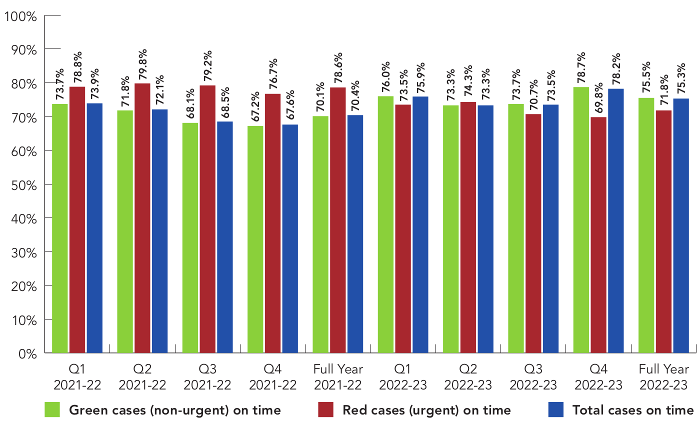
Table 5 – Success Measure: % of charging decisions completed on time
| Period | Q1 2021-22 | Q2 2021-22 | Q3 2021-22 | Q4 2021-22 | Full Year 2021-22 | Q1 2022-23 | Q2 2022-23 | Q3 2022-23 | Q4 2022-23 | Full Year 2022-23 |
|---|---|---|---|---|---|---|---|---|---|---|
| Green cases (non-urgent) on time | 73.7% | 71.8% | 68.1% | 67.2% | 70.1% | 76.0% | 73.3% | 73.7% | 78.7% | 75.5% |
| Red cases (urgent) on time | 78.8% | 79.8% | 79.2% | 76.7% | 78.6% | 73.5% | 74.3% | 70.7% | 69.8% | 71.8% |
| Total case on time | 73.9% | 72.1% | 68.5% | 67.6% | 70.4% | 75.9% | 73.3% | 73.5% | 78.2% | 75.3% |
Table 5 implies that the proportion of charging decisions completed on time has increased in 2022-23. However, this is not accurate, given changes in how this metric was calculated this year. In 2022-23, the target for charging decisions being completed on time was updated from 21 days to 28 days as part of the move to the new jointly agreed CPS and police charging model.
The comparable proportion of all charging decisions that are completed on time based on a 28‐day period for 2021-22 was 80.8%. As such, performance in 2022-23 has fallen. This is influenced by several factors and varies across the country. A key influencing factor has been the ongoing high caseload numbers due to the continued recovery from the COVID-19 pandemic and the impact of the Bar action, and the maintenance of that caseload. The below tables show how caseloads have fluctuated in both magistrates’ and Crown Courts throughout the year.
Table 6 – Magistrates’ court caseloads
Table 7 – Crown Court caseloads
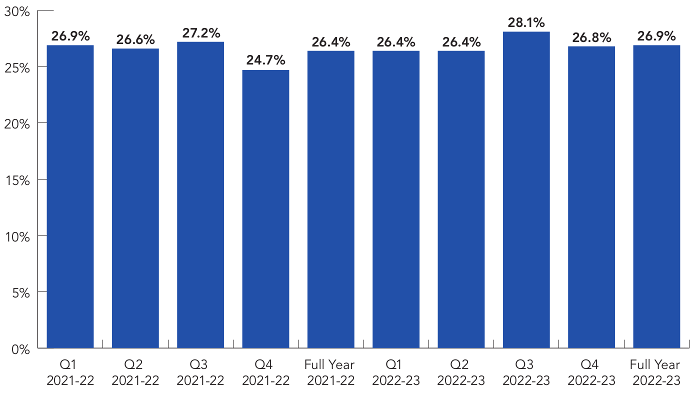
The CPS has a responsibility to continually review cases and take account of any change in circumstances. If the prosecutor considers that the case no longer meets the evidential or public interest test of the Code of Crown Prosecutors then it is their duty to drop the case. If a prosecution is to be dropped it is fairer and more efficient to drop it at the earliest opportunity. The following table shows the proportion of dropped cases that were not dropped until the third or subsequent hearing. Dropped cases includes those discontinued in advance of the hearing, where the CPS offered no evidence, those withdrawn at court, and cases where the defendant was bound over to keep the peace. The percentage of cases dropped at third or subsequent hearing remained steady through 2022-23 with a slight temporary uptick in Q3.
Table 8 – Success Measure: % of Magistrates Court cases dropped at 3rd or subsequent hearing
| Period | Q1 2021-22 | Q2 2021-22 | Q3 2021-22 | Q4 2021-22 | Full Year 2021-22 | Q1 2022-23 | Q2 2022-23 | Q3 2022-23 | Q4 2022-23 | Full Year 2022-23 |
|---|---|---|---|---|---|---|---|---|---|---|
| % of Magistrates Court cases dropped at 3rd or subsequent hearing | 26.9% | 26.6% | 27.2% | 24.7% | 26.4% | 26.4% | 26.4% | 28.1% | 26.8% | 26.9% |
Cases are dealt with effectively
New charging model
Under joint CPS/Police governance a new charging model has begun to be rolled out to all CPS Areas and their associated police forces, commencing in CPS Cymru/Wales and CPS Merseyside and Cheshire and their six police forces in September 2022. The new model is designed to improve the quality of police submissions to the CPS for charging consideration, allowing the CPS to make quicker charging decisions as a consequence. The new model affords priority to the most serious cases in terms of threat and harm.
Following the completion of initial and six-month evaluations of the new model in these two sites – which confirmed the anticipated benefits of the mode – it is now being rolled out to the remainder of the CPS and their police forces.
Changing Nature of Crime
The Serious Economic Organised Crime and International Division (SEOCID) and the Organised Child Sexual Abuse Unit (OCSAU) began operations on 1 April 2022. Since that time, both have been ensuring that every complex case submitted to CPS that satisfies the criteria for referral to these units has the right specialist legal expertise from the outset. This is providing better resilience and flexibility for the Service and builds on our existing relationships with criminal justice partners, at home and abroad.
Building on the success of both, consideration is being given as to how these specialist business units can further assist CPS Area operations as they navigate their way through Criminal Justice System recovery post-pandemic.
Domestic Abuse Operational Change
The Domestic Abuse Programme has worked hard this year to improve how effectively the CPS manages Domestic Abuse (DA) cases. We completed a review of conditional caution pilots, resulting in recommendations made to NPCC by the DPP on their future use, with a view to reducing reoffending. We instigated a re-invigoration of the cross-CPS DA Leads Group to increase identification and sharing of best practice and develop organisational ownership of DA casework.
Activity in 2023-24 will focus on development of a Joint National DA Action Plan with policing, responding to and enacting recommendations contained in the HMCPSI DA Inspection Report, and developing prosecutorial capability in respect of case strategy development.
Organised Immigration Crime
This year, the CPS has played a vital cross-CJS role in implementing new legislation and policy under the Nationality and Borders Act 2022, supporting a government priority to prosecute the most egregious cases for those crossing the channel illegally. To ensure CPS readiness and that cases are dealt with effectively, we worked closely with Home Office and law enforcement agencies to agree a joint approach to referral criteria and evidential requirements.
We supported prosecutors by developing podcast training and published updated immigration legal guidance giving clear direction on evidential and public interest factors to support charging decisions, to ensure the right person is prosecuted for the right offence. We also monitored the increased volume of referrals, which led to CPS South East being provided with targeted assistance to make timely decisions.
The focus next year will be on reviewing our MoU and legal guidance in light of our experience and political priorities and work closely with other government officials on the new Illegal Migration Bill.
Table 9 – Rape receipts and charges
A new charging model was developed and agreed by the National Police Chiefs Council and the CPS in August 2021. This will be rolled out across CPS Areas over the next year. The approach prioritises higher threat and harm cases whilst focusing on the quality of the file submission from policing to the CPS and then on the timeliness of charging decisions arising. The new model will contribute to CPS aims regarding digital capability, as it is predicated on digital submissions that will improve the efficiency and effectiveness of the charging activity, supporting overall case progression ambitions.
Table 10 – Success Measure: % of Judge directions that are complied with on time
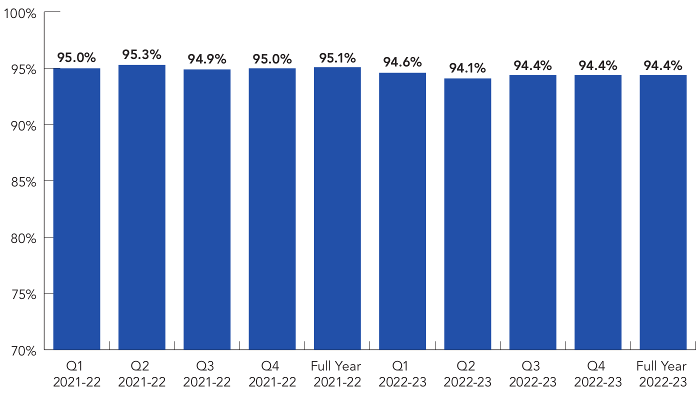
| Period | Q1 2021-22 | Q2 2021-22 | Q3 2021-22 | Q4 2021-22 | Full Year 2021-22 | Q1 2022-23 | Q2 2022-23 | Q3 2022-23 | Q4 2022-23 | Full Year 2022-23 |
|---|---|---|---|---|---|---|---|---|---|---|
| % of Judge directions that are complied with on time | 95.0% | 95.3% | 94.9% | 95.0% | 95.1% | 94.6% | 94.1% | 94.4% | 94.4% | 94.4% |
Table 11 – Success Measure: % of guilty pleas at first hearing
Guilty pleas at first hearing are expressed as a percentage of all guilty pleas.
The quality of our casework is enhanced through partnership working
Close joint working between the police and prosecutors is key to driving up the number of successful prosecutions. In 2022-23, we continued to work closely with policing through our wide-ranging Joint National Action Plan on rape and Operation Soteria, an ambitious programme of work to drive reform and improve collaborative working, with a focus on an offender-centric approach. We are seeing tangible results: since the launch of the Joint National Action Plan in January 2021 there has been an 69% increase in referral and an 86% increase in charge volumes for adult rape.
5. Public confidence
We work with partners to serve victims and witnesses and uphold the rights of defendants in a way that is fair and understood by all communities
We recognise the complexity and challenges in ensuring the wider public retains confidence in both our organisation and the wider criminal justice system. This requires us to deliver both the independent and fair prosecutions that the public expect of us, as well as a service that treats victims and defendants properly.
To best serve victims and witnesses, we have undertaken further research to better understand how service users feel about their communication with the CPS and what we can do to improve. We have published independent research into disproportionality in the outcomes of our charging decisions, leading to an ambitious programme of research and engagement to understand and address the issues found, overseen by an independent advisory board. We also recognise our important role in serving defendants as well as victims and witnesses. We published our Defendants: Fairness For All Strategy to clarify our role and responsibilities to all those who interact with us in the criminal justice system.
We have continued to reach out to our diverse communities through our Inclusion and Community Engagement Strategy and a range of different engagement and events. Including three Community Accountability Forums on different themes. The insights from these events are informing the ongoing work on our most complex and difficult cases.
This year we have worked hard on communicating our role to the public and conveying our ongoing commitment on key issues such as RASSO and violence against women and girls. We have also prioritised victim engagement. We understand that public confidence and understanding of the CPS has an impact on victims’ experiences interacting with us, and we are committed to expanding our reach and providing valuable information to new audiences.
Victims and witnesses have a fair experience interacting with us, regardless of outcome
Improving criminal justice outcomes and the experience of victims in cases of violence against women and girls is a top priority for the CPS and supporting victims has been at the heart of our work to improve our handling of rape cases. Under our Joint National Action Plan with the police and Operation Soteria initiatives, we have prioritised actions to improve our engagement with victims, complementing the work of our victim transformation programme.
Our policy statement on Domestic Abuse (DA) reaffirmed our commitment to taking every possible step to help victims through the difficult experience involved in the criminal justice system. We completed a DA landscape review and stakeholder mapping to encourage collaboration to identify root causes for charge and referral decreases and developed and consulted on a new DA Policy Statement and Guidance. We implemented a new DA checklist and reviewed our DA Legal Guidance, recognising children as victims and including important advice to our prosecutors to ensure they have the skills to address misconceptions and assumptions.
We are drawing from this work to tackle the holistic issues and challenges of VAWG offences, in the development of a VAWG Strategy for publication in 2023/24. We have been engaging our communities to ensure the strategy reflects the needs of those who are impacted by these devastating and often life changing crimes.
Victim Transformation Programme
The CPS is currently undertaking a long-term Victim Transformation Programme aiming to improve our service to victims. This will deliver an improved universal service offer for all victims of crime and an enhanced service offer for victims with the greatest need. It will focus on building victims’ understanding of the role of the CPS and their entitlements, enabling victims to access the support they need and providing timely updates and information throughout the victims’ criminal justice journey.
Over the last year, the CPS launched a new online guide for victims and improved our letter templates, with input from the Victims’ Commissioner’s Office. Since October 2022, the CPS has also been testing new communication activities in over half of all CPS Areas to improve communication and engagement with adult rape victims, including new, more informative letters pre-charge and familiarisation meetings at various points during the life of the case to enable the victim to meet the prosecution team and ask questions. We will identify learning from these tests to inform the development of a new national operating model for victims.
This is a transformational piece of work, and the CPS is committed to improving the service provided for all victims.
We understand how best to serve our diverse communities
This year the CPS has held three Community Accountability Forums on our first ever Defendants Strategy, our Victim Transformation Programme and Disproportionality in the Criminal Justice System. These forums have provided rich insights from a range of diverse stakeholders drawn from the voluntary community sector, criminal justice, academia and across government. They have helped to guide and inform the development of these important programmes of work.
CPS Areas continue to hold Local Scrutiny Involvement Panels where a review of cases involving Violence Against Women and Girls, and Hate Crime, is carried out with external stakeholders such as victims’ groups. CPS Areas have undertaken wide ranging community engagement activities, including work experience programmes, to improve public confidence by raising awareness of our role, the support available to victims and witnesses, and to promote the CPS as an inclusive employer.
We are a leading voice in ensuring defendants are treated fairly by the CPS
Our Defendants: Fairness for All Strategy 2025 was launched on 13 July 2022. The strategy sets out our commitment to ensuring that the right person is prosecuted for the right offence and protecting the rights of suspects and defendants. The supporting Action Plan for 2022-23 focused on two key areas: mental health and youth justice.
On mental health, we have added a new flag to our Case Management System to help us better monitor these cases. We are piloting a checklist to help police and prosecutors identify the right issues and ensure decisions are based on full and accurate information. We have introduced a Mental Health Stakeholder Forum to gain insights from organisations working in areas where criminal justice and mental health intersect.
The Defendants Strategy sets out a new approach to Youth Justice casework which reflects the changing landscape towards ‘Child First, Offender Second’. We have carried out new training on Youth File Handling and Youth Specialist Roles to upskill prosecutors when dealing with cases involving children.
In 2023/24 we will continue to drive improvements in how we deal with cases involving children or mental health issues and publish updated guidance to assist our prosecutors. We will also expand our focus on race disproportionality and women and girls.
The public understand our value
This year we have focused our communications work on priority campaign areas – explaining the role of the CPS as well as our work on key topics such as rape and serious sexual offences. This has included working with criminal justice and other partners to provide joined-up information and reach new audiences. We have developed information to support victims of crime, including a new guide to the criminal justice system to help prepare witnesses for the trial process.
Our approach has been informed by audience research, and we increasingly use digital channels to highlight our work. Since launch, the CPS Instagram account has been seen more than 2 million times, and positive sentiment on our social media channels has doubled. We have trebled the reach of our community newsletter, with 12,000 subscribers now hearing directly about issues that matter to them.
There has been a major focus on recruitment this year, and through innovative marketing approaches we have attracted record numbers of applications. Our people have been central to our recruitment campaigns, talking passionately and authentically about the strong sense of purpose at the heart of the CPS, and our supportive working environment.
Data on public confidence in the CPS is not available from the Office for National Statistics’ Crime Survey for England and Wales (CSEW) in 2022-23 as the relevant question was removed from the survey.
This year we commissioned a programme of polling to help us understand and track the level of public confidence in our work. We surveyed levels of confidence in the fairness, effectiveness and independence of the CPS, and of the wider criminal justice system. The following data comes from a survey conducted in January 2023.
Table 12 – Confidence that the CPS and CJS are “Fair”
Table 13 – Confidence that the CPS and CJS are “Effective”
Table 14 – Confidence that the CPS and CJS are “Independent”
More than half of those surveyed online agreed that the CPS is fair and independent. We will continue our work with partners and stakeholders in the criminal justice system to improve public confidence in the CPS, and we will also continue this polling to track trends against our work programmes.
- Source: People Survey 2021 and 2022 https://www.cps.gov.uk/publication/civil-service-people-survey-reports